Search this site
1736 results found with an empty search
- Jackson Finds: Brunch
Brunch isn't just a meal, it's a way of life. If you're on the prowl for the best brunch in Jackson, check out Sipp Jackon's newest blog post on where to go if you're in the mood for a couple mimosas and a nice weekend brunch!
- Jackson Finds: Downtown Cuisine
Downtown Jackson is rich in history and offers some of the best cuisine in the capital city. Several of the hot spots have been around for decades and are Jackson staples. Check out Sipp Jackson for some of the best places to grab a bite downtown!
- Jackson Finds: Vegan
If you're a vegan, vegetarian, or have a plant-based diet, it might seem that going out to eat can sometimes be difficult. If you're in the Jackson area looking for the kind of dishes, check out the latest Sipp Jackson blog post that provides the best advice on places to check out that have awesome vegan and vegetarian options.
- Beat the Heat With These Wines
by The Wine Guys, Tom Marquardt and Patrick Darr It’s pretty hard to escape the heat this time of year no matter where you live. Temperatures are soaring to record levels in the unbearable Southwest. Elsewhere, it isn’t uncommon to see temperatures well above 90 degrees accompanied by uncomfortable humidity. It’s times like these we confine our outdoor activities to morning and evening. It’s hard for us to enjoy a red wine at this time of the year unless we are in air-conditioned rooms. Except for grill steaks, our summer fare tends to have more seafood or even just a salad. It’s a much better time for chilled white wines. The fresh acidity of sauvignon blanc, for instance, cools the palate and makes a nice aperitif. Fruit, vegetables and grilled chicken with citrus sauces are ideal food to pair with sauvignon blanc. This is also a good time to explore the white wines with less familiar grapes but with equal acidity and fresh fruit character. The white wines from Italy, Chile, Portugal and Spain are terrific to enjoy at this time of year. Here are a few you probably haven’t tried but would be rewarded if you did: Castello Banfi San Angelo Pinot Grigio IGT 2019 ($19). Produced mostly from Montalcino in southern Tuscany, this pinot grigio has the lush peach, pear and tropical fruit notes that makes you reach for another glass. Castello Banfi La Pettegola Vermentino IGT 2019 ($20). Also from Tuscany, this vermentino is a great aperitif to enjoy on the deck for happy hour. Fresh and forward fruit with a dash of spice. Vigne Surrau Limizzani Vermentino di Gallura DOCG 2020 ($16). The producer blends fruit from all its estate vineyards to come up with a fresh and pure vermentino with exotic fruit flavors. Castello del Terriccio Con Vento IGT 2020 ($45). This is a very intriguing blend of sauvignon blanc and viognier grown near Pisa where the soils are loaded with stones and fossils. The result is a dose of minerality to marry well with the citrus flavors and generous aromas of this wine. Ferraton Pere & Fils St. Joseph La Source Blanc 2016 ($38). From the Rhone Valley of France, this marsanne has stone fruit notes with a dash of citrus and good acidity. It’s a perfect match to shrimp, salads and fruit dishes. Borreo Napa Valley Kerner 2019 ($38). This new line from Silverado Vineyards pays tribute to Felix Borreo who operated a grocery in Napa in the late 1800s. The owners purchased the property in 1992 and named the vineyard the Soda Creek Ranch. This kerner – a white German grape -- is one of several special wines it makes from the property. Generous aromas of melon and citrus with soft – almost sweet – honeydew and peach flavors. Bonny Doon Vineyard Vin Gris de Cigare 2020 ($15). Randall Grahm’s name is still attached to this legendary winery that clings to its whimsical portfolio. We have always liked this blend of southern Rhone varieties from the Central Coast. Pineapple and citrus notes. Bonny Doon Vineyard Le Cigare Blanc 2020 ($15). This is a blend of grenache blanc, vermentino and clairette blanche grapes. Very aromatic with citrus and pineapple notes. Olema Loire Valley Sauvignon Blanc 2020 ($15). This is a steal in the sauvignon blanc market. Citrus aromas, grapefruit and tropical fruit flavors with bright acidity. Hugues Beaulieu Picpoul de Pinet AOC 2019 ($12). We love to pour picpoul to guests because it never fails to please. From the Languedoc region of southern France, this wine is guaranteed to delight the palate. Fresh citrus fruit and grapefruit notes with zesty acidity. Scheid Vineyards Estate Sauvignon Blanc Monterey 2020 ($22). All stainless steel and 100 percent sauvignon blanc, this wine is rich and smooth and presents a complex mixture of grass, herbs, citrus, peach, and melon flavors. Worth the price, and then some. Blackbird Vineyards Dissonance Sauvignon Blanc 2019 ($20). We like what the 20 percent semillon adds to this delicious wine that draws grapes from Napa Valley and the Knights Valley of Sonoma County. Exotic fruit aromas, grapefruit and pineapple flavors with brisk acidity. Priest Ranch Grenache Blanc 2019 ($22). We’ve enjoyed this wine for many vintages and it is the perfect white wine to complement summer. Fresh, brisk acidity, pure citrus and tart apple flavors. Ladera Napa Valley Sauvignon Blanc 2020 ($36). More complex than your average sauvignon blanc, this version the cool, windswept Ryan’s Vineyard in the Oak Knoll District. The blending of savignon musque and some oak barrel aging gives the wine a plumpness and depth. Tropical fruit and stone-fruit flavors. Chalk Hill Estate Sauvignon Blanc Chalk Hill Sonoma County 2019 ($23). An amazing sauvignon blanc somewhat reminiscent of a grand cru Bordeaux white wine. Classic herbal and grassy notes accented with scents and a taste of roses and violets. A hint of oak with elegant honey notes. Wine picks Tenute di Arceno Valadorna 2015 ($55). Merlot is the foundation of this fruit-forward blend from Tuscany. Cabernet sauvignon, cabernet franc and petit verdot gives it a Bordeaux character, but more forward in style with ripe cherry notes and a hint of vanilla and black licorice. J. Lohr Carol’s Vineyard Cabernet Sauvignon 2017 ($60). Named after Jerry Lohr’s late wife, Carol’s Vineyard has been providing fruit for this wine since 1984. Blended with 18 percent petit verdot, the wine serves up dark fruit and cassis aromas with luscious red fruit flavors and hints of tobacco and spice. Since 2008 proceeds from this wine have funded mammograms and services in support of early breast cancer detection. J. Lohr Estates Seven Oaks Cabernet Sauvignon 2019 ($17). This delicious, fruit-forward cabernet blend from Paso Robles is one of the best values on the market. Petit sirah, petit verdot, merlot, cabernet franc and syrah add to layers of juicy fruit character that ranges from black cherries to raspberries.
- Event Addressed the Long-Term Success of Sweet Potato Industry
Ms. Bonnie A. Coblentz, MSU Extension Service Sweet potato growers and researchers from across the country met in Mississippi to map out industry needs for the coming years. Here, the group toured the Mississippi State University Pontotoc Ridge-Flatwoods Branch Experiment Station research sites. (Photo by MSU Extension Service/Kevin Hudson) STARKVILLE, Miss. -- In late July, 54 stakeholders from across the country met in person and remotely to hammer out their perspectives on the best way to sustain the nation’s sweet potato industry. The CleanSEED workshop was hosted by the Mississippi State University Extension Service and the Mississippi Agricultural and Forestry Experiment Station, or MAFES. It was held at the MSU campus and the MSU Pontotoc Ridge-Flatwoods Branch Experiment Station. Funding for the workshop was provided by a grant awarded from the U.S. Department of Agriculture-National Institute of Food and Agriculture Specialty Crop Research Initiative. The workshop began with a tour of commercial greenhouses used to grow clean plants, a commercial packing shed and current research studies at the branch station. This site is recognized by the National Clean Plant Network as one of six clean plant centers across the country. Mark Shankle, a researcher and MAFES professor, said growers from California, North Carolina, Arkansas and Louisiana had the opportunity to see how Mississippi produces sweet potatoes and tour lab, greenhouse and field research. “This event gave growers, researchers and industry personnel a chance to meet around a common interest and learn from each other,” Shankle said. “For three days, we were able to discuss the challenges facing the industry, hear about new ideas being explored in other states and share data from our states’ industry.” Mississippi consistently ranks second in the United States in sweet potato acreage with a crop valued at $121 million in 2020. Most of the state’s approximately 29,500 acres of sweet potato production are in the Calhoun County area. The focus of the event was to identify needs within the industry and compile that information so that grant applications can be made. Participants were interested in how clean seed can aid their industry in a variety of ways. “The CleanSEED project centers on the certified seed programs established across the country where plant material is cleaned of viruses and diseases in a lab,” Shankle said. “Clean plant material is cultured and propagated in a greenhouse and sold to growers. “Many sweet potato growers further propagate the clean plants in their own greenhouses for their own use and to sell to fellow growers as seed roots for the next year’s crop,” he said. At the workshop, stakeholders addressed harmonizing sweet potato certification programs, the use of technology to produce clean plant material, and other forward-facing, industry-specific topics. Short-term goals of the CleanSEED workshop are to identify research and Extension objectives to enhance security for certified seed programs to threats such as disease, viruses and invasive pests,” Shankle said. “Longer term goals will identify ways to ensure a sustainable supply of sweet potatoes.” Lorin Harvey, an MSU postdoctoral research associate, said that participants used a goal-setting process to discuss the need to create and adopt uniform terminology regarding clean seed, labor issues, controlling viruses, and weed and insect issues. “There is a lot of overlap between these issues, and participants were able to concretely discuss how these priorities related to each other,” Harvey said. In the long term, any research-supported changes must be efficient and sustainable. “If you don’t increase profitability and remain environmentally friendly, none of these changes will be adopted,” Harvey said.
- Celebrate National Cheesecake Day at These Mississippi Restaurants
July 30 is National Cheesecake Day! Celebrate accordingly with a slice of cheesecake from one of these restaurants in our state: City Hall Cheesecake - Hernando, Southaven, and Oxford With flavors like Red Velvet, Salted Caramel, Butterfinger, Strawberry, Kit Kit, and everything in between, this cheesecake café is the perfect spot to stop in for a mid-day treat or a night cap after date night. With a rotating selection of flavors, every cheesecake lover is sure to find happiness at City Hall Cheesecake. Sal and Mookie's - Jackson, Madison, and Gulfport Sal and Mookie's is known for their New York-style pizza, but if you save room for dessert, they also serve up New York-style cheesecake for dessert. Their house-made cheesecake comes with white chocolate, chocolate, or strawberry sauce with whipped cream on top - the perfect treat after a pizza pie. Cotton Blues Cheesecake - find in a grocery store near you Cotton Blues in Hattiesburg closed its doors earlier this year, but their delicious cheesecakes can still be found in several grocery stores around the state, and they even ship nationwide. These "Mississippi-made, New York approved" cheesecakes are handmade from scratch and immediately frozen, so when you purchase one at your local grocery, it is still fresh and tasty as ever. These cheesecakes come in original, salted caramel, blueberry, and strawberry. Check out their website to see where you can find a cheesecake near you. BR Prime - Biloxi Located inside the Beau Rivage in Biloxi, BR Prime Steakhouse is known for its delicious steak dinners and ambiance. After your steak or oysters, be sure to save room for their New York-style cheesecake for dessert!
- Napa Valley Wines Come at a Higher Price, But They Are Worth It
by The Wine Guys, Tom Marquardt and Patrick Darr If you ever wondered why a Napa Valley label on a bottle of wine usually comes with a premium price, here’s a clue. According to the website Vinovest, a planted vineyard in Sonoma County starts at about $70,000 per acre. Napa Valley, on the other hand, will cost you about $250,000 per acre for an entry level vineyard. In order for a Napa producer to get a decent return on his investment, he must sell his wine at higher prices. We recently spoke to Ralf Holdenried, director of winemaking at Black Stallion Winery, to learn about this relative newcomer to Napa Valley and to taste a sampling of his wines. Holdenried grew up in German wine country with parents who were winemakers. He decamped to California, earning a fermentation science degree and an MBA at UC Davis. After winemaking stints at other California wineries, including William Hill and Louis M. Martini, Holdenried joined Black Stallion Winery, which is owned by Delicato. The start-up years at Black Stallion have been complicated by the ubiquitous fires that have plagued California in recent years. According to Holdenried, the winery almost burned in 2017 but the wildfire stopped across the street from the winery. Half of the 2020 crop was lost to fires as well. Smoke taint is a recurring problem for all California wineries. Holdenried explained that some grape varieties are more vulnerable to smoke taint, with chardonnay less susceptible and pinot noir the most vulnerable. In addition, drought is an ongoing problem although Holdenried explained they have enough water for ongoing operations. The winery owns about 22 acres of vineyards and also purchases grapes from 35 to 40 growers from most of Napa Valley’s AVAs. That gives Holdenried a diverse palette to create his wines. He visits his producers frequently, spending as much time with his growers as his own vineyards and invites growers to taste their wines before blending. We tasted three of the Black Stallion offerings, starting with an unusual albarino. Some grape transplants from the old-world work extremely well in California with cabernet sauvignon, merlot, pinot noir and chardonnay starring in most California table wines and, in some cases, rivalling their European ancestors. Grapes, such as sangiovese, haven’t fared as well after the initial enthusiasm faded. We were happily surprised by the 2019 Black Stallion Limited Release Napa Valley Albarino ($40). This example was true to its Spanish Rias Baixas roots and would fit comfortably in an all-Spanish lineup. Bright acidity, lime and some floral notes form the base for this very tasty wine. Unfortunately, it is only available online or at their tasting room. The descriptors “reasonably priced, high quality, and Napa Valley” aren’t often paired in a sentence. However, the 2018 Black Stallion Cabernet Sauvignon Napa Valley ($30) may be the exception to this rule. Presenting well-balanced plum and blackberry notes with a distinctive brightness, this well-made red wine comes from a range of vineyards and includes mountain fruit from Atlas Peak. It is composed of 87 percent cabernet sauvignon with a dash of petite verdot, syrah merlot and malbec. It is aged in new and used French and American oak barrels. The 2016 Black Stallion Transcendent Cabernet Sauvignon Napa Valley ($150) is sourced from the producer’s 20 best barrels sourced mostly from higher elevation vineyards. It’s 100 percent cabernet sauvignon and 28 months of all new French oak barrel aging have resulted in a sensational ultra-premium Napa Valley wine that competes favorably with others in this price category. Very dense but with soft tannins. Black cherry and cassis notes flavor, this offering that is ready to enjoy. Wine picks Poggio Anima Asmodeus Nero d’Avola 2018 ($15). A perfectly plump wine for burgers and ribs on the grill, this Sicilian wine has jammy black cherry and plum notes with a dash of black pepper. Geodesy Chehalem Moutain Vineyard Pinot Noir 2018 ($80). Judy Jordan, formerly of J Vineyards and Winery, has focused her talents on an outstanding portfolio of wines and WG Edge (Women Gaining an Edge), a development program for young women entering the agricultural workforce. This luxurious pinot noir, like others in the collection, has a lot of elegance. Generous strawberry aromas with fresh raspberry and cocoa flavors with a hints of spice. Benziger Vineyards Bella Luna Vineyard Pinot Noir 2018 ($49). We can’t lay enough platitudes on this rich and lush pinot noir from a biodynamically farmed vineyard in the Russian Valley. By harvesting grapes by hand at night, the winemaker has been able to keep the fruit fresh and the acid bright. Pure black cherry flavors with a hint of cinnamon. Concha Y Toro Frontera Cabernet Sauvignon Central Valley 2019 ($7). Nothing complicated here -- just a pleasant berry/cherry-flavored cabernet sauvignon that will please almost all pocketbooks. Buy this for a crowd at your next barbecue. Dry Creek Vineyards Fume Blanc Sonoma County 2020 ($18). If you like sancerre, give this California cousin a try. A very good blend of citrus notes and crisp minerality accented by a hint of herbs create a very agreeable and drinkable sauvignon blanc. Villa Creek Grenache Adelaida District Paso Robles 2018 ($75). All organic, this luscious and juicy 100 percent grenache is what first drew us to grenache years ago. Black raspberry and cherry notes are accented with a hint of smoke. Decadent!
- Weather Ruins Majority of State's Watermelon Crop
Ms. Susan M. Collins-Smith, MSU Extension Service Ruined watermelons sit in a waterlogged field in George County on July 16, 2021. Excessive rain caused growers in southeast Mississippi to lose most of their crop. (Photo by MSU Extension Service/Heath Steede) Raymond, Miss. -- One month ago, watermelon production in southeast Mississippi was on track. Now, growers there have lost much of their crop to the summer’s wet weather. “The weather and what it would do was my one concern this year,” said Heath Steede, Mississippi State University Extension agent in George County. “I knew if it kept raining, we could lose a good bit of the crop, and that’s exactly what happened.” Growers in the southeast corner of the state, where most of Mississippi’s watermelons are grown, have endured excess crop loss this year. At least one George County grower lost 75% of his crop, and Steede estimates all other growers in the area will face approximately equal losses. “You’ll find that kind of loss in all of the counties around here that have any watermelon production,” he said. “I was in several of our fields in mid-June. I saw some of the prettiest watermelons I’d seen in a long time. But when the rain started, it just kept coming every day. And it’s still raining.” Watermelons require the right mix of rain, sun and warm weather to reach peak size and sweetness. Rains early in the growing season help melons grow to the proper size, but too much rain later in the season can introduce disease and cause melons to ruin. “What I’m seeing are a lot of watermelons with water spots,” Steede said. “They’re just rotting in the fields. You’ll look at them one day, and you’ll think they are OK. Then, two days later they’ll have a water-soaked spot that starts leaking.” According to the U.S. Department of Agriculture Crop Progress and Condition Report issued for the week ending July 18, 71% of watermelons were harvested compared to 78% in 2020. The previous week’s report, the latest to include watermelon crop condition, showed 66% of the crop was in good condition. However, Steede said growers in southeast Mississippi fall into the poor and very poor condition categories. Thirteen percent of the crop was listed in fair condition, 12% in poor condition and 10% in very poor condition. Smith County grower Kevin Ford is one of those growers. He estimates he lost two-thirds of his crop this year to the heavy rainfall. “We got between nine and 10 inches of rain in one day,” he said. “This is the worst crop we’ve had in a long time. We were able to harvest some watermelons. But most of the melons would look like they were going to do well, and then they just couldn’t get any size on them. Then they’d fall off the vine.” Pete Rutland, another Smith County producer, experienced the same problems and is hearing the same from other growers. “Everyone I’ve talked to has had a mighty tough year,” said Rutland. “We just never could set a crop. The soils were saturated, and the melons just didn’t get big enough. In some fields, we didn’t gather anything.” Rutland, who planted 60 acres of melons this year, has not had a chance to tally his losses, but said he knows the figures will not be good. “I can’t give you a figure because I just got through cleaning up my fields yesterday,” he said on July 16. “It’s just been an unusual year.” Excessive rains can also increase disease because growers cannot maintain a regular scouting and fungicide application schedule. “The vines have just melted down,” Steede said. “Nobody has been able to get in the fields to spray.”
- Food Factor: Air Fryer Sweet and Spicy Sweet Potato Fries
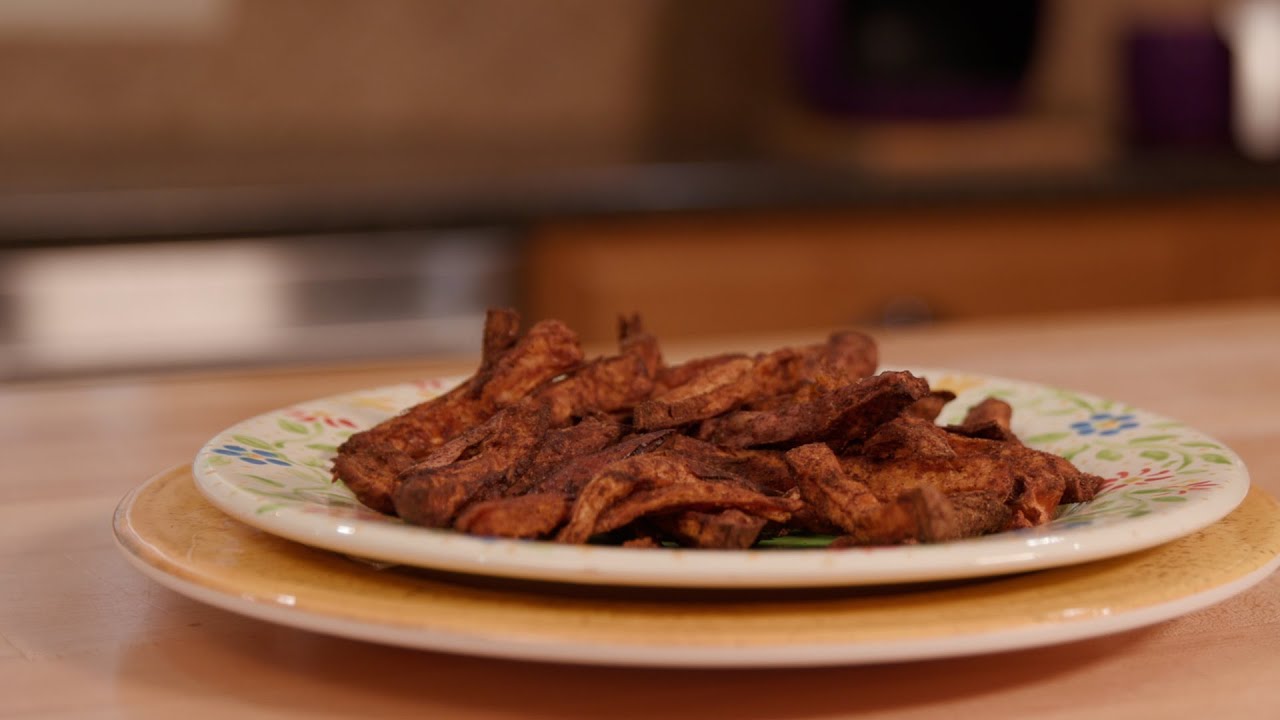
by Ms. Natasha Haynes, MSU Extension Service Cooking food in an air fryer gives you that crunchy texture you love without the added calories of deep frying. This recipe for Sweet and Spicy Sweet Potato Fries features Mississippi-grown sweet potatoes, olive oil, and spices—that’s it! Whether you serve these as a side dish or a fun snack, you’ll enjoy the health benefits of sweet potatoes, including fiber, beta carotene, and vitamin A. Vitamin A is an essential nutrient that has antioxidant properties that can help protect cells from damage. For savory sweet potato fries, use garlic powder, black pepper, and chili powder instead of nutmeg and cinnamon. By keeping the sweet potato skins on, you get more fiber! Crew Review: These were spicy! We suggest using less spice than the recipe calls for. Air Fryer Sweet and Spicy Sweet Potato Fries Ingredients: - 2 large sweet potatoes - 2 Tablespoons olive oil - 1 tablespoon ground cinnamon - 1 tablespoon ground nutmeg - 1 tablespoon cayenne pepper - 2 teaspoons salt Scrub the sweet potatoes with a clean vegetable brush under running water. Cut each sweet potato in half lengthwise and again crosswise so you have four pieces. Slice each piece again, into two or three thick slices, to make the potato more manageable to cut. Cut each slice into fries. Try to keep all the fries the same size so they will cook evenly. Preheat the air fryer to 350 degrees F. While it is preheating, place the cut fries in a bowl and toss with olive oil. In a separate bowl, stir together spices and salt. Sprinkle sweet potato slices with the seasonings and toss to coat. When the air fryer has preheated, add the fries to the basket and cook for 15 minutes. Pull out the basket and use tongs to quickly turn the fries (so the ones that were on the bottom are now on the top). Continue cooking 10–12 more minutes or until the fries are thoroughly cooked and golden brown. This recipe is part of our own MSU Extension publication P3578, “Air Fryer Recipes.” For behind-the-scenes photos, crew reviews, and terrific kitchen tips, be sure to follow The Food Factor on Facebook, Instagram, and Twitter! And if you like our recipes and videos, we’d love for you to share them with your friends! It really helps!
- It's Time to Stop Turning Up Our Noses to Chardonnay
by The Wine Guys, Tom Marquardt and Patrick Darr Studies show that women drink more wine than men, and, generally, it’s white wine they drink the most. Anecdotally, we find men rarely ask for chardonnay, and that always struck as odd. Is chardonnay associated with quiche? Real men don’t drink chardonnay? It doesn’t help that “feminine” is often a descriptor used for some chardonnays while “masculine” or “brawny” is commonly used to describe zinfandel, barolo or cabernet sauvignon. Whatever the reason, it’s time for all of us to get over our prejudices of the most widely planted grape variety in the world. Despite what we claim, chardonnay is the most sold white wine in the United States for good reasons: it’s delicious and goes well with seafood and poultry. There is even more to like in today’s chardonnay. Producers are abandoning the oaky, buttery style that swept through the industry many years ago. Today’s chardonnay, in the best of hands, is returning to a Burgundian style: light oak and balanced acidity. Many producers are even making unoaked chardonnays that perform remarkably better alongside food. While many top producers in California have put price tags of $50 and more on their premium chardonnays, it isn’t hard to find burgundy for less. Macon-Village, for instance, sells for under $25. Chardonnays from satellite regions of Burgundy can be had for under $50 and are incredibly delicious. Although they are more expensive, we enjoy the chardonnays from Ramey. Made in a burgundian style, they are rich and luxurious with the natural acidity tamed by malolactic fermentation. For the best values look for Chateau Ste Michelle, Kendall-Jackson, J. Lohr and La Crema. Here are a few we recently enjoyed: Domaine Gilles Bouton Saint Aubin 1er Crus “Champlots” 2018 ($56). This premier cru reminds us of a good meursault with nutty, rich lychee nut flavors and a luxurious texture. Rich, round and well-balanced, it is a beautiful wine for the price. Louis Latour Chameroy Macon-Villages 2019 ($20). Latour produces a Macon-Villages for $15, but we enjoyed the additional concentration of the Chameroy. White fruit and citrus notes. Balletto Vineyards Teresa’s Russian River Valley Unoaked Chardonnay 2020 ($20). One of the best values in chardonnay, this unoaked version is stripped of the oaky, buttery notes common to extracted chardonnay. It’s a much better match to food. Citrus and melon notes with crisp acidity. Kendall-Jackson Avant Unoaked Chardonnay 2019 ($17). Crisp and lively acidity with tropical fruit and apple flavors with a dash of citrus. La Crema Sonoma Coast Chardonnay 2019 ($22). Pear and apple notes with s smooth texture and a touch of sweetness. J. Lohr Arroyo Vista Chardonnay 2019 ($25). Using grapes from a cool climate in Monterey, this wine offers generous aromas with apple, pear and lemon dominating the flavor profile. Soft mouthfeel and a sweet oak finish. J. Lohr also produces an October Night chardonnay ($25) that uses a different clone and is equally delicious. Kosta Browne One-Sixteen Russian River Valley Chardonnay 2019 ($85). At this price we’re getting into premier cru territory. But the concentration, complexity and focus are undeniable in this wine. Known more for its pinot noir, Kosta Browne has been focused on creating a chardonnay with equal stature. Winemaker Julien Howsepian has structured this chardonnay with balanced acidity and plenty of pear, apple and spice notes. Lucia Soberanes Vineyard Chardonnay 2019 ($65). Wow, what a mouthful of beautiful chardonnay. From grapes grown in a single vineyard of Santa Lucia Highlands, this wine from Jeff Pisoni has layered fruit flavors of apple and pear with a light touch of oak notes and a citrus nose. The nutrient-poor soil here forces the vines to struggle and that creates more intense fruit. Hahn SLH Chardonnay 2018 ($25). From the Santa Lucia Highlands of Monterey, this rich and buttery chardonnay exudes luxury. Apple and mango notes dominate the palate. Veramonte Chardonnay 2019 ($12). From Chile and made with organic grapes, this simple chardonnay has pear notes and a kiss of oak. It’s hard to beat for the price. Smith-Madrone Estate-Bottled Chardonnay 2017 ($40). Co-owner Stu Smith led a volunteer team to spare his property from the devastating 2020 Glass Fire that destroyed much of Spring Mountain. He has much to be thankful for, including this distinctive chardonnay made in better times. Tropical and stone fruit character with a heavy dose of oak. Wine picks Bodegas Volver Single-Vineyard Tempranillo 2018 ($18). We were astounded by this rich and full-bodied tempranillo from La Mancha. Deep color, generous licorice and tobacco aromas with mature plum and cherry fruit flavors followed by soft tannins. You could pair this with grilled beef or just enjoy it on its own. Unshackled Rosé 2019 ($21). Drawing grapes from the Central and North Coasts, this juicy rosé comes from a blend of pinot noir, syrah, grenache and mourvedre. Citrus and melon aromas with grapefruit and strawberry flavors. J. Lohr South Ridge Syrah 2019 ($15). A great value, this luscious syrah, blended with a bit of viognier, grenache noir and mourvedre, is pure pleasure. Floral aromas with rich red berry flavors and a bit of spice. Pio Cesare Barbera D’Alba 2018 ($33). There is an ocean of inexpensive to moderately priced barbera d’alba on the market today. Most is passable, although some of the bargain selections taste like generic red wine. Offering proof that you get what you pay for, we highly recommend this Pio Cesare selection. Big and bold, almost barolo-like, this barbera d’alba offers a complex mélange of deep dark cherries, berry notes, and a trace of tar. An outstanding selection that will match the boldest cuisine. Veramonte Organic Cabernet Sauvignon Colchagua Valley 2018 ($12). This beauty from Chile is an outstanding value. Made entirely from cabernet sauvignon, it has plum and black cherry notes and is aged in old, neutral barrels to create a fresh-fruited wine for immediate consumption. Ryder Estate Pinot Noir Rosé Central Coast 2020 ($15). This quaffable rosé is affordable and refreshing. Fresh berries dominate with a light but appropriate acidity and weight in the mouth. Perfect for summer.
- Labor Shortages Limit Catfish Supplies, Raise Prices
by Mr. Robert Nathan Gregory, MSU Extension Service STARKVILLE, Miss. -- Many Mississippi restaurants that serve catfish have had to pay their distributors more to keep the popular Southern dish on the menu this year or go without, but pond inventory is not the primary issue. Instead, labor shortages at processing plants are more to blame, said Jimmy Avery, Extension aquaculture professor at the Mississippi State University Delta Research and Extension Center in Stoneville. Industry data, he said, show processing is down 9% for the first five months of 2021 when compared to the same period in 2020. “I think labor shortage is the big driver in this number. Although there is some talk about tight fish supply, there are no numbers to support it,” Avery said. “When supply gets tight either due to low pond inventories or processing shortages, processors shift available product types and volume to long-time customers with high volume and price.” May fish prices for premium sized fish to farmers was $1.25 per pound, according to the Mississippi Department of Agriculture and Commerce -- 9 cents more than the annual average of $1.16 in 2020 and 4 cents more than the 2016 average. MSU aquacultural economist Ganesh Kumar said the slow recovery in the industry’s processing phase can be attributed to several factors related to COVID-19. These include limits on how many people could work during the same shift while maintaining social distancing, as well as processors finding enough workers willing to work for pay comparable to stimulus checks and unemployment benefits. Still, he said he is optimistic about the industry’s prospects as it shakes off the pandemic’s effects. “A lot of us are surprised by how quickly the catfish industry came back,” he said. “The restaurant closings last year were a problem, but a lot of product usually sent to the restaurants in large bags were repackaged, refurbished and made available to other retailers.” Even though production was hampered in 2020 due to the pandemic, Mississippi produced 317 million pounds of catfish, which was only 0.6% lower than the 2016 production. “Our lowest production in several decades was 300 million pounds in 2012,” Avery said. “In 2018, domestic production rose to 341 million, an increase of 12%.” 2016 was the year U.S. Department of Agriculture’s Food Safety and Inspection Service (FSIS) took over inspection of imported catfish. Under FSIS oversight, 100% of catfish is inspected, and FSIS requires foreign countries to demonstrate that their inspection systems are at least equivalent to the U.S. inspection system. According to a USDA quantitative risk assessment on the public health outcomes associated with chemical hazards in aquaculture, applying the FSIS program to catfish yielded a reduction of approximately 175,000 lifetime cancers, as well as 95 million exposures to antimicrobials and 23.7 million exposures to heavy metal that constitute health risks. Just this year, FSIS has rejected more than 100,000 pounds of catfish from China for failed lab analyses. “The FSIS regulations are doing what they are supposed to do. The price hikes consumers are seeing are likely because of the supply issues, slight demand rise, as well as general inflation in consumer goods,” Kumar said. “The key point is that FSIS regulations are not for protecting the domestic industry but for ensuring consumers’ safety. This regulation is critically addressing the issue of equality of food safety standards between domestic catfish and imported pangasius products, curtailing the amount of contaminated fish coming into the US seafood market.”
- School's Out: 3 Easy Summer Snacks
by Ms. Natasha Haynes, MSU Extension Service Video by Jonathan Parrish With my kids out of school for the summer, snacks are an important part of our routine. Summertime snacks are my favorite, but I want to be sure they are nutritious and filling. For lasting energy and more substance, I think CFP: complex carbohydrates (whole grains), fiber and healthy fat, and protein. By paring complex carbs, healthy fats, fiber, and protein in every meal and snack, you can keep those bellies fuller longer. Here are some of my family’s favorite belly-filling snacks: Peanut butter and apple slices. Take it up a notch and melt the peanut butter and drizzle it over your apples. Add some extra toppings, such as chopped nuts and chocolate chips, for a fun fruit nacho. Fruit roll-up. Spread room temperature cream cheese on a whole-wheat tortilla, and top with your favorite fruit. We like bananas and strawberries. Pizza, pizza, pizza. You can make pizza out of many things, including whole grain bread, crackers, or even bell peppers. For a quick and easy pizza, try spreading your favorite tomato or spaghetti sauce on a piece of whole-grain bread. Then, top with your favorite toppings, like ham, veggies, and cheese. Bake on 350 degrees F until the cheese melts. You’ll have a kid-friendly pizza that you can even let the kids help you prepare. Stay cool with some of our recipes, including chocolate-covered frozen fruit, flavored water, and frozen yogurt pops. You can find these recipes and more in Extension Publication 3568, “Healthy Snacks for Kids on the Go or at Home." Bottom line: Summertime is a fun time. Keep it simple. Snack smarter and enjoy. For more helpful tips like these, visit extension.msstate.edu and join our Nutrition and Wellness Facebook group.
- Bob Pepi Seeks to Help Others Trying to Make it in the Wine World
by The Wine Guys, Tom Marquardt and Patrick Darr Bob Pepi has seen just about everything in the world of wine. A man who joined his father in 1960 to launch a winery under the family name in Oakville, Pepi has seen viticulture and winemaking progress during the 62 harvests he experienced. Now 70, he’s using his years of knowledge to help other aspiring wineries. “When we started the biggest change was in the vineyards, especially in distancing (between rows). You made it wide because, of course, a tractor had to fit in between,” he said. Harvesting equipment is different today and the grapes are often hand-picked to avoid damage to them. “The other difference was the soil. People didn’t even look at soils when they planted vineyards. We had (lousy) soil for cabernet sauvignon in the valley, but that turned out to be good for sauvignon blanc,” he added. He left the family winery in 1991 and became general manager for the California operations of Stimson Lane. His family sold Robert Pepi label to Kendall-Jackson in 1994. Pepi also cited global warming and biodynamic farming as major vineyard changes. “There is less diurnal fluctuation from day to night,” he said. “We are looking to plant in cooler places. Merlot is now being grown in Carneros. And no one thought of cabernet sauvignon in Coombsville.” Pepi began consulting in 1996 and has a number of clients, including Geyser Peak, Two Angels, Samuel Charles, Atlas Peak, Argentina’s Bodega Valentin Bianchi and Chile’s TerraPura. In 2000, Pepi entered an agreement with a prestigious vineyard to make great cabernet sauvignon under the Eponymous label. He added to his iimpressive portfolio a meritage wine named after the MacAllister Vineyard, a cabernet franc, syrah and a proprietary white blend. The role of the consultant has been a mystery to us. What role does he or she play? Is there another winemaker involved? Whose wine is it? “For small clients I am the only winemaker,” he said. “At other places I’m sitting in with the winemaker while I sometimes make the picking calls.” Winemakers, he said, can develop a “home palate,” which means they tend to taste the same thing every year and not identify the flaws. His review gives winemakers a fresh and honest perspective. Geyser Peak, in particular, is a winery that has had its up and downs. When former owner Accolade got the property we praised Daryl Groom for elevating its quality. When he left, the brand went back into a funk. But what we recently tasted under Pepi’s guidance was much better than what we remember. Here’s a sampling of wines from producers he has helped: Geyser Peak Chardonnay 2018 ($14). A great value in the chardonnay field, this creamy chardonnay with oak influences has white peach flavors. Geyser Peak Walking Tree Cabernet Sauvignon 2017 ($25). A good value in medium-body cabernet, this wine offered forward, juicy blueberry and blackberry flavors. It would be a good match to barbecued meat. Two Angels Red Hills Petite Sirah 2019 ($27). This exuberant wine has excellent depth and quaffable character. Classic inky color with ripe black cherry and plum flavors and a hint of mocha. Eponymous Napa Valley Cabernet Sauvignon 2018 ($60). Ripe plums and cassis flavors dominate the palate of this complex and rich cabernet. Mt. Veeder grapes comprise half of the blend with Coombsville, Howell Mountain and Atlas Peak sourcing the rest of the delicious blend. It has a long finish. Samuel Charles Oak Knoll District Napa Valley Cabernet Sauvignon 2019 ($80). This single-vineyard wine – the third release -- shows off copious aromatics and forward, bright raspberry and plum flavors with a hint of black pepper and vanilla. Atlas Peak Vineyards AVA Napa Cabernet Sauvignon 2018 ($50). Forward in style, this delicious cabernet sauvignon has a bit of merlot to amp up the richness. Ripe blackberry and dark cherry flavors with a hint of cocoa powder. Unanime We recently tasted several wines produced at Mascota Vineyard in Argentina and was so thrilled we bought several more. They are among the best from a country known for its bargain malbecs but not for the complexity we saw in these wines. Winemaker Rodolfo “Opi” Sadler has been making wines for more than 30 years and first focused on cabernet sauvignon. Only recently did he turn to malbec, the grape variety that put Argentina on the map. By and large, his wines range from a stunning $25 malbec to a $40 cabernet sauvignon that would blow away many Napa Valley competitors. Many have received high scores from critics. The high altitude and abundant sunshine and diverse soils in the Uco Valley give these wines a profile of ripe tannins and concentrated flavors. These wines, sold primarily at Total Wine, are worth seeking: Mascota Vineyard Unanime Malbec 2017 ($20). Rich, concentrated plum aromas with ripe dark fruit flavors, generous but soft tannins and a long finish. It’s the best malbec at this price we have tasted in years if not ever. Mascota Vineyard Unanime Signature Cabernet Sauvignon 2017 ($40). Big, gnarly tannins give backbone to this serious wine with rich and ripe dark fruit flavors. Mascota Vineyards Unanime Chardonnay 2016 ($20). If you like your chardonnay with oak, this is a beauty. Generous tropical fruit and citrus notes with a creamy texture and hints of spice and vanilla. Wine picks Migration Sta. Rita Hills Drum Canyon Pinot Noir 2018 ($70). Duckhorn’s Migration line of pinot noirs are stellar, but we most enjoyed the velvet texture, black fruit character and forest floor notes of this one. We also enjoyed the 2018 Migration Bien Nacido Vineyard pinot noir from a legendary vineyard. Full in the mouth and nose, it has great character. For a better value, try the Migration Sonoma Coast Pinot Noir ($42). Tenuta di Capezzana Barco Reale di Carmignano 2018 ($18). This estate’s entry-level wine is a delicious blend of sangiovese, cabernet sauvignon, canaiolo and cabernet franc. Fermented in stainless steel and aged in large Slavonia oak barrels, it has lots of fresh red berry fruit. For a step up in quality, however, the 2013 Ghiale della Furba IGT ($51) shows off a lot of mature and complex fruit. Made only in good vintages, it is a blend of cabernet sauvignon, syrah and merlot. The Pale Rosé by Sacha Lichine 2020 ($17). From the producer behind the popular Whispering Angel, this rosé uses grapes from Vin de Pays du Var region of Provence. Light in color with citrus and melon notes. Very good.
- Extension Uses USDA Grant to Help Mississippi Farmers
by Sasha Steinberg, MSU Office of Public Affairs STARKVILLE, Miss. — Mississippi State University’s Extension Service is working to enhance direct sales, farmers markets, and local food development in northeast Mississippi as part of a new project “From Gravel Roads to City Streets” funded by USDA’s Agricultural Marketing Service. Rachael Carter, Extension economist for the MSU Extension Service’s Center for Government and Community Development, is principal investigator for project, along with co-PIs Lauren Colby Nickels, Extension instructor for the Center for Technology Outreach, and Courtney Crist, assistant Extension professor of food science, nutrition and health promotion. “Farmers in Mississippi are faced with many challenges when selling directly to consumers and have experienced a loss in direct-to-consumer sales or a decline in the number of farms that sell directly to consumers in five counties—Itawamba, Monroe, Clay, Lowndes and Noxubee—along the Tennessee-Tombigbee Waterway,” Carter explained. The MSU Extension Service, Mississippi Main Street Association, West Point Growth Alliance, Aberdeen Main Street, Itawamba County Farmers Market, Columbus Main Street, and Noxubee Alliance, are collaborating to create economic opportunity, foster food entrepreneurship, improve access to healthy foods, and strengthen the capacity of regional food systems in these counties. Carter said the project’s main objectives are to improve marketing, enhance capacity and patron diversity, and recruit growers for existing farmers markets within these areas, as well as build capacity for local food development specifically in Noxubee County, where there is no market. View this story in its entirety here.
- Food Factor: Strawberry Swirl
by Ms. Natasha Haynes, MSU Extension Service As the days heat up, I’m looking for ways to cool off! I don’t want the empty calories found in many cold treats, such as snow cones or slushies. This recipe for a Strawberry Swirl gives me all the health benefits of whole fruit with the refreshing coolness of a frozen drink. A little advance planning is required if you want a true slushy texture. This summer, I may experiment with partially freezing the apple juice and not thawing the strawberries completely to see if I can find the best combination for immediate slushy perfection! Now that’s a sweet experiment! Strawberry Swirl Ingredients 1 cup frozen strawberries, thawed 1 cup (8 ounces) apple juice Combine ingredients in a blender and process until smooth. Serve right away or freeze for one to two hours to make a slushy. Refrigerate leftovers within 2 hours. Thanks to Oregon State University’s Food Hero program for this recipe! For behind-the-scenes photos, crew reviews, and terrific kitchen tips, be sure to follow The Food Factor on Facebook, Instagram, and Twitter! And if you like our recipes and videos, we’d love for you to share them with your friends! It really helps!
- Owners of Shaggy's Restaurants Announce "Home Buyer" Program, Includes Assistance for Down Payments
GULFPORT, Miss. - During an employee breakfast at the Mississippi Aquarium, Shaggy's owners Ron Ladner and Rimmer Covington Jr., announced a new program to help Shaggy's employees purchase their first home and get back on their feet financially. "We decided that as we continue to strengthen our 'culture of appreciation,' we wanted to do even more for our people," says Covington. "So Ron and I are introducing the Shaggy's staff to our team at Bancorp South, in a partnership, to help them reach their dreams." Chris Romano, Market President for BancorpSouth, brought along a contingent of representatives who specialize in second-chance checking, secured credit cards, savings, auto loans, and home loans. They explained the various programs available to help the Shaggy's team reach their financial and life goals. When the question was posed, "Will you raise your hand if you want to buy a home but can't currently qualify?" almost 30 people raised their hands. "We want everyone to understand that if you want to buy a new home or car and have the commitment, Rimmer and I WILL make it happen," said Ladner, as he addressed his staff. "We recognize that for most of you, the biggest hurdle is the up-front down payment. But we want you to know that we stand ready to provide cash for 100 percent of your down payment…whatever it takes to make this happen. Have hope!" Covington added, "Every situation will be different, some of you will need credit counseling…and we will provide that; some of you will need to pay charge offs, and we will help you pay them off; some of you will need cash, and we will provide that also." Ladner and Covington committed to standing behind their employees through the underwriting process, including a pledge of their own personal credibility, to make sure all Shaggy's employees have a chance. In many cases, a "second chance" that they can't get from just walking into a local bank branch. "We are vouching for our employees," says Covington. "We intend to provide guarantees to help make them more credible in the eyes of the bankers." Speaking to the group, Romano said, "Shaggy's is a very solid and strong business. We have a lot of confidence and respect for Ron and Rimmer and the Shaggy's operations and have been banking them for ten years. We also have confidence in each of you because you are part of what makes Shaggy's so successful." In 2020, Ladner and Covington made a bold move to raise the internal minimum wage to $15 per hour and raise the tipped base rate to an average of $7-8 per hour, plus they pay for full health/dental/vision benefits for all full-time employees. The average non-manager employee at Shaggy's makes between $35,000-$55,000 per year. "We want to give our people more than a job," says Ladner. "We want to give them 'a life,' hope, a future not just for them, but for their entire family." Adds Covington, "We are creating real careers for people and making long-term dreams come true!" For more information about Shaggy's, visit www.shaggys.com
- Foppiano Vineyards Survived Prohibition, Still Thriving Today
by The Wine Guys, Tom Marquardt and Patrick Darr Paul Foppiano is hardly the image of what you would expect of a company president. There’s no Brooks Brothers’ pinstripe suit, spacious office or aides who bustle in with spreadsheets and strategic plans. You won’t find him pondering a merger behind a desk either. “My mind gets made up on the hood of a tractor or truck. That’s my office,” he said in a recent phone interview. And that pinstripe suit? “I’m in a pair of blue jeans with a hole in them and hydraulic stains all over.” That’s how the business of growing grapes and making wine has been done for generations at Foppiano Vineyards. Paul is the fifth-generation to lead the company, one of the oldest continually operated, family owned wineries in Sonoma County. As families squabble acrimoniously and sell their fractured wineries to large Wall Street beverage companies, Foppiano remains a survivor. Its wines may not have the cache or cult following of prestigious Napa Valley labels, but instead the winery stays on a course of making reliable, affordable wines. This is particularly the case with its iconic petite sirah, a flagship wine introduced by his Italian ancestors. Founded in 1896 by Genoa immigrant Giovanni Foppiano, the business survived Prohibition by selling home winemaking kits. The operation was passed down to new generations, but Paul was only nine when his father died in 1984. He eventually went to work at Sausal Vineyard with another Genoa immigrant and then returned to Foppiano in 1999. He assumed the president title when his grandfather retired about 10 years ago. There aren’t many family wineries left intact today. Three conglomerates have swallowed up many of the operations that established the California wine industry. Most recently Sebastiani was purchased by Foley Family Winery and its historic facility in Sonoma was closed. Paul said the closing of an iconic building in town hit him hard. “I drove by there the other day one last time,” he said. He lamented the number of people who have lost their jobs. He struggled to find advantages to being family owned – “no one fights better than families,” he said – but he likes that decisions can be quickly made and that everyone on his small staff can perform every chore. “Everyone gets their fingers in the Kool-aid one way or another,” he said. “I wouldn’t ask any employee to do anything I wouldn’t do myself. We work as a team, and you don’t always see that in corporate.” Now the only Foppiano still involved in the winery, Paul is more than happy to keep the business humming. But if it was up to him, he’d spend his entire time in the vineyards. Knowledge was passed down through generations, but Paul admitted times have changed since horses plowed his family’s vineyards. He pointed to irrigation and organic farming as among the most significant advances. But the region’s lack of water is among the most serious challenges. One of his wells has been ordered to shut down in a regional effort to conserve water. “We are probably in the worst drought ever,” he said. “The Russian River may go dry this year. Young vineyards can’t survive if you don’t irrigate.” We pull for wineries like Foppiano. It’s more than just preserving tradition created by hard-working pioneers. It’s about the wines that reflect a personal dedication and not the formula-driven recipes embraced by impersonal corporations. Here are some of the Foppiano wines to try: Foppiano Estate Zinfandel 2017 ($28). Classic raspberry and spice aromas with plum and blueberry flavors with easy tannins. This is a better food wine than most extracted zinfandels. Foppiano Estate Petite Sirah 2017 ($25). Foppiano’s crowning achievement year after year, this petite sirah has elegance and structure. Effusive clove and pepper aromas are followed by ripe strawberry, blueberry flavors with a hint of chocolate. Foppiano 1896 California Red Blend 2018 ($13). The beauty of this quaffable wine is in its simplicity. Red berry fruit and a perfect match to grilled burgers. Foppiano Russian River Valley Chardonnay 2019 ($25). Pear and apple notes with a dash of spice give this chardonnay a nice lift. Wine picks Capensis Silene Chardonnay 2017 ($40). We loved this aromatic chardonnay from mountain vineyards in the Stellenbosch winegrowing region of South Africa. Rich, citrusy and intriguing. Hahn SLH Chardonnay 2018 ($25). From the Santa Lucia Highlands of Monterey, this rich and buttery chardonnay exudes luxury. Apple and mango notes dominate the palate. Vigne Surrau Naracu Cannonau di Sardegna DOC 2019 ($16). Named after the remnants of ancient fortresses whose ruins can still be seen in Sardinia, this simple but pleasing wine is made from cannonau grapes. Fresh, red berry fruit. Vigne Surrau Limizzani Vermentino di Gallura DOCG 2020 ($16). Home to Sardinia’s only DOCG, this special vermentino is a blend from all of the producer’s estate vineyards. Fermented in stainless steel, it retains its fresh tropical fruit character.
- Celebrate All Month Long With Several National Food Holidays
The month of July is filled with national food "holidays," so here are some great recipes to celebrate with all month long! National Ice Cream Month - Homemade Strawberry Ice Cream National Macaroni Day, July 7 - Pimento Cheese Macaroni Salad National Blueberry Muffin Day, July 11th - Quick Blueberry Muffins National Tequila Day, July 24 - Classic Margarita on the Rocks National Lasagna Day, July 29 - The Best Lasagna
- Food Factor: Air Fryer Lemon Pepper Chicken Wings
by Ms. Natasha Haynes, MSU Extension Service If you love fried chicken wings but want a healthier option, these Air Fryer Lemon Pepper Chicken Wings cooked in the air fryer are for you! I love the crispy texture and delicious citrus flavor almost as much as I love knowing they are better for me to eat! Be sure to use a meat thermometer to test the internal temperature of the wings. Crew Review: We LOVED these wings! This recipe is probably one of the most popular we’ve ever tried. Tips: Check the lemon pepper seasoning label to make sure it contains only lemon and pepper. Many lemon pepper seasonings have a lot of sodium. Add more flavor with more garlic powder, lemon pepper, cayenne, or smoked paprika. These seasonings do not contain sodium. Lemon Pepper Chicken Wings Ingredients: - 1 pound chicken wings, split into flats and drumettes - 1 tablespoon olive oil (or your preferred oil) - 1 teaspoon salt - 2 teaspoons garlic powder - 2 tablespoons lemon pepper - Dash of cayenne or smoked paprika Thoroughly pat dry the chicken wings with paper towels and place in a mixing bowl. Do not rinse raw chicken. Throw away the paper towels immediately after use. Wash your hands with soap and water after touching raw chicken. Evenly coat the chicken with a tablespoon of oil, and then sprinkle with seasonings. Wash your hands with soap and water after touching raw chicken—every time. Preheat your air fryer if your instructions tell you to do so. The additional few minutes will allow the chicken to marinate in the seasoning. Place the chicken in your air fryer basket, spacing evenly. Air fry at 400 degrees F for 8 minutes per side, or until chicken wings are crisp and golden brown with an internal temperature of 165 degrees F. Measure the temperature with a food thermometer at the thickest part of the chicken, but not touching the bone. This recipe is part of our own MSU Extension publication P3578, “Air Fryer Recipes.” For behind-the-scenes photos, crew reviews, and terrific kitchen tips, be sure to follow The Food Factor on Facebook, Instagram, and Twitter! And if you like our recipes and videos, we’d love for you to share them with your friends! It really helps!
- Complete Your July 4th Spread With These Recipes
July 4th is this weekend, and if you're still trying to get your menu together, these recipes will be a hit at any cookout this weekend! Pork Tenderloin Sliders with Peach BBQ Sauce Creamy Mac and Cheese Black Bean, Corn, and Feta Dip Red, White, and Blue Potato Salad Strawberry Ice Cream Cake with Oreo Crust Strawberry and Lemonade Dessert Drinks
- Food Factor: Orange Delight
by Ms. Natasha Haynes, MSU Extension Service Video by Jonathan Parrish If you are a fan of The Food Factor and are of a certain age, you may remember one of my favorite childhood flavors—the Orange Julius®. A trip to the mall wasn’t complete without a stop for a creamy, frozen citrus treat! This Orange Delight has a similar flavor, and the frozen orange juice concentrate preserves the drink’s slushy texture. When you have a hankering for a frozen beverage you know is loaded with sugar and calories, treat yourself to this homemade, low-fat refreshment instead! Next time I make this, I plan to experiment by blending ice cubes for more slush, and maybe some frozen fruit. As always, I encourage you to experiment by adding other fruits to create your own summery concoction! Orange Delight Ingredients - 4 cups 1% or nonfat milk - 6 ounces frozen orange juice concentrate (about 3/4 cup) - 1 teaspoon vanilla Place all ingredients in a blender. Put the lid on tightly. Blend for about 30 seconds or until smooth. Serve and enjoy. Refrigerate leftovers within 2 hours. Thanks to our friends at Oregon State University’s Food Hero program for this recipe! For behind-the-scenes photos, crew reviews, and terrific kitchen tips, be sure to follow The Food Factor on Facebook, Instagram, and Twitter! And if you like our recipes and videos, we’d love for you to share them with your friends! It really helps!
- Climate Change Effects Are Felt by the Wine Industry
by The Wine Guys, Tom Marquardt and Patrick Darr You wouldn’t think a couple of degrees spread over a few decades would make much of a difference in a vineyard. But climate change – or whatever you want to call it – is wreaking havoc in vineyards across the world. And, it’s about to get worse. Let’s go first to France, arguably the most revered wine growing country. Severe frost affected nearly 80 percent of the crop; summer heat spikes are accelerating maturation too quickly. Merlot is headed for distinction because it is ripening too fast – the consequence of which is more alcohol but less acidity. The impact is so foreboding that seven new grape varieties, including sangiovese from Italy and assyrtiko from Greece, are being introduced in the Bordeaux AOC because they can survive in warmer temperatures. More northerly regions have benefited by the warming climate. Alsace has reported recent droughts have protected grapes from the common mildew. And pinot noir, a challenged for Alsace winemakers, is doing better. The same is true for Champagne, which has seen several vintage years. Champagne basks in wet, cool climates. But the higher temperatures – 2 degrees over 30 years -- have created a sweeter wine. Producers are no longer adding a dosage (additional sugar) and they are eliminating malolactic fermentation to hang on to natural acidity. Some producers report they are pulling more from their reserve wines from previous years to get the acidity they are looking for. Champagne’s loss is England’s gain. As temperatures warm here, the Brits have found success in making sparkling wine. Once a borderline region for vineyards, areas like Kent, West Sussex, Hampshire and Dorset are producing fantastic sparkling wines. Land planted to grapes has quadrupled since 2000; there are now more than 160 wineries in England where the soils replicate the chalky soils revered in Champagne. Taittinger recently invested in English vineyards, so what does that tell you? Burgundy, too, has had its climate challenges. Hail – not uncommon to the Cote de Beaune – has ruined several recent vintages. A recent study published in the Proceedings of the National Academy of Sciences, researchers theorized that Burgundy and Bordeaux soon could be known for its mourvedre instead of its cabernet sauvignon and pinot noir. In the United States, California has been experiencing rising temperatures too. Riper grapes have led to increases in alcohol content. We spoke to several pinot noir winemakers who said they are no longer pulling canopy from the vineyards. Not only are they trying to protect the grapes from heat stroke, but most of them are picking at night. Cooler regions, such as Anderson Valley, and regions that benefit from fog off the Pacific Ocean, are prized for pinot noir. The PNAS report showed that suitability for grapes is projected to decline in Bordeaux, Rhone Valley, Tuscany but improve in northern regions of North America and Europe as well as New Zealand. Maybe your next best cabernet sauvignon will be coming from Canada. Cote Mas Jean-Claude Mas isn’t afraid of trying something new. The face behind Domaines Paul Mas, a large and innovative wine producer in southern France’s Languedoc region, Mas is always experimenting with new grape varieties. His vast holding of vineyards is planted to 45 different varieties, including experimental lots of montepuliciano. Even his one-liter bottles don’t conform to the conventional 750-ml sizes we see on the shelves. Although born in the heart of Languedoc, Mas spent several post-college years pursuing car and motorcycle rallies before returning to his roots and his real passion of making wine. His great grandfather was the first in the family to make wine in this region in the late 19th century. Jean-Paul has been at the helm of the family winery since 2000. He relates his diversity of grape varieties to a Rubik’s cube. “I can create different styles from pleasurable to sophisticated,” he said. The producer offers something for everyone in both grape variety and cost. But these Cote Mas wines represent some of the best values in southern France. We have said before – and now again – that the Languedoc-Roussillon region is not only a beautiful place to visit, but an undiscovered wine producing region. Try these wines as we dig into summer: Cote Mas Rosé Aurore Pays d’Oc IGP 2020 ($15). Grenache, syrah, cinsault and vermentino combine to deliver a mélange of red fruit aromas and rich strawberry flavors. Good acidity but a smoothness as well. Cotes Mas Sauvignon Vermentino IGT Pays d’Oc 2019 ($15). This intriguing and unique blend of mostly sauvignon blanc and vermentino offers something different in white wine. Zesty with grapefruit and tropical fruit notes. Delicious is a word that comes to mind. Cotes Mas Syrah Grenache IGT Pays d’Oc 2018 ($15). Luscious blackberry and black currants notes with a good dose of licorice. It’s a simple wine to enjoy with lighter fare or just by itself. Cotes Mas also makes two tasty sparkling wines: a brut and a rose in its Cremant de Limoux line. Each costs $20 – another good value. Wine Picks Dutcher Crossing Family Reserve Merlot 2015 ($51). The extra bottle aging in this current release helps to smooth off the edges of a brilliant wine that refutes what naysayers claim about merlot. It is dense, chock full of varietal flavors and layered dark fruit, plus a dose of fine tannins. Ladera Pillow Road Vineyard Chardonnay 2018 ($55). Yes, it’s a bit pricey, but it’s probably the best Russian River Valley chardonnay we have tasted this year. The texture is exquisite with lush tropical fruit a nd peach flavors, toasted oak and citrus, hazelnut aromas. The finish went on and on. Ponga Marlborough Sauvignon Blanc 2020 ($14). This is unquestionably one of our best discoveries in the New Zealand sauvignon blanc market. We loved its lively acidity but mostly its oodles of grapefruit, white peach and tropical fruit notes. Nice mineral thread and alluring aromas. Flora Springs Napa Valley Cabernet Sauvignon 2018 ($50). Fruit forward in style, this showy Napa Valley cabernet sauvignon exudes lush plum and black cherry flavors with hints of oak-inspired vanilla and dark chocolate.
- Starkville's Newest Restaurant, Taste, Open For Business
STARKVILLE, Miss. - A new restaurant opened on June 17th in Starkville that promises to deliver recognizable favorites with an elevated flair from locally sourced products, but that's the long description. The short answer is, “It's just a restaurant,” according to Michael McIntosh, Director of Operations. “If we describe it as anything, it's a 'really good' restaurant.” The fact is that Taste doesn't want to come with any pretense. “Fine dining is a tired word,” says Chef Jeff Thornberry. “And we definitely aren't trying to be fine dining. We want Taste to be a restaurant for all occasions. If you want to have a ribeye and an expensive bottle of wine for your birthday, you can do that. If you want to have a flatbread and a beer at the bar with friends, you can do that. The restaurant can be whatever you want it to be. We call it a place to celebrate life's victories.” The approachability of the menu starts with the cornbread waffles served as an appetizer with black truffle butter ($7). These waffles are cooked to order and the blend of sweet and savory is a great balance. Other apps of note are the roasted duck dumplings ($14), glazed pork belly ($10) and the wagyu meatballs ($24). Taste boasts a French fry menu that allows you to top crispy shoestring fries with everything from crawfish to duck sausage gravy. For a main, the Cast Iron Redfish is popular ($23), and for dessert, warm chocolate chop cookies served with a glass of cold vanilla milk ($7). And the food isn't everything that is elevated. Corey Jernigan is the Master Mixologist for Taste and his cocktail menu is nothing like most restaurants in the state have seen. One of his most popular concoctions is the Salt Air Margarita ($12) which is basically a margarita but instead of a heavily salted rim, the margarita is topped with a light, salty foam that gives the effervescence of the beach that sips easy and smooth. “This margarita might change your life,” says Jernigan. Taste opened in the old Veranda space located at 208 Lincoln Green, Starkville, Miss., 39759. Construction began in the Spring and the restaurant was able to open before its Father's Day target. Reservations recommended and can be booked on Open Table. https://tastestarkville.com/
- Ridgeland Bakery Promotes Peace, Love, and Acceptance With Anti-Bullying Campaign Through June
by Kristie Aylett What do cacti, coffee, and cakes have in common? The answer is a local small business owner who is following her dreams and making a difference in her community. The Prickly Hippie is hosting an anti-bullying campaign this month and hoping to promote the benefits of random acts of kindness after recently learning about so many local students being bullied. The Prickly Hippie owner Jenni Sivils started making cakes as a hobby in college. Through baking, she found a way to express her creative side and make money before she entered the corporate world, selling baked goods to supermarket chains. After the burnout of long days on the road, Jenni settled in Ridgeland to sell cacti and coffee. But the urge to create unique sweet treats led her to find her passion of making homemade baked goods. The pandemic presented Jenni’s biggest challenge yet in keeping the doors of The Prickly Hippie open. One key resource that helped her through this time were the tools provided by social media platforms. Platforms like Facebook have offered a critical opportunity to advertise her business for free and take online orders through Facebook’s Shop Now tool. Jenni’s mother was also her saving grace throughout the pandemic, as the duo baked tirelessly every day to fulfill orders for contactless pickup. To do something to recognize her mom’s help and kind heart, Jenni was inspired by the “peacetarts” her mom creates at their store and by their mission of providing a place where people can go and feel accepted. So during the month of June, The Prickly Hippie is giving a free mini bouquet with a "Kindness Looks Good on Everyone" customizable tag to anyone so that they can write a kind note to someone who may be struggling to fit in or find acceptance in their community. Plus, they'll get a free coffee for themselves. Check out The Prickly Hippie in Ridgeland at 500 Highway 51, Suite F, and be sure to check them out on Facebook.
- How to Preserve Foods At Home Safely
Are you planning to can fruits and vegetables this year? Whether you’re new to canning or you’ve done it for years, Extension has resources to help you make sure it’s done safely. Different foods require different equipment and canning methods. Make sure you’re using the proper preservation method and that you’ve got the right equipment for the type of food you are preserving. Also make sure it’s in proper working order. These steps will help ensure you kill bacteria that can cause dangerous and potentially deadly food-borne illnesses. We have detailed publications that can help you learn all about proper food preservation. But here are a few Dos and Don’ts to keep in mind: Do Always use the right equipment. Always use research-based recipes. Invest in the right type of thermometer. Check all equipment parts and clean them according to the manufacturer’s instructions before canning begins. Check the dial gauges on steam pressure canners to be sure they are accurate. Your local Extension agent can test dial gauges. https://extension.msstate.edu/county-offices Be sure all canning jars and lids are in perfect condition and clean them with hot soapy water and rinse well. Some pieces may need to be sterilized. Don’t Never use conventional ovens, microwaves, dishwashers or the open-kettle method. Never use electric pressure cookers. While some of these appliances have recipes in their manuals and a canning or preserving button, keep in mind these appliances have not been tested by the U.S. Department of Agriculture to ensure canned foods reach the correct temperatures to kill dangerous bacteria. Never use canning powders. These powders are useless as preservatives. Canned foods must be properly processed with heat. Never use jars with wire bales and glass caps. One-piece, zinc, porcelain-lined caps also should not be used. Although they have flat, rubber rings for sealing jars, they often fail to seal properly. For more detailed and specific information about home food preservation read these Extension Publications: P1152, “The Complete Guide to Home Canning” P0220, “Pickles, Relishes, Jellies, Jams, and Preserves” IS0845, “Food Preservation – Selection, Use and Care of Canning Equipment” P0993 “Home Canning Questions Answered” Extension relies on and recommends The National Center for Home Food Preservation for information about preserving any food items at home. The center is housed at the University of Georgia and uses the research-backed data supported by and gathered from USDA testing.