Search this site
1736 results found with an empty search
- Summer Citrus Growth Brings Autumn Harvest
Meyer lemons, a cross between a lemon and an orange, are thin-skinned and sweet. They can be grown in Mississippi landscapes. (Photo by MSU Extension/Gary Bachman) Although we’re in the middle of a blazing hot summer, I find my gardening thoughts wandering to the coming fall season. You may think you know why I'm looking forward to the cooler weather, but the main reason is that the citrus in my home grove will start to ripen. While August is too early to think about harvesting fruit, it is time to start thinking about planting your own citrus. You can plant citrus in the ground or, my preferred method, in containers. I’ve written before about the various citrus trees that I’ve tried to grow in the past. I’ve told of being unable to resist a key lime I saw in the garden center, but it didn’t survive the “brutal” coastal Mississippi winter. I’ve tried growing the eerily fascinating Buddha’s hand citron, but it also didn’t make it past winter. I’ve finally learned to grow citrus that is hardy for my garden with minimal cold protection. I’ve settled on three consistent performers: satsuma orange, Meyer lemon, and kumquat. Satsuma oranges are related to mandarins and are winter favorites because they are easy to peel. I’m always astonished at the number of oranges that will be set on my satsuma trees. My first year growing this citrus, there were so many flowers on my little tree I went ahead and removed about half because if they all had produced a fruit, the tree would have snapped. As it was, my little tree had 13 oranges that almost bent the trunk to the ground. I enjoy growing and caring for Meyer lemons, which are not like the tart, thick-skinned grocery store offerings. This fruit -- long-overlooked in the culinary world -- is a cross between a lemon and an orange, making it thin-skinned and really sweet. Each year, my crop is destined for a batch of homemade limoncello, which is a holiday family treat. The citrus crop I’m most excited about are the kumquats. These fruits are produced in astonishing numbers; because of the number of flowers, my trees are buzzing with what seems like hundreds of native bumblebees. The number of kumquats developing would seem to cause a structural problem for the trees as they ripen, but it’ll be okay. Due to their small size, the weight will not threaten the tree. Kumquats don’t need to be peeled, as the rind is completely edible. I have two varieties; one is sweet, and the other is a little tart. Kumquats are perhaps the most cold tolerant of the citruses, extending the northern range for home gardeners. Citrus must be protected from the cold. Citrus trees are grafted, and the graft union is susceptible to freeze damage. I planted all my citrus trees in 25-gallon containers so I could move them to the garage for protection. However, the containers weigh too much to actually move. My mistake. So, I constructed removable conduit frames from which I hang frost blankets on the coldest nights. If you want more information about growing citrus, especially in containers, get Mississippi State University Extension Service Publication 2542, “Growing Citrus in Containers in Mississippi.” This is an excellent guide for gardening success with citrus in your landscape. Find it here. For now, I’ll just have to be satisfied with the visions of homemade limoncello while I wait out the rest of the summer in air conditioning.
- These S'mores Will Have You Asking For More on National S'mores Days
If you're looking for the perfect excuse to whip up some s'mores, today's your day, because it's National S'mores Day! Everyone loves the classic s’more, but have you ever thought about putting a little twist on this snack? Try these fun and flavorful s’mores ideas to celebrate today. These gourmet treats are not your average campfire snack. The sky is the limit when it comes to dressing these sweet treats, and you'll have everyone asking for some more. No campfire required! You can toast your marshmallows in the oven. Preheat your broiler and line a baking sheet with parchment paper. Spread the marshmallows out in a single, even layer. Place the pan under the broiler a few inches away from the element. Leave the oven door slightly open and check every 30 seconds to make sure they don’t burn. Leave until they are golden brown and toasted to your liking. Samoa S'mores Graham crackers Marshmallows Dulce de leche Toasted coconut 1-ounce semi-sweet chocolate Caramel Apple Cinnamon S'mores Cinnamon graham crackers Marshmallows Caramel apple dip Thinly-sliced granny smith apples Peanut Butter, Bacon, and Maple Syrup S'mores Peanut butter cookies Cooked bacon Marshmallows Maple Syrup Other flavor combinations Sliced fruit Fruit preserves Cream cheese Pretzels Peppermint patties Reese's peanut butter cups
- Mississippi Episode of 'State Plate' Set to Air on August 18th
The critically-acclaimed original series State Plate, hosted by Taylor Hicks, is set to return to television on Friday, August 11th on the family-entertainment network INSP. In each episode of State Plate, Hicks goes on an unforgettable culinary tour across a particular state to assemble a plate of that state’s most emblematic foods. This season, Hicks makes his way to Mississippi to showcase the culinary experiences that our state has to offer. Hicks tastes his way across Mississippi on a quest to discover the state’s most emblematic foods. Along the way, he visits the home of the blues to make the coolest food in the Delta: the “koolickle.” Taylor fishes the Mississippi River for fresh catfish without using a pole and grinds corn for homemade hushpuppies fried to golden perfection. He plants the delicious staple known as black-eyed peas and discovers how the decadent chocolate mud pie got its name. It’s an abundant plateful of Mississippi cuisine filled with the stories and legends behind the state’s tastiest foods. The Mississippi episode of State Plate will air on Friday, August 18th at 7 p.m. CT.
- August Marks National Catfish Month
The 2017 Catfish Farmers of the Year are, from left, Mary Quitman Holmes, of Greensboro, Ala.; Chris and Missy McGlawn of Swiftown, Miss.; and Glen Fleming of Dumas, Ark. JACKSON, Miss. – Each August since 1984, when President Ronald Reagan declared it as such, the nation rolls up its sleeves to celebrate National Catfish Month. And there is plenty of reason to celebrate, particularly here in Mississippi, Alabama, and Arkansas, where the majority of the nation’s catfish farms are located. The Catfish Institute (TCI), the Jackson-based nonprofit promotional arm of the U.S. Farm-Raised Catfish industry, works throughout the year to promote the good work of the farmers it represents and the impact they have on local economy. “The catfish industry is fairly unique among agriculture industries with respect to its economic impact,” said Roger Barlow, TCI president and executive director of Catfish Farmers of America. “Every element of our industry has an economic return that benefits the areas where the fish are grown, as well as the entire region. The fingerlings are hatched locally; the feed is produced and fed locally; the fish are seined and hauled by rural small business owners; they are processed and packaged locally; and they are sold locally to family-owned restaurants and grocery stores, as well as shipped to larger markets across the country. This kind of economic multiplier is almost unprecedented.” As the national marketing organization for U.S. Farm-Raised Catfish, TCI works tirelessly to promote awareness and consumption of America’s largest aquaculture product. One element of its annual advertising campaigns involves utilizing the industry’s “Catfish Farmers of the Year” from Alabama, Arkansas, and Mississippi. “Each year, farmers from the three main producing states are asked to select from their membership a deserving producer to be named as their state’s Catfish Farmer of the Year,” said TCI president, Roger Barlow. “This honor is a great opportunity to give leading producers national recognition for their contributions to our industry, and we are proud to feature these outstanding American farmers in our annual lineup of industry promotions.” The 2017 Catfish Farmers of the Year are Mary Quitman Holmes, of Greensboro, Alabama; Chris and Missy McGlawn of Swiftown, Mississippi; and Glen Fleming of Dumas, Arkansas. These farmers are chosen from a large field of many deserving catfish growers in the industry. Although it is difficult to select just one farmer from each of these states, those who are selected embody the spirit of the American Farmer. “All of the Farmers of the Year have made significant contributions to the U.S. Farm-Raised Catfish Industry,” Barlow said. These Farmers of the Year are used by TCI in various advertising campaigns throughout the year, including print advertisements, events such as Boston’s Seafood Expo North America; radio ads during National Catfish Month; and in their very own brochure to highlight each farmer’s favorite catfish recipe. For recipe ideas and more information about U.S. Farm-Raised Catfish or The Catfish Institute, please visit UScatfish.com. \
- Plan Your Next Beach Trip to Pensacola for the 10th Annual Taste of the Beach
PENSACOLA, Fla. – The Pensacola Beach Celebrity Chefs are prepped and ready to serve up the food and spice up the crowds at the 10th Annual Taste of the Beach festival September 15th and 16th on Pensacola Beach. Presented by the Pensacola Beach Chamber of Commerce, Taste of the Beach is Pensacola Beach’s annual foodie festival that celebrates the beach’s talented chefs and their unique coastal cuisine with cooking demonstrations, chef challenges, sample tastings, and a free live concert. The Pensacola Beach Celebrity Chefs include Jere Doyle of Crabs We Got ‘Em; Dan Dunn of H2O at the Hilton Pensacola Beach Gulf Front Hotel; Josh Warner of The Grand Marlin; Dennis Moore of Flounder’s Chowder House; and John Smith of Hemingway’s Island Grill. “This is our way of celebrating the amazing culinary scene happening daily on Pensacola Beach and spotlighting those directly responsible for it — our beach chefs,” said Alison Westmoreland, President of the Pensacola Beach Chamber of Commerce. The party gets started Friday night with a special, ticketed VIP event at the Hilton Pensacola Beach Front at 6 p.m. Guests will sample specially-created hors d’oeuvres before a beginning a formal, five-course meal and wine pairing while viewing an on-stage cooking demonstration presented by five Pensacola Beach chefs. Tickets are $75 each and can be purchased on the Taste of the Beach website. The day-long Taste of the Beach outdoor festival opens on Saturday at 10:30 a.m. with about 20 beach restaurants showcasing their signature dishes for just $5 each. The festival, which is centered around the Gulfside Pavilion at Casino Beach, amps up the entertainment with chef demonstrations, cooking competitions and live music. Kicking off the day is the Team Cook Off challenge, beginning at 10:30 a.m. Local celebrities, beach businesses and civic organizations will be invited to compete against each other using surprise ingredients for the chance to win the Taste of the Beach Cup trophy. Next up is the Chef’s Challenge - starting at 11:30 a.m. - in front of the Gulfside Pavilion Stage. The cooking contest pits six Pensacola Beach chefs against each other using a secret ingredient for the chance to win a cash prize, a trophy and bragging rights for a year. The five Pensacola Beach Celebrity Chefs take the stage at 1 p.m. to present simultaneous live cooking demonstrations. Following the demonstrations, festival-goers with pre-purchased wristbands can sample the chefs’ creations. A limited number of wristbands are available for $20 at www.tasteofpensacolabeach.com. Immediately following will be a Q-and-A session and meet-and-greet. From 5 to 7 p.m., festival-goers can sample a selection of microbrews and beers provided by Lewis Bear Co. Wristbands can be purchased on the website for $12. Finally, prepare to get your Classic Rock fix on Saturday night at 7 p.m. when White Tie Rock Ensemble takes the Gulfside Pavilion stage to end the 10th annual Taste of the Beach festival. White Tie is an ambitious group of local musicians that combine classic rock hits by artists such as Journey, Aerosmith, Van Halen, and The Eagles with the precision and detail of a symphony orchestra, creating the ultimate music experience. The concert is free to the public, but a limited number of VIP seating tickets will be sold for $30 each. The VIP area will be cordoned off and will be general admission for ticket holders. Please note that no coolers or extra chairs will be allowed in the VIP area. For more delicious details, VIP event tickets, or lodging information, visit www.tasteofpensacolabeach.com.
- Chefs of the Coast Food & Wine Event Set for September 24th
GULFPORT, Miss. – The Gulf Coast Chapter of the Mississippi Hospitality and Restaurant Association (MHRA-GCC) is hosting the 35th annual Chefs of the Coat Food & Wine Event on September 24, 2017, at the Mississippi Coast Coliseum and Convention Center in Biloxi from 6 to 8 p.m. (VIP ticket holders will be granted early admittance at 5 p.m.). This year's event will offer gourmet food sampling, wine tasting, live music by vocalist Jesse Hill, and a food competition between elite Gulf Coast Chefs and local high school culinary students. "We've added a competition aspect to this year's event that involves our local high school culinary program students," said Chef Danie Rodriguez, MHRA-GCC President. "This provides an opportunity for students to gain experience working on a team with a professional chef and enables them to compete for a food pantry donation to their school." The chef and school cooking competition will take place during the VIP hour of the event, from 5 to 6 p.m. All attendees at the event will be able to sample food from more than 30 Mississippi Gulf Coast restaurants, taste a variety of wines, and view the masterful creations of the competitors in the Food Meets Art competition, where food is crafted into works-of-art. Tickets are available for purchase at ticketmaster.com. General admission is $65 for an individual, or $110 per couple. VIP tickets, which allow early admission, a Chefs of the Coast cookbook, and a commemorative event poster, are $80 for an individual, or $140 per couple. Prices do not include fees. For more information about the event, or to learn more about sponsorship opportunities, call (228) 324-0032. The Gulf Coast Chapter of the Mississippi Hospitality & Restaurant Association has been the voice of the local restaurant industry for more than 35 years, supporting the industry through government representation, education, and mentorship. The MHRA-GCC aims to provide assistance to local high school culinary programs and scholarships to culinary students attending Mississippi colleges and community outreach programs. The MHRA-GCC is a 501(C)(6) organization.
- Idea of the Week: Embrace the Taco
Tacos get a bad rap. In most cases, they’re relegated to the kids’ table or drive-thru item at the fast food Mexican place. It’s high time to take tacos from the bottom of the totem pole and move them to the dinner table. After all, if they’re created the right way, tacos can be a healthy, well-balanced meal. First, consider the fact that in one handy pouch, you’ve got the four major food groups in the form of grains, protein, vegetables, and dairy. And I have yet to find anyone, even those like myself who don’t especially enjoy Mexican food, to say they’re not delicious. While upgrading their image, I’ll share a healthier and foolproof way of enjoying them. Here’s a hint: no more salt-laden seasoning packets or shaky shells. First, a word or two about how they moved into our mainstream food chain. Like many foods, we Americans have embraced and labeled “international,” our version of tacos is nothing like the authentic version served in Mexico, their country of origin. Authentic Mexican tacos are small, soft tortillas made from ground corn, then filled with seasoned meat and topped with cilantro and lime, wrapped in a corn husk. At no time do sour cream and salsa enter the picture. Restaurants have been quick to recognize the potential of tacos, adding an increasing number or varieties to their menus and offering toppings that, while delicious, bear little resemblance to the humble meals served south of the border. A quick inventory of some of the state’s restaurants showed chefs are quite inventive in transforming a corn tortilla into a tasty work of art. A few combinations that might prove inspirational in your own kitchen include Asian chicken with mango slaw; lamb with minty Mojito slaw and cucumber salsa; teriyaki chicken with a grilled pineapple and pear salsa; spicy Sriracha shrimp with cilantro lime slaw and my favorite, grilled steak with sliced avocado, chopped red onions, and tomatoes with a spicy queso dressing. Despite our affinity for basic ground beef fillings, fish tacos are quickly becoming the taco of choice for restaurant diners. A few of the multiple fish taco offerings on menus are coconut-crusted fish with mango salsa; blackened fish with avocado sauce; smoked tilapia topped with chopped vegetables and a creamy lime dressing; spicy catfish with chipotle mayonnaise and grilled red fish topped with lime cabbage slaw. The one I can't wait to try is crispy Baja fish with fresh pico de gallo topped with a creamy white sauce and a sprinkle of fresh lime juice. If these delicious restaurant menu items still don’t inspire you to begin making tacos at home, I don't know what will. Okay, here are two additional thoughts that may cause you to transform tomorrow night into “Taco Thursday.” There is a way to easily make your own seasoning and by extension, control the amount of sodium and other ingredients to spice up your tacos. Second, if you prefer old school taco shells over corn or flour tortillas, but hate it when ingredients fall out of the shell, look for flat-bottom taco shells in the supermarket. They fit neatly into a baking dish and later, stand up nicely on a serving platter or a plate. So, join the growing movement and embrace the taco. Take it from me, Taco Night can be healthy, delicious, and fun. Easy Taco Bake 4 large boneless chicken breasts 1 medium purple onion, sliced and thinly diced 1 red bell pepper, sliced and thinly diced 1 medium Roma tomato, sliced and thinly diced (another for topping later) 2 chicken bouillon cubes 1 cup water 1 tablespoon each: chili powder and cumin 1 teaspoon each: garlic powder, onion powder, paprika 1/2 teaspoon each: salt and pepper or Mrs. Dash Place chicken on bottom of large crockpot, then add other ingredients. Cook on low for eight hours or on high for 4 hours. Remove chicken from crockpot and shred meat. Place equal amount of shredded chicken in eight flat-bottom tacos, then top with cooked vegetables. Place tacos in a baking dish, fitting them close together. Top with Mexican cheese and bake in a 350-degree oven for 8-10 minutes, or until cheese melts. Remove and serve with additional chopped vegetables and toppings, if desired.
- MSU Research, Outreach Boosts Catfish Industry
Mississippi catfish sales in 2016 from the state’s 150 farms totaled more than $213 million, nearly $100 million more than the nearest competing state. Catfish are shown being seined at Lee Farms in Noxubee County on March 21, 2017. (Photos by MSU Extension Service/Kevin Hudson) STONEVILLE, Miss. – This year marks Mississippi’s 200th anniversary as a state, but one of its most successful industries – catfish farming – is only about 60 years old. The Mississippi State University Extension Service has played a significant role in the state’s status as the top producer of catfish in the U.S. Most of the technological advances related to the industry have taken place at MSU facilities under the direction of university and U.S. Department of Agriculture researchers. “The state’s industry has sustained its Number 1 national ranking by including scientific principles in decision making processes,” said MSU Extension aquaculture associate Mark Peterman. “This research has been instrumental in the sustainability of the catfish industry over time by providing an unbiased and scientific approach to problem identification, methodology, and communication of results.” Today, the state boasts more than 150 catfish production operations over 34,700 surface water acres. Farm-gate sales regularly exceed the $200 million mark each year. Virtually all of the state’s catfish production is in the alluvial soils in the Mississippi Delta or the Black Belt soils of east Mississippi. The early days Thomas Wellborn, former Extension leader in what is now the MSU Department of Wildlife, Fisheries, and Aquaculture, stated in a 1990 report that the first commercial catfish enterprise in the state began in 1959. Skinner Anderson and Bobby Thompson of Yazoo City stocked channel catfish fingerlings into the 400-acre pond they had built in 1957. During the early 1960s, the industry consisted of mostly small operations that sold processed fish to local markets or live fish used to stock private ponds. Construction of a processing plant in Morgan City in 1967 allowed production to move to year-round sales. A year later, MSU officials William Bost and James Anderson committed funding toward research and educational programs to benefit the catfish industry. At that time, Bost was the MSU Extension director and Anderson was the Mississippi Agricultural and Forestry Experiment Station director. “In the 1970s, marginal catfish farms began to fail as they struggled with achieving economies of scale and the turbulent agricultural economy of the period,” said Jimmy Avery, Extension aquaculture professor. “However, the opening of a feed mill in 1974 and the development of support industries eventually led many remaining farmers to expand their operations. Both acreage and yield increased from 1982 until 2002.” Advances in research The MSU Delta Research and Extension Center in Stoneville has been the central hub for much of the technological advances in the last half-century. These include improvements in production practices, feed formulations and fish health management. “The introduction of hybrid catfish, which are a cross between female channel catfish and male blue catfish, has also been a major development,” Peterman said. “Hybrids have growth and disease resistance traits that are superior to normal channel catfish.” Research to improve production practices has centered on the use of hybrid catfish and intensive systems such as split ponds and intensively aerated small ponds. “Split pond systems confine catfish to a small portion of the pond and use the remaining pond to improve water quality,” Avery added. “Another new technique producers employ is increasing aeration rates per acre on smaller ponds.” Feed accounts for 65 percent of the cost of producing catfish. MSU catfish nutritionists have spent over 30 years finding ways to reduce the cost of feed through lowering protein levels or using alternative ingredients. This research carries over to disease prevention. “Every study that has been done on new antibiotics for catfish has been done in Mississippi, along with a large portion of the research associated with fish health management,” Avery said. “If you look at some of the more recent advancements, the development of oral vaccines and treatments for some of our most challenging fish diseases have been done here.” Ebbs and flows U.S. catfish industry highs and lows can be attributed to increases in production and feed costs, along with foreign competition. “The industry was at its height in the 1980s and early 1990s, when production costs were at their lowest and there was little to no competition from foreign imports,” Peterman said. “Increased feed and fuel costs, and later, competition from foreign imports, led to catfish industry economic loss in the U.S. and in Mississippi.” The fluctuation of demand also adds to the risk of being a catfish producer. “The biggest challenge financially is that you don’t have control over the price of your inputs or the sales price of your product. As corn and soybean prices go up, catfish feed costs rise accordingly,” Avery said. “Since we don’t have a way of booking fish for forward sale similar to what farmers can do with cotton and grain futures, catfish farmers have to take what someone is willing to pay on the day they harvest fish.” Feed prices reached an all-time high of $590 per ton in 2012, leading producers to repurpose acreage that had been used as catfish ponds. The state saw a decrease in acreage from 130,500 acres in 2001 to 36,100 in 2016. Producers are beginning to recommit to catfish acreage as feed prices stabilize below $350 per ton. Another sign that the industry is rebounding is a recent change in regulatory oversight that levels the playing field for the domestic catfish market. The USDA Food Safety and Inspection Service now oversees inspection. “This is the same agency that oversees inspection of both domestic and imported poultry and beef,” Avery said. “This means domestic and imported catfish are being inspected at the same level, which was previously not the case.” Mississippi is well positioned to continue setting the standard for catfish production, Avery said, primarily because of the strong infrastructure in place. “We build the equipment, make the feed and process the product all within the state,” he said. “We also have a solid state and federal commitment for continued funding for research and Extension and are fortunate to have strong commodity associations in place. It doesn’t hurt that we produce a great product, and we’re in the middle of the six-state radius that consumes the most catfish.”
- Discover Wines From the Rioja Region of Spain
The wine world is constantly evolving. Fifty years ago -- a blink of the eye for some of us -- France was the preeminent producer of world-class wines. Although most Americans had not tasted a great wine from Bordeaux or Burgundy, there certainly was a vague awareness that these storied regions were the source of great wines. Italy and Germany were minor players, producing inexpensive plonk, and California was noted for their post-Prohibition jug wines. Fast forward to present day, and, while France is still certainly a leading producer of world-class wines, American, Italian, German, and Spanish wines are some of the best and most competitive in the world. The newest region to attain this well-deserved recognition is the Rioja region of Spain. Tempranillo is the dominant red grape of Rioja, although it is frequently blended with garnacha (grenache) and mazuelo (carignan). A recent meeting with Eladio Fernandez, export manager of Bodegas Muriel, gave us a chance to taste their Rioja offerings, as well as a delightful albarino from Rias Baixas. Bodegas Muriel is a large producer of Rioja, with ownership of several wineries producing one million cases of wine per year. The Muriel Vendimia Seleccionada Blanco 2015 is a steal at $12. A perfect summer sipper, this clean, 100 percent viura offered thirst-quenching apple and citrus flavors with balanced acidity. We also enjoyed the Pazo Cilleiro Albarino Rias Baixas 2015 ($20) made entirely from albarino grapes, which presented a bit more acidity and citrus notes than the viura. The albarino grapes are grown on a 6-foot high pergola system that allows for effective air circulation away from the damp ground. According to Fernandez, all of the Rias Baixas D.O.-approved land is already planted to mostly albarino (90 percent), thus cutting off any potential expansion of albarino plantings in the area. The well-priced Bodegas Muriel Vina Eguia Tempranillo Rioja 2014 ($14) features fresh cherry fruit in a rich and round package with some black pepper notes. The Vina Eguia Reserva Rioja 2013 ($19) is a step up. This delicious reserva presents very ripe cherry with a hint of licorice and is elegantly balanced. The Bodegas Muriel Reserva Rioja 2011 ($20) is another fantastic reserva that deserves attention. Coconut and fruit dominated the nose with a bare hint of mint. Ripe cherry and coconut flavors and hints of vanilla developed in the mouth with a long, pleasing finish. The Conde de los Andes Tempranillo 2013 ($50) is a stunner. Although this wine could benefit with some bottle aging, it already displayed delicious cherry and berry flavors, with coffee and cacao notes in the nose and mouth. Very elegant, this beautiful wine can compare to some of the best wines in the world. A bit pricey, but worth it. WINE NOTES Clos du Val Estate Cabernet Sauvignon 2014 ($52). This historic property seems to have turned a big corner with a series of new estate-grown wines made by the new team of Steve Tamburelli, president and CEO, and Jon-Mark Chappellet, director of operations, and winemaker Ted Henry. The wines slipped in quality in recent decades, but this house cabernet takes it back to the quality that made it famous in the Judgment of Paris. This wine is concentrated and complex with a velvet texture and rich plum and cocoa flavors. Saldo California Zinfandel 2015 ($28). From The Prisoner Wine Co., this lively and rich zinfandel shows off beaucoup raspberry aromas with strawberry and blackberry flavors, with a hint of oak and vanilla. Concannon Vineyard Mother Vine Cabernet Sauvignon 2014 ($45). Concannon earned a footnote in history by being the source of virus-resistant vines back in the 1960s. It estimates that today 80 percent of California's cabernet sauvignon is planted with Concannon clones. The fruit for this aptly named cab comes from vines of the first planting. It's a winner. Smooth, quaffable, mouth-filling fruit. Ripe plum and black cherry notes with a hint of mocha and a long finish. Drumheller Columbia Valley Merlot 2015 ($12). The merlots from this Washington state region are overshadowed by syrah and cabernet, but shouldn't be. This incredible deal is a medium-bodied, rich, and tasty merlot that is blended with 20 percent syrah. It has blueberry and plum notes with a hint of chocolate. The Drumheller cabernet sauvignon ($12) is also a killer wine with cocoa powder and expresso to accent the dark berry flavors. Olema Chardonnay Sonoma County 2014 ($15). This is a lot of wine for the price. Citrus and pineapple in the nose, with mouth-coating tropical fruit flavor framed in a bit of toasty oak. Markham Vineyards Merlot Napa Valley 2014 ($28). If you've forgotten how good a California merlot can be, try this delicious example from a well-respected Napa winery. Fantastic aromas and flavors of raspberry, cherry, and mocha waft from this elegant wine. Firm but soft tannins make this wine drinkable now or a candidate for 3-5 years of aging. Vavasour Sauvignon Blanc Awatere Valley Marlborough New Zealand 2014 ($22). Classic, well-made Marlborough sauvignon blanc with ample grapefruit. passion fruit, cut grass, and herb notes. Refreshing, thirst-quenching acidity. Charles Krug Merlot 2013 ($25). Merlot fans looking for a good deal should turn to this flavor knock-out. Made by one of the oldest winery's in Napa Valley, some cabernet sauvignon, malbec, and cabernet franc is blended with the merlot. Big-time forward and ripe black cherry flavors and a dose of vanilla.
- White Pillars Set to Make Its Return to Biloxi This November
The new White Pillars restaurant in Biloxi, Mississippi, is set to open mid to late November of 2017. The concept is farm-to-table as Chef Austin Sumrall is a proponent of utilizing ingredients he is able to find and source locally. The entire restaurant will be surrounded with this idea as all art, dish ware, tables, etc., will be coming from right here in Mississippi. The Sumralls are proud to call Mississippi home and want to showcase our state within their restaurant. Recently, a party was held to announce the re-branding of the restaurant and to allow local dignitaries and media a glimpse into the renovations. The Sumralls unveiled the new branding for the restaurant, which created even more excitement as the Gulf Coast has been looking forward to the return of this Biloxi icon. Opened in 1970, the White Pillars was known to the state as “perhaps the most magnificently furnished establishment of its kind in Mississippi,” as it featured many antiques dating back to the mid 1800's. Dripping with crystal chandeliers and historical atmosphere, the restaurant was open for 19 years. Just prior to closing, White Pillars was honored by The Wine Spectator for having one of the most outstanding restaurant wine lists in the world. The restaurant was minimally damaged during Hurricane Katrina in 2005. In 2008, some restoration began, but was paused. In 2012, the renovations were complete with the intent to lease the property.
- Spice Up School Days
Busy school days demand meals that can match the pace of life. A Mexican-themed meal is a sure way to keep things festive and lively around the family dinner table. Not only does a meal centered on Mexican-style foods let you spice up your menu, it also allows for plenty of personalization so even the pickiest of palates can be satisfied. That means less time for preparation and more time spent together. Put a fresh twist on your next school-night fiesta with these ideas: An ethnically-inspired meal is a great opportunity to encourage kids to try out new flavors and experiment with foods they wouldn't normally eat. Sample variations of classic salsa, incorporate seasonal ingredients like jicama and diced sweet peppers to freshen up your dishes, or put a spicy spin on classic Italian favorites by creating Mexican-inspired stuffed shells. Get creative with proteins. Chicken and beef are common options, but heart-healthy fish and shrimp are also great candidates for a Mexican-style meal. Pork is another good choice for many Mexican dishes, and beans provide an excellent source of added protein, along with some flavor variety. Mex-up your taco night. Try an alternative to the traditional corn shell with an option like Ortega Good Grains Taco Shells, crafted with artisanal blends of real corn, unique grains, and ingredients baked into each shell. They're made with whole kernel corn, giving them an authentic taste and a distinctive flavor, aroma, and texture. Keep things kid-friendly and fun by focusing on finger foods. A large taco can be difficult for little hands to handle, but a street taco portion, a chimichanga, or even nachos are more hands-on. Look for fun toppings that add and extra crunch. For example, new Ortega Crispy Taco Toppers, lightly breaded slices of real jalapeno or onion, provide a bold kick and are the perfect finishing touch for tacos, salads, and even Mexican-style burgers. Don't forget dessert. No meal is complete without a sweet treat, such as a churro, flan, empanda, or sopapilla. Many of these favorites can be prepared ahead of time so you can simply cook and server for a perfect ending to your family fiesta. Find more mealtime inspiration like these recipes, perfect for the busy back-to-school season, at ortega.com, or find Ortega on Facebook, Instagram, and Pinterest. Slow Cooked "Pulled" Chicken Tacos Prep time: 5 minutes Cook time: 2 hours Serves: 5 1 1/2 pounds boneless, skinless chicken tights 1 bottle (8 ounces) Ortega Chipotle Taco Sauce 1/2 cup chicken stock 1/2 teaspoon salt 1/2 teaspoon pepper 1 package (10 shells) Ortega Good Grains White Corn with Chia Taco shells, warmed Taco toppings In medium pan, combine chicken, taco sauce, chicken stock, salt, and pepper, and cook on low, covered, approximately 2 hours, or until internal temperature reaches 165 degrees F. Remove chicken from pan and shred using forks. Turn heat to medium-high and reduce cooking liquid into thick sauce, cooking 3-5 minutes and stirring occasionally. Remove from heat and combine sauce with shredded chicken. Serve in taco shells with desired toppings. Baja Chicken Pizza Prep time: 15 minutes Cook time: 15 minutes Serves: 5 4 boneless, skinless chicken breasts, about 1 pound 1 bottle (8 ounces) Ortega Green Taco Sauce 1 can Ortega Vegetarian Refried Beans 3/4 cup Ortega Homestyle Salsa 1 Mama Mary's prepared pizza crust 1 red bell pepper, diced 1 can (4 ounces) Ortega Diced Green Chilies 1 bag (8 ounces) Mexican-style shredded cheese 1 bottle (8 ounces) Ortega Original Taco Sauce (any variety) 1 bag Ortega Crispy Onion Taco Toppers In a large bowl or re-sealable plastic bag, combine chicken with green taco sauce. Stir or shake to coat. Marinate at least 30 minutes or up to 2 hours. Heat oven to 350 degrees F. Bake chicken 15-20 minutes, or until internal temperature reaches 165 degrees F. Let chicken cool 10 minutes, then cut into small cubes. In a medium bowl, combine refried beans and salsa. Transfer prepared pizza crust to baking sheet. Spread bean mixture over dough, leaving 1/4 inches at the edges for crust. Top with peppers, green chilies, chicken, and cheese. Bake 10-15 minutes, or until crust is golden brown and cheese is melted. Top with taco sauce and crispy onion toppers and serve. Mexican Style "Totchos" Prep time: 15 minutes Cook time: 25 minutes Serves: 5 1 package (32 ounces) tater tots 1 1/2 pounds ground beef 1 packet Ortega Taco Seasoning 1 cup water 16 ounces shredded cheddar cheese 2 medium tomatoes, diced 1 container (16 ounces) sour cream 1 bag Ortega Crispy Jalapeno Taco toppers Prepare tater tors according to package directions. Heat medium skillet over medium heat. Cook ground beef 4-5 minutes until browned, using wooden spoon to break into small pieces. Add taco seasoning and water. Cook until water evaporates and sauce thickens. Top the tater tots with cooked ground beef and cheese, and broil in oven 5 minutes. Top with tomatoes, sour cream, and crispy jalapeno toppers, and serve.
- The Food Factor: Flavored Water Recipes
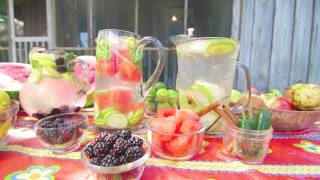
The Food Factor presents the best, research-based information related to food, nutrition, diet, and healthy lifestyles. Our host, Natasha Haynes, is an experienced educator with the Mississippi State University Extension Service who has spent over 15 years sharing tips for healthy living with Mississippians of all ages. She brings food science down to earth and makes it useful for today’s families. Click here to view previously aired shows, and be sure to follow The Food Factor on Facebook and Twitter.
- Delta Marks National Rice Month with Annual Luncheon
Attendees of the 27th annual Rice Tasting Luncheon can sample more than 300 rice dishes during the event Sept. 15, 2017, at the Delta State University Walter Sillers Coliseum in Cleveland. The luncheon is held in conjunction with National Rice Month and highlights Mississippi’s 17 rice-producing counties. (Photo by MSU Extension Service/file photo) CLEVELAND, Miss. – Delta area residents and chefs will show off the versatility of rice– one of Mississippi's four major row crops– during the 27th annual Rice Tasting Luncheon. The event, which celebrates National Rice Month, draws more than 1,000 people from the state, the region, and other countries. As the top rice-producing county in Mississippi, Bolivar County has the honor of hosting the luncheon every year. It begins at 11 a.m. and concludes at 1 p.m. on Sept. 15 at the Delta State University Walter Sillers Coliseum in Cleveland. More than 300 different rice dishes will be available for tasting. Attendees also will receive goody bags, view various exhibits and enter for a chance to win door prizes. The luncheon is hosted by Delta Rice Promotions Inc. and sponsored by the Mississippi State University Extension Service, Farm Bureau and area businesses and organizations. Admission is $5 per person. Tickets can be purchased at the door or in advance from Farm Bureau offices or from MSU Extension offices in the Delta. For more information, call the Extension office in Bolivar County at 662-843-8371.
- Have a Cookie: It's National Chocolate Chip Cookie Day
Celebrate the weekend with National Chocolate Chip Cookie Day! Of course there's the classic chocolate chip cookie recipe, but if you want something a little more exciting than the run-of-the-mill cookie, try these recipes out this weekend to commemorate National Chocolate Chip Cookie Day. "Simply" Delicious Simple Cookies 1 box yellow cake mix 1/2 cup brown sugar 2 eggs 3 tablespoons water 1/2 cup canola oil 1 cup quick oats 1 cup chopped nuts 1/2 cup mini chocolate chips 3/4 Heath (Bits 'O Brickle) almond toffee bits Mix cake mix, brown sugar, eggs, water, and oil by hand about 75 times. Add oats and mix. Then, add nuts, chocolate chips, and toffee bits and mix. Drop cookies onto an non-greased cookie sheet. Bake at 350 degrees F for 12 minutes. Colorado Cookies 1 cup sugar 1 cup brown sugar 1 cup butter, softened 2 eggs 1 teaspoon vanilla 2 cups flour 1 teaspoon baking soda 1/2 teaspoon baking powder 1/2 teaspoon salt 1 1/2 cups oatmeal 1 cup corn flakes 1 cup chocolate chips 1 1/2 cups chunky peanut butter Mix sugars. Blend in butter until fluffy. Add eggs one at a time, mixing well. Add vanilla. Sift together dry ingredients. Mix with sugar/butter mixture. Stir in cereals, chips, and peanut butter. Drop by the tablespoon onto a greased cookie sheet. Bake at 350 degrees F until golden. Chocolate Chip, Toasted Pecan, Coconut Cookies 1 cup sugar 1 cup packed light brown sugar 2 teaspoons vanilla 3 large eggs 3 cups all-purpose flour 1 teaspoon baking soda Pinch of salt 12 ounces chocolate chip pieces 2 cups toasted, chopped pecans 1 cup shredded coconut Preheat oven to 325 degrees F. In a mixer, cream the butter and sugars until fluffy. Add the vanilla and eggs; beat until smooth. In a small bowl, combine flour, sugar, soda, and salt. Slowly add the dry ingredients to the mixer, beating on low until blended. Pour in the chocolate, pecans, and coconut. Fold in by hand with a spatula. Chill dough for 30 minutes. Drop the dough by the spoonful onto a well-greased baking sheet. Bake 12-15 minutes.
- Yiayia's Greek Kitchen Opens in Ridgeland
The city of Ridgeland welcomes Yiayia's Greek Kitchen to town. Yiayia’s is a family-owned business serving authentic, Greek cuisine from recipes handed down from generation to generation. Named for proprietor Despina Mangafakis, Yiayia means "grandmother" in Greek, and Despina is grandmother to two precious grandsons. Guests will find piles of stuffed grape leaves and cabbage rolls, trays of cookies, baklava, and spanakopita (that’s Greek for spinach pie). Entrees include the mouth-watering eggplant dish moussaka, baked fish, roasted chicken and lamb, and the pasta and meat dish, pastitsio. Side dishes include roasted Greek-style potatoes or rice, Greek salad, and Greek-style meatballs. Yiayia’s Greek Kitchen is located at 587 Highway 51, and it open for lunch and dinner Monday through Saturday, 11 a.m. to 8 p.m. Photos courtesy of Yiayia's Greek Kitchen
- Get Your Watermelon Fix at the 48th Annual Water Valley Watermelon Carnival
The 48th annual Water Valley Watermelon Carnival will be held on August 4th and 5th at Water Valley’s City Park. The Watermelon Carnival is Water Valley’s most prized annual celebration. An estimated 20,000 people attend the various events, and it is always set the first weekend in August. The carnival is named among the top 20 festivals in the southeastern United States by the Southeastern Tourism Society. Each year’s carnival is kicked off by a Thursday evening music festival at the Civic Auditorium, sponsored by the Town & Country Garden Club. On Friday, a Street Dance with a fireworks display draws crowds to City Park. Saturday is full of continuous entertainment, food vendors, arts and crafts booths, contests, parades, an antique car show, a 3-K run and much more. This year’s carnival includes melon eating and throwing contests, seedspitting, a car show,, live music, fireworks, biggest melon contest, a pet parade, games, and free watermelon slices. The festival also features a barbecue contest with categories such as best side, best dessert, best sauce, and best watermelon dish. For more information, call 662-473- 1122, or visit Water Valley Chamber online. Free watermelon slices being cut by Mr. Casey Washington
- The Westin Hotel, Estelle Wine Bar & Bistro Open in Downtown Jackson
JACKSON, Miss.– Westin Hotels & Resorts in partnership with Wischermann Partners, Inc. announced the official opening of the brand’s debut hotel in Mississippi, The Westin Jackson. Bringing a new level of luxury and well-being to the state’s capital city, The Westin Jackson boasts 203 thoughtfully-designed guestrooms and suites, a wine bar and bistro, a resort-style spa, as well as the brand’s signature fitness studio and saltwater pool. Specifically designed to celebrate the history and culture of Jackson, Mississippi as “the birthplace of American music,” The Westin Jackson is part of the $60-million public-private development that incorporates rhythmic architectural features and custom artwork, including custom figurines designed by local and renowned artist Anne Robin Luckett, representing various Mississippi cultural icons ranging from esteemed athletes to beloved musicians. The anticipated hotel is poised to support travel and tourism in downtown Jackson – ideally located in the downtown arts and cultural district and steps from the Jackson Convention Complex. “Around the world, travelers are realigning their priorities to put their well-being first, which continues to fuel Westin’s growth in both established cities like Jackson, Mississippi and emerging destinations like Jordan,” said George Fleck, Vice President, Global Brand Marketing & Management, Westin Hotels & Resorts. “With the revival of downtown Jackson and new energy in the city, we are thrilled to introduce a unique wellness proposition for business and leisure travelers, as only Westin can – empowering guests to be their best selves while on the road.” “We are excited to be a part of the resurgence of downtown Jackson; The Westin Jackson will set the bar for the city’s hospitality industry and become an important part of the community,” says Mike Burton, General Manager, The Westin Jackson. “From our iconic Heavenly Bed to our Gear Lending partnership with New Balance, we look forward to delivering a memorable experience to visitors and locals alike.” The Westin Jackson transforms every aspect of a guest’s stay into a revitalizing experience. All guestrooms and suites offer the world-renowned Westin Heavenly® Bed – featuring lush sheets, down cushioning and a patented pillow-top mattress. Guests will revive in the Heavenly® Bath, enhanced with the brand’s Heavenly® Shower, Heavenly® Robe and White Tea Aloe bath amenities, and enjoy in-room high-speed Internet access. In addition to the hotel’s guestrooms and meeting spaces, guests and locals now have the opportunity to experience the hotel’s magnificent amenities including: Estelle Wine Bar & Bistro: Led by Executive Chef Matthew Kajdan, Estelle Wine Bar & Bistro introduces a fresh concept to the city’s dining scene, with a savory menu featuring modern American fare fused with European influences. A café bar by day, Estelle will transform into an upbeat hot spot at night, inviting guests to enjoy the vibrant atmosphere in the wine bar and lounge, or a summer evening out on the spacious patio. The open kitchen style will allow diners to engage with the artistry of cooking by experiencing the sounds, smells and sights that go into their dishes. Estelle’s eclectic beverage program will complement the food selections featuring the most sought-after craft spirits, vermouths, and specialty hand-crafted cocktails. Soul Spa: An oasis of beauty and tranquility, Soul Spa will offer guests the highest quality services, including massages, facials, body treatments, and nail services, within a modern and sophisticated urban setting. Soul Spa will consist of seven treatment rooms, manicure and pedicure stations adjacent to the reception area, sauna, experience showers, and an outdoor courtyard with a whirlpool. The spa is partnered with United Kingdom-based ESPA to carry their premier product line, and is the only ESPA provider in Jackson. State-of-the-Art Fitness: Travelers who wish to continue their fitness routines on the road can participate in the hotel’s RunWESTIN™ program, which features the brand’s Gear Lending Program in partnership with New Balance®, offering workout gear for guests to borrow so they can pack light and stay fit on the road, as well as a run concierge, who hosts group runs for guests and encourage runners of all levels to explore their destination. Boasting Let’s Rise as the brand’s new mantra, Westin is committed to empowering its guests and delivering thoughtful wellness experiences that often reflects their at-home active lifestyle. The hotel’s WestinWORKOUT® fitness studio features the finest exercise equipment from world-class brands in open, airy and well-designed spaces. The fitness studio also features an indoor, saltwater pool, as well as coveted Peloton commercial grade bikes, allowing guests to experience live studio cycling classes from world class instructors, as well as 5,000 on-demand classes. During their stay in “The Birthplace of Blues, Country, and Rock and Roll,” The Westin Jackson invites guests to step into the persona of famous musicians with the Music Legends of Mississippi program. As part of a special room package, Music Legends of Mississippi allows guests to play and enjoy replicas of iconic guitars in the comfort of their own guest rooms. Featured will be exact replicas of guitars played by six of the most legendary guitarists in history who have ties to Mississippi: Muddy Waters, Elvis Presley, BB King, Jimmy Buffet, Prince, and Marty Stuart. When not in use, the guitars are displayed for guests and visitors to see in the hotel lobby. With an eye to Jackson's lush natural surroundings and the capital city's rich history, global hospitality design firm The Gettys Group devised a distinct look and feel for the Westin Jackson. Working with a color palette evocative of nature - soothing neutrals punctuated with mossy greens, plush purples and burnished golds - the design team incorporated undulating organic shapes in the furnishings and artwork to create a modern, serene feel throughout the property, including the guest rooms, event spaces, Estelle Wine Bar & Bistro, and the 6,000-square-foot Soul Spa. A custom large-scale art installation symbolizing the Jackson Prairie region sets the tone at the hotel's front desk, also weaving in allusions to the city's renowned musical legacy. A custom-designed lobby living wall also serves to bring the outdoors in. The Westin Jackson is located at 407 South Congress Street Jackson, in the heart of downtown Jackson, and within walking distance of the Mississippi Museum of Art, Federal Courthouse, Planetarium, and Thalia Mara Hall, the historic music and arts theatre. Also within one block from the hotel, the Jackson Convention Complex features over 300,000 square feet of flexible meeting and exhibit space for convention attendees. For more information on The Westin Jackson, visit www.westin.com/jackson or call (601) 968-8200.
- Elevate Your Burger Game With These Juicy Ideas
With the end of summer sadly in sight, you may be finding your grilling game in need of some fresh inspiration. This weekend, break out the grill and show everyone on the block how your burger reigns supreme. When ordinary condiments just won't cut it, elevate your beef patty with some of these mouthwatering ideas. Create a Burger Bar (because Bloody Bars are so 2016): Pick your favorite fresh toppings and invite your guests to mix and match at your very own Burger Bar. From fresh tomato and basil, to candied bacon and cheese, mix up your grilling routine with a fun an interactive bar like this one featured on Peanut Blossom. Make it a Juicy Lucy: Stuffed with oozing cheddar cheese, this burger (though occasionally a little messy) does not mess around. Create the best Juicy Lucy by taking two thin beef patties and forming them around a delicious, creamy Borden Cheese Cheddar Chunk. Dress It Up: Why cap off your burger with plain ol' ketchup when you can pile your patties with colorful condiments and tasty toppings? Check out the Southern-Inspired BBQ Burger from Borden Cheese, dressed up with American cheese, bacon, BBQ sauce, lettuce, tomato, and onion rings! Whether hosting an informal neighborhood barbecue or whipping up an easy weeknight dinner, it's never too late to up your grill game.
- Vinegar: It's More Than a Cucumber-Pickler
“Ah, the delightful aroma of vinegar wafting through the house.” Said nobody ever. As a couple of ladies discussed the noxious odor of distilled white vinegar while shopping for jars and supplies in the supermarket canning aisle, childhood memories of my grandmother’s kitchen filled with piles of chopped cucumbers and the pungent smell of boiling vinegar reemerged in my mind and sinuses. I swore I’d never follow her example and use any ingredient that smelled as vile as vinegar. As with most things we swore we’d never do, making homemade pickles with, yes, boiling vinegar, is one of my favorite summertime activities. Almost as good as the pickles, I’ve learned that cooking with vinegar can be pleasant and result in flavorful, healthy dishes. A quick perusal of my pantry uncovered not one, but six varieties of vinegar. These tangy liquids are used in a multitude of ways, ranging from de-glazing and making sauces for meat and vegetables; doubling as flavorful meat marinades, especially for chicken that often emerges dry and tasteless from the oven; inexpensive salad dressings and providing an extra “something” to liven almost any dish lacking in taste and flavor. The all-purpose white variety is essential for pickling cucumbers, but my favorite flavor is apple cider, reported to help increase “good” HDL cholesterol and decrease the “bad” kind. I couldn’t make my favorite Memphis coleslaw without it. In fact, after making the recipe given to me by a family friend, I can no longer tolerate mayonnaise-based cole slaw. The combination of apple cider vinegar and sugar, seasoning, and cabbage, carrots, and onions, results in an addictive flavor that far surpasses run-of-the-mill coleslaws. Other vinegars in my pantry are balsamic, which besides a powerful flavor, is thought to help lower blood pressure and its red-wine cousin. The latter minimizes blood sugar spikes, a trait particularly useful for diabetics. Last on the shelf are rice vinegar, filled with phenols linked with reduced cancer risk and raspberry, which besides its delicious flavor, gives weight-loss efforts a kick start. Recipes for using these and other varieties of vinegar are plentiful, but besides dressings and marinades, one of the most basic ways I utilize vinegar is as a substitute for high-calorie vegetable and olive oil. When I’m in a hurry and need to sauté meat or vegetables on the stovetop, I combine a little vinegar (either balsamic or apple cider) with chicken broth, dash of low-sodium soy sauce, and a drop of honey, which counteracts vinegar’s bitterness. It’s a healthy way to cook and even better, the remaining sauce can be ladled over the meat and side dishes. Pasta is another favorite meal, but topping it with fattening meat sauce or Alfredo dressing is reserved for special occasions. For a quick, waistline-friendly meal, I cook dried pasta in my Microwave Pasta Boat (if you don’t own one, you’re missing out), then lightly brown the cooked pasta in a skillet with a teaspoon of butter, cup of chicken broth and a splash of rice vinegar. It’s a hearty and here’s the best part, relatively healthy pasta meal. Last weekend, creating a healthy baked chicken and vegetables dinner for a crowd was on my agenda. However, the thought of rubbery chicken and bland vegetables was as distasteful as my grandmother’s vinegary kitchen. Instead, I marinated the chicken overnight in a bath of herbs, apple cider vinegar and the secret ingredient, honey. The chicken turned out moist and delicious and the accompanying sauce did double duty as a topping for both. Give vinegar a chance when planning healthy meals. It’s come a long way since it filled our grandmothers’ kitchen with a scent we’ll never completely forget. One-Pan Secret Ingredient Marinated Chicken and Vegetables 4-5 chicken breasts with rib meat, washed and patted dry 1 cup apple cider vinegar (can use balsamic if you prefer) 2 tablespoons honey 2 tablespoons Dijon mustard 1 teaspoon minced garlic 1/2 teaspoon dried oregano 1/2 teaspoon dried basil Salt and ground black pepper, to taste 16 ounces baby red potatoes, quartered 2 cups baby carrots 1 pound asparagus, trimmed (can use long green beans if you prefer) In a bowl, whisk together vinegar, honey, Dijon mustard, garlic, oregano and basil; season with salt and pepper, to taste. In a gallon size Ziploc bag, combine vinegar mixture and chicken; close and marinate in the refrigerator for at least an hour, preferably overnight, turning the bag occasionally. When done, drain the chicken from the marinade. Preheat oven to 400 degrees. Place a stick of butter on a large baking sheet and put it the oven to melt. When butter is melted, place a layer of potatoes down one side of the pan and layer of carrots on the other side. Place chicken down the middle of the pan between potatoes and carrots. Drizzle all with olive oil and season with salt and pepper. Place pan in oven and roast about 25-30 minutes, or until the chicken is completely cooked through, reaching an internal temperature of 165 degrees. Place asparagus around sides of chicken during the last 10 minutes of cooking time; drizzle with olive oil and season with salt and pepper. Remove pan when done; allow chicken to rest for five minutes before serving. Note: If serving a side dish like rice or mashed potatoes, stir up an additional recipe of the marinade and serve on the side to drizzle over chicken and the side dish. Recipe doubles easily.
- Early Planting Helps State's Soybean Crop
Producers planted much of Mississippi’s soybean crop early, allowing it to avoid many late-season threats from diseases and insects. These soybeans were growing July 25, 2017, on the Mississippi State University R.R. Foil Plant Science Research Center in Starkville, Mississippi. (Photo by MSU Extension Service/Kevin Hudson) STARKVILLE, Miss. -- Most of the state's soybean crop has a very good yield potential despite some challenges coming late in the season. Trent Irby, soybean specialist with the Mississippi State University Extension Service, said growers planted more than 60 percent of the crop in April. "We had more soybeans planted in April than we've had in years," Irby said. "We had several windows that month where it was warmer than usual and dry enough to plant, and growers took advantage of those planting opportunities." This early planting date is an advantage on many acres, as the crop has the potential to avoid times when it is vulnerable to certain diseases and insect pests common at this time of year. The U.S. Department of Agriculture estimated that 90 percent of the crop was blooming and 76 percent was setting pods by July 23. Those figures are well ahead of the five-year average, and the overall crop condition is rated as 70 percent fair or good and 22 percent excellent. Irby said disease pressure has been manageable to this point in the year, although growers are concerned about target spot, which was a problem in 2016. “So far, disease issues haven’t been out of the norm in Mississippi,” Irby said. “A lot of that is environment-dependent. We had a lot of rain and lower than normal temperatures in June, but disease pressures remained relatively light during that period. July has been much warmer with more scattered rains, but we still need to pay close attention for any disease development moving forward, particularly on the later planted part of the crop.” Angus Catchot, Extension entomologist, said Mississippi soybean growers are dealing with two insects, but which pest is a problem depends on when the crop was planted. “Corn earworms or bollworms are a problem now in later planted soybeans, and redbanded stinkbugs are a problem in earlier planted soybeans, mostly in the southern part of the state,” Catchot said. Most of the state’s soybeans were planted early and will miss the bollworm problem. Later planted soybeans in the Delta are flowering and are susceptible to this pest, but Catchot said growers have bollworms under control. Redbanded stinkbugs are another issue. “Redbanded stinkbugs are a lot more difficult to control and more damaging than our traditional stinkbugs,” he said. “Particularly south of Highway 82, we have a lot of redbanded stinkbugs in our system that are being treated.” When the early-planted soybeans mature and begin to dry down, late-planted soybeans are among the only green plants left on cropland. “I’m anticipating we’ll have a lot more pressure from redbanded stinkbugs then,” Catchot said. “We need to make sure we’re on top of scouting for these pests in the coming weeks.” The other challenge facing this year’s soybean crop is off-target movement of dicamba, an herbicide applied to resistant crops that can volatize, or become airborne, and drift away in a vapor. This problem can damage other nearby crops not resistant to dicamba. “There are concentrations of this herbicide that may not cause a yield reduction, and there are concentrations that will,” Irby said. “Without knowing the concentration, there’s no way to know what the potential impact on yield will be on the affected acres.” Growers who suspect there is an off-target movement issue in their fields are encouraged to contact the Bureau of Plant Industry in the Mississippi Department of Agriculture and Commerce.
- Sauvignon Blanc: A Perfect Balance of Sweet and Acidic
We have found over time that people who hate chardonnay seem to gravitate to sauvignon blanc because it is distinctly different and more refreshing on warm days. We get that its crisp acidity and generous grapefruit flavors are palate cleansers, but on the same token, the grassy and citrus attack on the palate can make the mouth pucker. Finding the right sauvignon blanc for your palate is like walking through a minefield. In general, New Zealand sauvignon blancs have more grassiness. Not everyone likes a wine that reminds them of freshly mowed grass. California sauvignon blancs are all over the board. We favor those that add some musque clone to round off the flavors. Adding semillon also can mute the astringency of sauvignon blanc. Here are some sauvignon blancs we recently tasted and enjoyed: Decoy Sonoma County Sauvignon Blanc 2016 ($20). From the fabulous Duckhorn portfolio, this simple sauvignon blanc with a dash of sweetness delivers generous flavors and good texture. Varietal grapefruit character with good acidity and a dash of sweetness that seems to round off the edges. Matanzas Creek Sonoma County Sauvignon Blanc 2016 ($15). Every year, this wine strikes us as one of the most unique in a crowd of typical, varietal sauvignon blancs. It is due to the winemaker's daring use of various clones, including the assertive musque clone, that provides big aromas and a peach and mango profile. Flora Springs Napa Valley Sauvignon Blanc 2016 ($26). This wine was aged for seven months in a combination of stainless steel, oak, and concrete to give it more complexity. Layered grapefruit, pear, and citrus flavors with a dash of spice on the finish. Deliciously round in the mouth. Quivira Vineyards Sauvignon Blanc 2016 ($18). One of our favorite of this year's sauvignon blancs, this Dry Creek version has grassy aromas, but ripe and sweet melon and pineapple flavors. Sidebar High Valley Sauvignon Blanc 2015 ($20). David and Carla Ramey founded this Lake County winery just a few years ago, and these new releases show the winemaker's talents. This sauvignon blanc is aged sur lies in a variety of vessels and includes some musque clone to give it more texture. Crisp acidity and grapefruit citrus flavors. Sidebar’s single vineyard Ritchie sauvignon blanc is a tasting experience but will set you back $34. Stag’s Leap Wine Cellars Aveta Sauvignon Blanc 2015 ($26). The musque clone in this incredible sauvignon blanc and six months of sur lies aging provides a delicious roundness and some unique flavors not often seen in your normal sauvignon blanc. In short, we loved it. Mango, tangerine notes with crisp acidity, just a touch of grass, excellent balance and length. One of our favorite sauvignon blancs this year. Matanzas Creek Sauvignon Blanc Sonoma County 2015 ($22). Matanzas Creek has produced world-class sauvignon blanc since 1977, and this example is no exception. Very elegant without the excessive acidity and overwhelming citrus notes that plague some sauvignon blancs. It is blended with a mellowing dose of 7 percent semillon. That and 20 percent barrel fermentation in neutral oak barrels produces a balanced drink, featuring grapefruit and peach elements. Mud House Sauvignon Blanc 2915 ($17). Fresh from New Zealand, this zingy sauvignon blanc has varietal grapefruit character and herbal aromas. Balanced and good acidity, it will do well with spring fare. Wither Hills Winery Rarangi Sauvignon Blanc Marlborough 2015 ($25). This New Zealand producer is new to us, but we were impressed with its two sauvignon blancs from the Wairu. This single-vineyard edition is packed with citrus and grapefruit flavors. Freemark Abbey Napa Valley Sauvignon Blanc 2016 ($25). A little semillon goes a long way in this delicious quaff. Bright acidity but a mid-palate roundness that reminds us of melon and apples. Nice citrus aromas too. Shooting Star Sauvignon Blanc 2016 ($14). Good varietal character and, although simple, delivers good value. Fresh acidity, grapefruit flavors and some nice citrus zest. Ladera Napa Valley Sauvignon Blanc 2016 ($30). The sauvignon musque clone in this wine gives a broader and melon profile that we so enjoy. Varietal grapefruit flavors are complemented by lemon zest and fresh acidity. Montes Spring Harvest Sauvignon Blanc 2017 ($16). Citrus and peach notes dominate this floral and crisp sauvignon blanc from the Leyda Valley in Chile. Gamble Vineyard Sauvignon Blanc 2016 ($25). Four clones, including musque, are used to create this wonderful, multi-dimensional wine. Nobilo Icon Marlborough Sauvignon Blanc 2016 ($22). This New Zealand wine has many fans in our circle. Classic citrus and copious grapefruit flavors with tangy citrus notes. This is for those of you who like your bold New Zealand sauvignon blancs. Robert Mondavi Fume Blanc 2015 ($20). Mondavi clings to its iconic "fume" when labeling its long-serving sauvignon blanc. That pleases us because it has a unique style with expressive aromas and layered citrus and peach flavors. Rich texture is boosted by a bit of semillon added to the blend. Mercer Horse Heaven Hills Sauvignon Blanc 2015 ($15). Grapefruit and citrus notes with a dash of lychee. Kendall-Jackson Avant California Sauvignon Blanc 2015 ($13). Very nice apple and lemon notes with a bit of sweetness and a good balance. Charles Krug Sauvignon Blanc 2016 ($18). Beautiful aromatics with generous grapefruit and lime flavors, balanced acidity and long finish.
- MDMR to Begin Second Phase of Oyster Restoration Program
Image courtesy of MDMR BILOXI, Miss. – In August, the Mississippi Department of Marine Resources will start on the second phase of a program to rebuild and revitalize oyster reefs in the western Mississippi Sound. During this phase, employees and contractors will plant approximately 160 acres of cultch material on several reefs by the end of August. “The purpose of this project is to restore Mississippi’s oyster reefs and increase future production,” said Erik Broussard, director of MDMR’s Shellfish Bureau. “By the end of the year, we will have planted more than 600 acres of cultch material. We also will do an additional planting next spring to continue restoration efforts.” The reefs included in the August planting are Pass Christian, Henderson Point, Pass Marianne and St. Joe. Broussard asked that fishermen with crab traps in these areas move them until the cultch planting is complete. This project is being funded by NOAA National Marine Fisheries Service. The fisheries disaster funding was the result of the 2011 opening of the Bonnet Carre Spillway, which damaged both the oyster and crab fisheries in Mississippi. The Mississippi Department of Marine Resources is dedicated to enhancing, protecting and conserving marine interests of the state by managing all marine life, public trust wetlands, adjacent uplands and waterfront areas to provide for the optimal commercial, recreational, educational and economic uses of these resources consistent with environmental concerns and social changes. Visit the DMR online at dmr.ms.gov.
- Beat the Heat with These Summer Smoothies
The summer heat doesn't seem to be going anywhere anytime soon. Ice cream is one way to cool off after a hot day, but if you're looking for something a little healthier, check out these smoothies from Mississippi Kitchen that are a refreshing and nutritious way to beat the brutal Mississippi heat. Strawberry Mango Sweet Tart Smoothie Mint and Cilantro Pineapple Smoothie Toasted Pecan and Coconut Smoothie Chocolate Chip Strawberry Smoothie Bowls
- The Food Factor: Zoodles
The Food Factor presents the best, research-based information related to food, nutrition, diet, and healthy lifestyles. Our host, Natasha Haynes, is an experienced educator with the Mississippi State University Extension Service who has spent over 15 years sharing tips for healthy living with Mississippians of all ages. She brings food science down to earth and makes it useful for today’s families. Click here to view previously aired shows, and be sure to follow The Food Factor on Facebook and Twitter.
- Executive Chef Named for Fine & Dandy, Coming Fall 2017
JACKSON, Miss. —Miller Hospitality, the Jackson-based restaurant development company behind Fine & Dandy, today announced Jesse Houston as culinary director and acting executive chef of Fine & Dandy. An award-winning chef, Houston brings a creative dynamic to Miller Hospitality that will be instrumental in Fine & Dandy’s culinary development. Slated for a fall opening in The District at Eastover, Fine & Dandy is an upscale burger restaurant that will include a lighter, more progressive take on American classics. “I have been watching Jesse develop as a chef since he worked with Craig Noone and I thought, 'here’s a guy that’s adding something new to the culinary scene in Jackson,'” said Ray-Scott Miller, President of Miller Hospitality. “He has this crazy ability to make forward-thinking food approachable. Besides that, his food tastes amazing.” A James Beard Semi Finalist for “Best Chef South” in 2016, Houston most recently worked in Jackson at Saltine Oyster Bar, a concept he opened in 2014 that was named one of Bon Appétit’s “Best Restaurants” and one of Southern Living’s “Best New Restaurants.” He first moved to Jackson in 2010 to assist Chef Craig Noone in opening Parlor Market, and he briefly worked under John Currence at City Grocery in Oxford. A native of Dallas, Houston attended Texas Culinary Academy and has been featured in Garden & Gun, Southern Living and Bon Appétit. Most recently, Houston has traveled the world to explore cuisine with stops in Japan and Vietnam, as well as a four-month residency in Tulum, Mexico. Fine & Dandy introduces a fresh approach to Southern hospitality that will be evident in the restaurant’s food and service, but also in its modern yet comfortable dining space, thoughtfully designed to deliver an experience perfect for sharing time with family or drinks with friends. About The District at Eastover The District at Eastover represents the best of mixed-use urban revitalization in the heart of Mississippi’s capital city. Conveniently located between Jackson’s historic Eastover and Fondren neighborhoods and adjacent to the I-55 corridor and the University of Mississippi Medical Center, The District offers a transformative destination characterized by boutique shopping, acclaimed restaurants, thoughtfully-planned office space and luxury residential living opportunities. Learn more about The District at www.thedistrictateastover.com.