Search this site
1736 results found with an empty search
- Food Factor: Pumpkin Spice Oatmeal Muffins
by Ms. Natasha Haynes, MSU Extension Service Video by Jonathan Parrish Whether you love or hate the pumpkin spice craze that takes over every fall, you can’t deny that pumpkin is a healthy food! High in fiber, low in calories and packed with vitamin A, pumpkin is a terrific addition to your diet. When shopping for pumpkin puree, be sure you don’t buy pumpkin pie filling. For even healthier muffins, substitute whole-wheat flour for half of the all-purpose flour. You can make these in a mini-muffin pan or in a standard-size muffin pan. Next time I make these, I’ll probably add more pumpkin pie spice for a bolder flavor. Happy fall, y’all! Pumpkin Spice Oatmeal Muffins Ingredients: - 1 1/2 cups all purpose flour - 1 cup quick oats - 3/4 cup brown sugar - 1 tablespoon baking powder - 1/2 teaspoon baking soda - 1/2 teaspoon salt - 1 1/2 teaspoons pumpkin pie spice - 1 egg, slightly beaten - 1 cup pumpkin puree - 3/4 cup low fat milk - 1/3 cup oil Topping: - 1/4 cup quick oats - 1 tablespoon brown sugar - 1 tablespoon melted margarine or butter - 1/8 teaspoon pumpkin pie spice Wash hands with soap and water. Spray muffin tins with cooking spray or use muffin liners. In a medium bowl, combine flour, quick oats, brown sugar, baking powder, baking soda, salt and pumpkin pie spice. Break egg into a small bowl. Wash hands with soap and water after cracking raw egg. Add pumpkin, milk and oil to egg. Mix well. Add liquid ingredients to dry ingredients and stir until just moistened. Fill muffin cups two-thirds full. Mix topping ingredients. Sprinkle topping evenly over muffins. Bake mini muffins at 400 degrees F for 8 to 12 minutes or until evenly browned. Bake regular-sized muffins for 15–18 minutes. Thanks to the University of Nebraska-Lincoln Extension for this recipe! For behind-the-scenes photos, crew reviews, and terrific kitchen tips, be sure to follow The Food Factor on Facebook, Twitter, and Instagram! And if you like our recipes and videos, we’d love for you to share them with your friends! It really helps!
- More Merlot, Please
by The Wine Guys, Tom Marquardt and Patrick Darr We can’t read a critique of merlot without a reference to “Sideways,” a 2004 movie that portrayed merlot as a lowly wine and thus put the nail in a coffin of a grape variety that was already sliding downhill. Watching Miles dump a spit bucket over his head was good for laughs, but isn’t it time we give the merlot joke a rest? In fact, there is a lot of good merlot being made today on the West Coast. Although there is still the occasional merlot that is too vegetal and green – the result of stem contact -- the bulk of the merlot we tasted in the last few weeks is ample reason to renew respect for this maligned grape variety. Next to cabernet sauvignon, merlot is the second most planted grape variety in the world. It is one of several noble grapes that go into the best Bordeaux. Petrus, one of the most expensive wines in the world, is made entirely with merlot. Merlot has a wide array of flavors, depending on where and how it is grown. Blackberries, raspberries, plums and black cherries are common flavors. The tannins are usually soft, which makes the wine more approachable than many premium cabernet sauvignons. Alas, the best merlots we tasted were expensive. These wines are full-bodied and easy to confuse with cabernet sauvignon. Here are the top 10 we recently tasted: St. Supery Merlot Estate Rutherford Napa Valley 2015 ($50). This wine exhibits wonderful intense plum, cherry and cedar notes in a delicious package that shouldn’t be missed. It was one of the most accessible and enjoyable merlots in the tasting. Stags’ Leap Wine Cellars Block 20 Merlot 2017 ($70). Using the best grapes from one block, Stags’ Leap has a colossal merlot with plum and clove aromas. The full-bodied palate is of rich and silky raspberry and cherry flavors with hints of cocoa and spice. Duckhorn Vineyards Napa Valley Merlot 2017 ($56). It’s impossible not to reach for another glass of this approachable, softly textured merlot. Blended with 16 percent cabernet sauvignon and a little cabernet franc, petit verdot and malbec, it has broad and ripe dark fruit flavors with tantalizing hints of licorice and chocolate. Vanderbilt Reserve Dry Creek Valley Merlot 2017 ($35). Blackberry and vanilla aromas lead into a ripe palate of raspberries and blueberries. Firm tannins, full body make it a wine to pair with beef. Sullivan James O’Neil Napa Valley Merlot 2015 ($250). At this price, we understand why you may not want a case. But we list it because the wine shows what magic can be done with this grape variety. It is unquestionably the most powerful merlot in our tasting. Immense tannins, dense flavors and great complexity. Plum aromas and rich dark cherry flavors with lingering hints of cocoa powder and leather. Peju Napa Valley Merlot 2016 ($48). This merlot combines elegance with power to make a delicious, rich wine that can age for five years or more. Very aromatic with pomegranate and cranberry notes and soft dark berry flavors with a hint of vanilla. La Jota Vineyards Napa Valley Merlot 2017 ($85). Drawing grapes from two vineyards on Howell Mountain, this showy merlot is a good example of a winemaker’s deft hands. Dense and rich black cherry notes, floral nose, and hints of dried herbs, coffee and mineral. Long finish. Hickinbotham The Revivalist McLaren Vale Merlot 2017 ($70). You don’t think of Australia for its merlots, but this dynamite version from Hickinbotham scores points with its generous plum and strawberry flavors and balanced acidity. There’s a nice mineral and earthy character to it. Mt. Brave Mt. Veeder Merlot 2018 ($80). Nearly 1,800 up Mt. Veeder, the Mt. Brave winery draws from a great source of grapes for this serious and complex merlot with plum and dark red cherry fruit and hints of vanilla and spice. Firm tannins make it a keeper too. Decoy Sonoma County Merlot 2018 ($25). A good value in a sea of expensive merlots, the Decoy has beautiful black cherry and blueberry flavors with hints of chocolate and mineral. Wine picks Los Moradas de San Martin Senda 2017 ($13). We can’t remember the last time we fell in love with a wine so much that we ordered a case online. Unable to find it in local stores, we had to pay shipping fees, which raised the price to $15 a bottle – but it’s still a great bargain. From the Madrid side of the Gredos range of hills in Spain, this producer is focused on old vine garnacha. The depth, texture and tannins in this wine suggested a cost of $40 or more. Generous aromas with plum and black cherry flavors, a bit of minerality and vanilla. We also tasted the producer’s 2013 Initio garnacha and it was showing beautifully. Four Vines The Kinker Cabernet Sauvignon 2018 ($18). Petite sirah and grenache is added to this Paso Robles cabernet sauvignon to give it more color and broader flavors. Ripe dark fruit aromas with fruit-forward flavors of currants, plum, cassis. Black Stallion Limited Release Napa Valley Cabernet Sauvignon 2017 ($60). Using grapes from higher elevations on Diamond Mountain and Atlas Peak, winemaker Ralf Holdenried has crafted an accessible cabernet sauvignon with blackberry aromas and jammy dark berry fruit. Gary Farrell Russian River Valley Chardonnay 2018 ($35). You get a lot of good chardonnay for the money with this delicious and balanced wine. Drawing grapes from several vineyards, the chardonnay has melon and grapefruit flavors and crisp citrus and stone fruit flavors.
- It's Soup Season, Y'all
There is something about this time of year that makes you want to curl up with a big ole bowl of soup and some cornbread or crackers. This fall, try out one of these delicious soups that you'll want to make over and over again. Smoked Sausage Corn Chowder Potato Pimento Cheese Soup Hamburger Veggie Soup No-Bean Chili Tomato Basil Soup
- Get In the Holiday Spirit with Cotton House Hotel
CLEVELAND, Miss. - From November 6 through December 31, downtown Cleveland transforms into a winter wonderland with over 100,000 holiday lights, a Christmas tree and appearances by Santa Claus! Steps away, Cotton House is filled with plenty of holiday cheer and accommodations as cozy as home. To celebrate the season, join Cotton House for the second annual Holiday Workshops: a holiday series of painting, dancing and libations! With art classes for the kids to cocktails on the roof for the adults, your holiday stay at Cotton House is one you won’t soon forget. Join Cotton House Hotel on these dates: Friday-Sunday, November 6-8 Saturday, November 7 Saturday, December 5 Saturday, December 12 Event Details: Holiday Open House in Cleveland November 6-8 Hot chocolate in the lobby 25% off Cotton House gift cards purchased that weekend Live music in the lobby on Saturday, November 7, from 3 - 5 p.m. by Lions of Winter Kids Art Class with Delta Art Alliance Saturday, December 5 10 a.m. - noon in Peavine Room $30 per ticket Purchase tickets here Santa Claus Saturday, December 5 3 - 5 p.m. in Donelson Room Adult Paint Class with Delta Art Alliance Saturday, December 5 5 - 7 p.m. $50 per person, includes 2 glasses of wine and appetizer Purchase tickets here Cocktail Making Class "Up on the Rooftop" With Melissa Townsend and Milk Punch Saturday, December 12 3 - 5 p.m. at Bar Fontaine $55 Purchase tickets here
- Food Factor: Banana Boats
by Ms. Natasha Hayne, MSU Extension Service Video by Jonathan Parrish Do you ever feel like you have to trick your kids into trying new foods or eating healthier options? Sometimes all it takes is a different cooking method to turn a finicky eater into a fan! Most people don’t think of fruit as a hot treat unless it’s a sugar and fat-loaded pie or cobbler. These Banana Boats can be cooked on a grill, in the oven or even over a campfire or fire pit! The best part is their versatility. The original recipe calls for a tropical combination of banana, pineapple and coconut. But you can try other combinations, too: banana and strawberry, banana and blueberry or even banana and peanut butter! Banana Boats Ingredients: - 1 banana with peel - 1 tablespoon crushed pineapple - 1 tablespoon coconut flakes Leave the peel on the banana and make a deep cut down the long side through the peel and into the banana. Do not cut all the way through. Gently pull the cut apart to make a pocket in the banana. Fill the pocket with crushed pineapple and top with coconut flakes. Wrap the banana in foil. Place on a grill or near the coals of a campfire. Heat until warm, about 5 minutes at medium-high heat. Carefully remove the foil packet from the heat. Let cool slightly and remove foil. The peel may be black, but the inside will be warm and delicious. Refrigerate leftovers within 2 hours. Notes: Not grilling? Bake the foil packets in the oven at 350 degrees F for about 15 minutes. Try other fillings—peanut butter, chopped nuts, other fruit, a drizzle of honey, or a sprinkle of cinnamon. (Honey is not recommended for children under 1 year old.) Thanks to our friends at Oregon State University Extension’s Food Hero program for this printable recipe! If you like healthy desserts, don’t miss our popular Tropical Angel Cake recipe! For behind-the-scenes photos, crew reviews, and terrific kitchen tips, be sure to follow The Food Factor on Facebook, Instagram, and Twitter! And if you like our recipes and videos, we’d love for you to share them with your friends! It really helps!
- Lettuce, Collards Thrive In Cool-Season Gardens
by Dr. Gary R. Bachman, MSU Extension Service Baby leaf lettuce is easy to grow at home in containers, allowing gardeners to grow their own for salads all winter. (Photo by MSU Extension/Gary Bachman) Last week, I sang the praises of my favorite cool-season vegetable and explained how it is both edible and ornamental. Kale is a multitasking super food that is really easy to grow from seed. But there are other great cool-season vegetables like lettuce and collards. I consider these must-haves for my garden, and they also are easy to grow from seed, especially in containers. The cooler months of winter are the perfect time to grow lettuce. Lettuce can tolerate frost and light freezing temperatures. And when temperatures are cool, it doesn’t get bitter like it does when grown in the heat of summer. You don’t even have to grow it in your normal vegetable garden. Try growing lettuce in containers to save money and add spice to your landscape. I like to grow both baby leaf and mini head lettuce. The mini heads are the perfect size for individual salads. There are many types available, and I like the mini romaine and mini buttercrunch the best. Mini head lettuce is perfect for bi-weekly succession planting. Sow the seed densely, much like sowing grass seed, and then you can harvest lettuce after about 21 days. If you don’t grow your own, you can buy baby leaf lettuce in the grocery store, usually sold as mixes of several varieties and colors. Whether home-grown or store-bought, these add mealtime interest. Collard greens are another classic leafy vegetable for our Mississippi gardens. The best-tasting collards are those grown in the fall through the winter and into the spring. This makes sense as collards don’t tolerate high temperatures very well. Like our other leafy greens, collards are very appreciative of cooler temperatures, even frosts and freezes. The colder temperatures intensify their flavor profile. There are many varieties of collards available, including hybrid and open-pollinated types. MSU Extension recommends the following varieties for Mississippi gardens: Vates, Top Bunch, Georgia LS, Blue Max, Champion and Tiger. Like lettuce, collards also can be grown in containers. Growing leafy greens in containers is more manageable and requires much less weeding. You will be surprised how many plants will grow in a tight space when you grow them in containers. Even if you only have a small patio, balcony or sunny kitchen window, you can still enjoy fresh greens. Be sure to place your containers where they will be easily accessible. This can be on your patio, doorstep, or even windowsill. Keeping them accessible will allow you to maintain them well so you can enjoy fresh salads through the winter. Most retail garden centers have seeds readily available, or you can order them online. However, the increased gardening interest due to the COVID-19 pandemic has resulted in shortages of many varieties of vegetables. So if you want to grow some of these leafy greens, don’t wait. If you’d rather not start yours from seed, many garden centers should be offering transplants of these leafy greens that you can grow instead.
- Aperture Wines and Merlots for National Merlot Month
by The Wine Guys, Tom Marquardt and Patrick Darr Behind every winemaker is a good story and it doesn’t get any better than that of Jesse Katz. At age nine, he joined his father – an accomplished photographer, (both pictured right) – on assignment around the world. One would think he eventually would pursue photography. But the photos of California wine country convinced him otherwise. He pursued wine. “Dad barely knew the difference between white and red zinfandel,” Katz said of his father Andy. “But I fell in love with the cultures and met some influential people, including Robert Mondavi.” When it came time to go to college, Katz first pursued business and then caved to his desire to make wine. Soon after getting a degree in viticulture and oenology at Fresno State, he was honing his understanding of terroir at Petrus and Haut Brion and developing an appreciation of malbec at Bodega Noemia in Argentina. About the time he felt he knew enough to make premium wine, you would think he would plant roots in prestigious Napa Valley. But he chose Sonoma County instead. “I wanted to showcase an area,” he said. “It’s hard to do that in Napa because of the barrier of entry for new winemakers. That’s one of the faults of Napa – it’s pushing out young winemakers because of the price points. There is a level of discovery in finding new areas in Sonoma County.” He found choice vineyards in eastern Alexander Valley where nighttime temperatures are cooler than those of Napa Valley. The more temperate, coastal-influenced climate here lengthens the growing season by two weeks and gives him the “balance and elegance” he wants from cabernet sauvignon. He founded Aperture – a fitting tribute to his photographer father – in 2009, and before he was 30, he was labeled an impressive young winemaker by Forbes. He’s not a maverick any more, but at a still young 36, he is an accomplished winemaker whose wines are turning heads. There’s a two-year wait to get some of Aperture’s most exclusive wines. We recently joined Katz for a virtual tasting and was impressed by the unique character of his wine. By commanding control of leased vineyards, Katz is able to apply the viticultural education he got from his time at Cheval Blanc to extract the expression he seeks from the soil – a commitment so important that his front label indicates if the grapes come from a specific soil type. We don’t know anyone else who does that. “The human touch can only go so far, but place has so much to do with the wine,” he said. True to his training, he brings respect to malbec, a grape all but abandoned in Bordeaux and often abused in Argentina. “It’s the most difficult variety to farm,” he said. “You can have a wine that will give green and jammy flavors all at once.” Canopy management and thinning the fruit allows him to avoid the traps other winemakers walk into with malbec. The 2017 Aperture Right Bank Red Blend ($55) is an almost even blend of cabernet sauvignon and malbec. The vineyard blocks he uses are clay soil type, which Katz believes lengthens the growing season to achieve full phenolic ripeness. It is a very concentrated blend with floral aromas, fresh red berry fruit and a spicy finish. Like all of his red wines, the blend avoids the over-extraction that plagues many California wines and instead strikes a silky elegance. Equally refined is the 2017 Aperture Cabernet Sauvignon ($70), which includes some malbec and merlot. Full-bodied, it shows off ripe blueberry and blackberry fruit and finishes with some nice minerality and a hint of dark chocolate. The soil here is volcanic and the steep hillsides stress the vines to make the grapes smaller and more intense. Katz admitted his cabernet sauvignon has a “green element,” a term sometimes used derisively to describe a number of under-ripe wines from California and even Bordeaux. But in Aperture’s wines the greenness gives the wine vibrancy and freshness. “It’s a natural element in all great cabernets. Most winemakers freak out at greenness, but it fades. Fresh style balances it out,” he said. We also loved the 2019 Aperture Sauvignon Blanc ($40) made from grapes from the Dry Stack Vineyard in Bennett Valley. Katz blends 2 percent of semillon into the wine in true Bordeaux style and ages it in oak for six months. It is an expressive, aromatic sauvignon blanc with mouth-watering flavors of melon, apricot, spice and tropical fruit. This is not your grassy New Zealand sauvignon blanc. Semillon does wonders to sauvignon blanc, but Katz admitted it is hard to find in California. He’s planting his own with a clone from Chateau d’Yquem – favorite of the estate’s viticulturalist. We can’t wait to taste the results. Normally, his annual production is between 10,000 and 12,000 cases, but this year’s fire is expected to reduce the 2020 production to 5,000 cases. Most of Aperture is sold through its website and some of the single-vineyard wines have a waiting list. Katz cherishes his business partnership with his father, whose photos grace every label and who likes to be involved in the blending. But despite the relationship, the images aren’t free. When we asked how much the photos cost the winemaker, Katz said “pallets” of wine. We suspect the elder Katz now knows the difference between red and white zinfandel. Merlot month October is merlot month, and we’ve spending a lot of time tasting this often-maligned grape variety. We’ll have a more thorough report in a couple of weeks, but for now here are a couple of merlots to honor the occasion: Barnett Vineyards Napa Valley Estate Merlot 2018 ($70). Hal Barnett and crew battled fires surrounding their property on Spring Mountain, but appears to have survived significant damage. What a relief because it would be a shame if Barnett didn’t produce this estate-bottled merlot in 2020. The 2018 has ripe black cherry notes with distinctive hints of eucalyptus and chocolate. Soft texture and long finish. St. Supery Rutherford Estate Merlot 2015 ($50). St. Supery scores again with one of its underrated grape varieties. With just some cabernet sauvignon and cabernet franc in the blend, the wine shows off the bountiful merlot fruit: ripe blackberry, plum and raspberry notes mingle with subtle chocolate, espresso and graphite. Luxurious mouthfeel. Flora Springs Merlot Napa Valley 2017 ($35). Big pure black cherry elements with a beautiful chocolate finish creates a big complex and satisfying wine. Made entirely of merlot and aged in French oak. Credit for images goes to Aperture Cellars
- The Fish House Met All Expectations and More
by Kara Kimbrough Want to know what makes my day? It’s when I enjoy the food at a restaurant I’ve heard about for years but never took the time to check out. Usually it’s because I mistakenly felt it would not be to my liking. I was pleasantly surprised when I visited the Shivers Creek Fish House in the small Simpson County community of Pinola recently. I admire our state’s ability to raise and import fresh catfish, but the fried version is not my favorite dish. Because I’d heard the restaurant was known for catfish, I wasn’t in a hurry to dine there. My opinion changed after my visit. There are multiple reasons why. First, upon walking in most restaurants and smelling the aroma of food, hunger pains hit. Having to wait for food to be delivered is not my favorite experience. The opposite happened when my friend and I sat down in the sprawling dining room at Shivers Fish House. Our waitress immediately delivered bowls of coleslaw, hushpuppies and greens. I’ve sampled all three at numerous seafood restaurants. These dishes were fresh, lightly seasoned, cooked without a lot of grease and some of the best I’ve ever tasted. Like other thriving fish-centric restaurants that have found their niche, Shivers’ menu includes plenty of fried catfish, along with shrimp, oysters and salmon. Seafood can be prepared to your liking, including fried, blackened or, in the case of shrimp, boiled. Catfish plates range in price from $14.99 to $16.99 and my selection, fried (or blackened) shrimp plate, is $15.99 to $17.99. Fried oysters are $15.99 or $26.99 for two dozen. Additional seafood dishes include grilled salmon ($19.99) and crab cake dinner ($16.99). In addition to seafood, friends have raved about Shivers’ steaks. I didn’t try one on my first visit, but the ones delivered to neighboring tables looked – and smelled – amazing. Selections include the 12 or 16-ounce ribeye ($26.99 to $27.99), 12-ounce ribeye and shrimp ($29.99) and for those with smaller appetites, hamburger steak ($14.99) served with gravy and onions. Besides the three appetizers already delivered to the table, seafood can also be accompanied by several sides, ranging from baked potato, fries and salad. If any of these aren’t to your liking, a lineup of appetizers in the $7 to $8 range can be added to any meal. These included fried pickles, blooming onion, fried jalapeno poppers and cheesy bacon ranch fries, to name a few. The word “fried” sends many health-conscious people into shock, but Shivers’ offerings are not heavily-breaded or greasy. It’s evident in the appearance and flavor of the main star – fried catfish –and the lightly-seasoned, crispy fried shrimp I enjoyed - the restaurant’s cooks are skilled at preparing and frying food. Those looking for a lighter meal can sample a shrimp salad or chicken salad ($12 range) or a large and smaller dinner salad ($7 to $8 range). Also, grilled chicken dinners and baskets ($10.99 to $12.99), shrimp, oyster, fish or chicken po'boys ($13.99), cheeseburger ($9.99) and chicken and fish sandwiches ($7.99) are on the menu. Shivers' dining options include take-out and socially-distanced dining in. What: Shivers Creek Fish House Where: 618 MS Highway 43, Pinola (between Magee and Hazlehurst) When: Hours are 4:30 to 9 p.m. on Thursday and Saturday; 4:30 to 10 p.m. on Friday Call: 601-847-1700 for more information or to place a take-out order.
- Pumpkin Spice Cookies: The Perfect Fall Treat
It's no secret that the flavor of fall is pumpkin spice. If you're looking for a delicious pumpkin recipe that even pumpkin haters will enjoy, try these easy and yummy Pumpkin Spice Cookies. They're perfect for Halloween and Thanksgiving gatherings or just for a fun, fall dessert. They are even vegetarian! Pumpkin Spice Cookies with a Creamy Brown Butter Icing by Food Blogger Laurel Evans, featured by Fine Dining Lovers Ingredients : For the cookies: - 1-1/2 cups all-purpose flour - 4 grams baking powder - 4-1/2 grams baking soda - 5 grams cinnamon - 1 gram ground nutmeg - 1 gram ground cloves - 2.5 grams ground salt - 110 grams softened butter - 300 grams sugar - 350 grams pumpkin puree - 1 egg For the brown butter icing: - 115 grams unsalted butter - 240 grams sifted icing sugar - Vanilla extract - 10 milliliters pure vanilla extract - 30 to 60 milliliters milk Preheat oven to 350 degrees F. Combine flour, baking powder, baking soda, cinnamon, nutmeg, ground cloves and salt; set aside. In a medium bowl, cream together the butter and sugar. Add pumpkin, egg and vanilla, and beat until creamy. Mix in dry ingredients. Drop on cookie sheet and flatten slightly. Bake for 15 to 20 minutes in the preheated oven. Cool cookies, then frost. Melt butter in a saucepan over medium-high heat until golden brown in color, about 10 minutes. Pour butter into a bowl, and add sugar, vanilla and milk; stir until smooth. Tip: If the icing is too thick, add another tablespoon milk, a little at a time, until consistency is spreadable. Let cool for 5 minutes and use immediately.
- Laurel's Only Gourmet Butcher Shop: The Knight Butcher
The city of Laurel has garnered lots of attention over the last couple years with it being where the HGTV show "Hometown" takes place. Not only is Laurel home to beautiful homes and wonderful people, it's also home to The Knight Butcher, the town's only gourmet butcher shop. The Knight Butcher is owned and operated by Chad and Terri Knight. Chad is a native of Laurel, and Terri is from Florence, Mississippi. While Terri was attending college at the University of Southern Mississippi, Chad was working for a local grocery store in Laurel and playing music on the weekends. They eventually met, got married and moved to Seattle in 2011. After three and a half years in Seattle, they decided that they missed living in Mississippi and being close to their family and friends. During the time they lived in Seattle, Chad worked for several small butcher shops, and his passion grew to own his own butcher shop one day. Terri worked in sales, and the desire was placed in her heart to help her husband's dream come true. After a lot of planning, they were ready to move back to Laurel in January of 2015 and start the biggest endeavor of their life: The Knight Butcher. Chad has been in the meat industry for over 18 years, with a wide range of experience, from grocery store management to lead Journeyman. Right after high school, Chad took Meat Processing and Merchandising at Jones County Junior College and then started his career in various grocery markets. While in Seattle, Chad worked for several small butcher shops and developed many new skills to add to his repertoire such as charcuterie (sausage making, curing meats, etc.), business management, class tutorials on different animal breakdowns and much more. Terri has worked in sales her entire life, so with her business knowledge, she took over as the public relations and business marketing manager for the shop. Terri has a passion for people and helping them to better understand the food that they are buying for their families. Together, she and Chad hope to give back to the city they love and give the people of Laurel a fresh and local product that they cannot get at any other store in town. Located at 520 Central Avenue in Laurel, this butcher shop truly does it all. Currently, The Knight Butcher sells cuts of beef, pork, chicken and lamb, along with other specialty products. They buy the whole cow so that they get every bit of the animal - even the tongue. You can find pretty much any cut of meat you can think of at The Knight Butcher - ribeye, flat iron, rib cap steak, oxtail, beef shank, beef heart and literally everything in between. Pork cuts range from bone-in chops, tenderloin, shoulder, butt, spare ribs and all of your other favorite cuts of pork. If you prefer chicken, try a whole chicken, kabobs, tenders, party wings, BBQ smoked halves or their pizza-stuffed chicken breasts. Also lining the shelves at The Knight Butcher is bacon, fresh link and breakfast sausage, jalapeno cheddar sausage, hot dogs, meatloaf, meatballs, corned beef, roast beef, pastrami and smoked ham and turkey, along with other specialty and gourmet items. A local favorite is the Knight Jerky - their house-made beef jerky. Mild, spicy and teriyaki beef jerky is a crowd favorite, and it is made fresh, in-house every day. Along with all the meat inside The Knight Butcher, you can also find lots of local products like Jones Toffee, Grumpy Man Salsa and Pepper Jelly, Pure Honey by Dale and Lynn Holifield, Loblollie Pops, and Chittlins BBQ Sauce, rubs, chips and sodas. To top off your visit to The Knight Butcher, be sure to also snag some Knight Sugar Fudge, which Terri makes fresh daily, too. Fudge flavors range anywhere between classic, white chocolate with pecans, banana pudding, king cake, cookie monster, red velvet, cinnamon roll and several others in between. The Knight Butcher also serves lunch. Stop in Monday through Friday from 11 am to 1 pm, and till 2 pm on Saturdays, for a delicious brown bag lunch. You can check out their Facebook page for daily lunch specials, or you can give them a call. They can also put together deli trays for any gathering, party or corporate event. If you're ever in Laurel and need any cut of meat you can think of, The Knight Butcher is the place to go. They quite literally have it all, and they have lots of other fun things to shop around for. The Knight Butcher is located at 520 Central Avenue in Laurel. They're open 10 am to 6 pm, Tuesday through Saturday; closed on Sundays and Mondays. Visit their website to learn more, or check out their Facebook page to keep up with them daily.
- How Can Nutrition Reduce Cancer Risk?
by Ms. Qula Madkin, MSU Extension Center Video by Jonathan Parrish Being a registered dietitian and daughter of a breast cancer survivor, I understand the importance of using a healthy lifestyle and nutrition to reduce cancer risk. Certain foods high in phytonutrients, dietary fiber, minerals and vitamins may reduce cancer risk. These types of foods are usually minimally processed and include whole grains, vegetables, fruits, nuts, and beans. Not only are they good for you, but they also help you feel full without excess calories. Here are some ways to reduce your risk: Eat more cruciferous and dark leafy green vegetables, like broccoli, cauliflower, spinach, cabbage, collards, mustards and kale. Include more berries and citrus fruits in your diet, like cranberries, blueberries, strawberries and oranges. Eat more plant-based protein, like dried beans, peas and lentils. Include whole grains, like oats, barley, quinoa and wild and brown rice. Cut the excess! Cut excess sugar to avoid extra calories. Find smart swaps. Use unsweetened fruit as a topping for yogurt or cereal. Choose seltzer water or fruit-infused water. Always make room for vegetables. Focus on fiber! Are you eating enough fiber? Some research suggests that eating more fiber -- at least 30 grams per day -- may lower cancer risk. Eat a variety of unprocessed foods without added sugars, sauces, and creams. Frozen and canned fruits and vegetables count as unprocessed. For more information on ways to cut calories, read Extension publication 3517, “Eat Less and Cut Calories.” Information on nutrition and decreasing cancer risk can be complicated to navigate. It is important to use reliable, evidenced-based information. Here are some ways to determine if the information is reliable: Consider the source. Websites ending in .gov or .edu are usually trusted sites. Some websites ending in .com may not be trusted sites. Trusted sites will have experts and/or expert panels. For example, if the site focuses on nutrition, check to see if there are registered dietitians writing the articles or speaking on video. Research the author’s credentials. Look for red flags. Are you being sold a product or a miracle cure? These may indicate unreliable information. Look for current information. What is the date of the article or the date the website was published or updated? A note about prevention: Lifestyle choices make a difference. The American Institute for Cancer Research recommends ten lifestyle choices that can help prevent cancer, including being physically active and breastfeeding when possible. For the full list of recommendations, visit the American Institute of Cancer Research website. Remember, nutrition and healthy lifestyle choices can only reduce cancer risk, not eliminate it. For more nutrition information and tips, visit extension.msstate.edu and join the MSU Extension Nutrition and Health Facebook Group. For more information about cancer prevention, visit the American Academy of Nutrition and Dietetics, American Institute for Cancer Research, and American Cancer Society websites.
- Slow Cooker Recipe Round-Up
by Ms. Susan M. Collins-Smith, MSU Extension Center Slow cookers can help you prepare meals when you are short on time or when you need to free up the oven for other dishes. Photo by CanStock/amyinlondon Slow cookers are great for quick and easy meals any time of year. Winter, spring, summer, or fall, this small appliance can help you when you are too busy to cook or you need to free up oven space when you’re cooking a large meal. Check out these recipes from The Food Factor previously featured on the blog. Slow Cooker Barbecue Chicken Sliders will be a hit with the family, and you can decrease the sugar content depending on the barbecue sauce you choose. Try “Baked” Potatoes in the Slow Cooker. They’re great as a side dish, but we like to make loaded baked potatoes at my house as an easy main dish. Choose veggies and a little low-fat cheese for toppings. Your slow cooker also is great for making desserts. This Slow Cooker Berry Cobbler will win over fans of this quintessential Southern dessert. Slow Cooker Cranberry Pork Roast might just be your new go-to holiday main dish. Cranberries add flavor, Vitamin C, and fiber to a lean pork roast without lots of calories. Check out the food section of the blog, for more recipes, tips and information about simple and nutritious food. Be sure to follow The Food Factor on Facebook and Twitter! And if you like our recipes and videos, we’d love for you to share them with your friends! It really helps!
- Bring Rosés and Sparkling Wines Into the Fall Months
by The Wine Guys, Tom Marquardt and Patrick Darr Some of us live or visit states where the changing leaves are signaling a change in climate while others are welcoming more moderate warm temperatures. In either case, the cooler temperatures allow us to turn to more complex and fuller-bodied red wines that aren’t so tasty in 95-degree temperatures. Even as temperatures creep into the 60s and 70s in winter months, rosé is still a good call. We like the rosés from Tavel because they offer a substantial counter point to more ample meals. In fact, Tavel rosé is one of our favorite wines for the crazy panoply of foods that grace our Thanksgiving tables. Recently, we have recommended Chateau de Segries Tavel Rosé 2019 ($20-25). However, current vintage offerings from Guigal, Domaine Ott, Domaine Tempier, Chateau Minuty and Chateau D’Aqueria will also work nicely and are similarly priced. One of our first considerations as we feel the first wisps of cool mornings are red Bordeaux wines. Bordeaux produces just shy of a billion bottles a year from mostly merlot grapes followed by cabernet sauvignon and cabernet franc. Prices of first growth grand cru classé wines, such as Chateau Lafite-Rothschild, seem to lead news coverage. But, Bordeaux grand cru classé wines only represent about 3 percent of total Bordeaux volume. Most grand cru classé wines cost north of $75 per bottle with many fetching hundreds of dollars per bottle. However, most of Bordeaux wine production is sold worldwide for under $15 per bottle. Look for red Bordeaux wines labeled "Bordeaux" or "Bordeaux Superior" or other of the more than 60 appellations. Since there are literally thousands of Bordeaux chateaus bottling wine, seek out a knowledgeable wine salesman to determine local availability of these value-oriented wines. Two of our favorites are: Chateau Bellevue Castillon Cotes de Bordeaux 2015 ($16), and Chateau La Mothe Du Barry Bordeaux Superior 2018 ($11). The wines bottled under the Légende label are also reasonably priced. Cooler weather and heartier foods are also a good match for zinfandel. The ripe, fruity nature and high alcohol make this American grape variety a good match to everything from pizza to hearty stews. We like zinfandels from Ridge, Ravenswood, Quivera, Cline and Frank. We like to have sparkling wines on hand in the fall and winter to welcome guests. Sparkling wines don’t have to be expensive, with many Italian Proseccos and Spanish cavas available from $10 to $15 per bottle. Extra dry Proseccos tend to be a bit sweeter than cava. Some good value options for prosecco are Cortefresca, Laluca and Rufino, all of which should cost under $15. Spanish Cava also offer a superb value. Brands such as Segura Viudas Cava Brut ($10-15), Conde de Subirats Cava Brut ($12-15) and Codorniu Cuvee Classico Cava Brut ($10-12), are all good. The wines of Gerard Bertrand Gerard Bertrand is eager to spread the word about Languedoc-Roussillon that despite being the largest wine producing region in the world is often the most forgotten. He recently launched an international campaign, “The Ultimate French Wine Experience,” to market his wines in the 171 countries his company serves. Only until recently have producers such as Bertrand raised the bar for quality so that it can compete with more notable appellations in France. Before then this region that borders Spain was known more in terms of quantity than quality. Bertrand’s enthusiasm and experience are steeped in history. He started his education alongside his father in 1975 in the vineyards of the Villenmajou Estate in Corbieres. When his father died in an accident in 1987, he assumed management of the estate. His father emphasized an attention to detail, a lesson he has adopted in practicing biodynamic farming. It was a farming practice he said changed his life. “Biodynamic farming is holistic medicine on a plant.” Bertrand is using the same classic grape varieties, but each property gives the wine its own range of terroir-inspired flavors. His 2017 Clos D’Ora -- a blend of syrah, grenache, mourvedre and carignan – is a world-class wine with great complexity but at $250 a bottle, not everyone can afford it. He chose not to increase his prices despite the higher tariffs. Here are a few of his more affordable wines: Gerard Bertrand Cigalus Rouge 2018 ($50). Exceptionally concentrated, this is a wild blend of merlot, cabernet sauvignon, syrah, caladoc, cabernet franc, grenache and carignan. It has black cherry aromas and ripe blackberry and plum flavors. Hints of toasted oak and spice with fine tannins and long finish. Gerard Bertrand La Forge 2016 ($75). This rich and hedonistic blockbuster is made mostly from carignan grapes grown on century-old vines. Bold and broad in structure, it sports strawberry and clove aromas with black fruit and spice flavors. Chateau l’Hospitalet La Clape Blanc 2018 ($45). Bertrand said this estate and its four-star hotel “changed my life” when he bought it in 2002. This blend is an exotic and refreshing combination of bourboulenc, roussanne, vermentino and viognier. Apricot and peach flavors dominate the palate. With surprising depth, it has citrus and almond aromas. Chateau l’Hospitalet Grand Vin Rouge 2017 ($45). A blend of syrah, grenache and mourvedre, this dense wine has effusive cassis and plum aromas followed by ripe cherry and raspberry flavors. Hints of licorice and a bit of garrigue give it great dimension. Accessible now if paired with meat, but can easily stand a decade or more of cellaring. Wine picks Peju Province Winery Petit Trois Napa Valley Cabernet Franc 2013 ($75). Dark in color and drenched in complexity, this amazing wine shows what cabernet franc can produce in the right hands. Layered cherry, blueberry and raspberry flavors dominate this textured wine with a long finish. Hints of vanilla and licorice it is a wine that can be enjoyed now but shows tannins to give it longevity. Bonterra Organic Vineyards Sauvignon Blanc 2019 ($14). Bonterra has been a pioneer in the organic movement and this well-honed, bright sauvignon blanc comes with experience. Melon, lime and grass notes dominate this spritely, refreshing wine.
- Nothing Tastes Better Than Homemade Chicken Noodle Soup
by Kara Kimbrough Much to my dismay, the temperature didn’t decrease as much as I’d hoped last weekend. Despite this setback, I moved ahead with my plans to make a big pot of soup. In my mind, nothing is more comforting this time of year than a steaming bowl of homemade soup with a side of hot cornbread or slice of crusty French bread. I normally use Ina Garten's, aka the Barefoot Contessa, chicken noodle soup recipe, but a chance discovery of an Italian cooking site on a social media page changed my plans. Those Italian cooks know their way around a kitchen so following their advice is never a bad thing. This particular cook shared a recipe and appetizing-looking photo of her homemade noodle soup. She added the disclaimer to use frozen egg noodles instead of dry ones. I was inspired to try the recipe with the frozen egg noodles, but was disappointed to find they weren’t carried in my local supermarkets. Not to be outdone, I substituted frozen dumplings. To transform them into egg noodle-size, I used kitchen shears to cut them in thirds. The final product was a little doughier than I’d anticipated, but they worked in a pinch. I plan to stock up on the required product the next time I’m near a Jackson supermarket. Homemade Chicken Noodle (Or Dumpling!) Soup Ingredients: - 1 medium yellow onion, chopped - 2 stalks celery, finely diced - 2 tablespoons minced garlic - 4 tablespoons butter - 2 tablespoons flour - 1/2 teaspoon onion powder - 1 teaspoon kosher salt - 1/2 teaspoon ground black pepper - 2 quarts chicken stock or prepared chicken broth - 1 tablespoon chicken base - 12 ounces frozen egg noodles (I substituted frozen dumplings and trimmed them to size) - 3-4 chicken breasts - Olive oil for brushing - 1 bag frozen English peas and carrots - 1 can cream of chicken soup, plus one cup of water Brush chicken with olive oil and lightly sprinkle with salt and pepper. Bake on a baking pan in a 350-degree F oven for 30 minutes, turning once. While chicken is baking, melt butter in a skillet over medium heat. Sauté onion, celery and garlic in butter until become translucent- about 10 minutes. Add the flour and cook, stirring, for a couple of minutes. Add the onion powder, salt and pepper, and stir to coat the vegetables with the seasonings. Remove chicken from oven and add it to a large stockpot along with chicken stock or broth; bring to a simmer. Once it is simmering whisk in the chicken base. Add the frozen egg noodles, frozen peas and carrots and soup, with an added cup of water. Cook over medium- low heat for 20 to 25 minutes until the noodles are cooked through. Turn the heat to low and remove chicken with tongs. Shred into pieces and add back to soup mixture. Stir and cook for an additional five minutes.
- Tasty, Nutritious Kale Brings Garden Beauty
by Dr. Gary Bachman, MSU Extension Center Kale have tremendous nutritional benefits, and selections such as the red, ruffled Redbor and the green Winterbor are also beautiful in landscapes. (Photo by MSU Extension/Gary Bachman) This weekend, I was excited to see that one of my favorite fall/winter vegetables is beginning to play a prominent role -- if not center stage -- in my ornamental landscape and culinary garden. Of course, I’m referring to kale. Kale is a versatile plant, and its uses in our gardens and landscapes seem endless. Imagine Bubba talking about shrimp in the movie “Forrest Gump.” Kale has just about as many uses as Bubba lists for shrimp. Kale has been the rage among the hipster crowd as the latest super food that everyone should be eating. The super food label is not far from the truth. When looking at the nutritional benefits of consuming kale, consider these numbers. A cup of raw kale has 30 calories with two grams of fiber and three grams of protein. Its vitamin count is through the roof: vitamin A greater than 200% of the recommended daily allowance, or RDA; vitamin K greater than 600% RDA; vitamin C greater than 100% RDA; vitamin B complex 5 to 10% of RDA; plus calcium, potassium, magnesium and the micronutrients manganese and copper. Kale is also loaded with antioxidant phytonutrients beta carotene, flavonoids and polyphenols. Kale has a reputation for having a strong flavor, and some folks may find that a bit disagreeable. If the leaves are harvested when small, that flavor is less intense. I like to brown a couple of pieces of bacon -- since bacon makes everything taste better -- before adding the kale leaves to cook. One variety I love for the table is Toscano or dinosaur kale. I don’t know if it’s been around since the dinosaur; if so, then Og was eating well. This selection has long, linear leaves that are a really deep, dark green. Other culinary types I like are flat-leaved Siberian and Hanover. Some of the best growth and performance I get is by planting kale in self-watering boxes, which you might recall is my favorite home growing system. Kale is ideal for the edible landscape, where we can enjoy it for its aesthetics as well as its culinary appeal. When used as ornamentals, I like to let the kale plants get big and really show off their ruffled and textured leaves and vibrant colors. When we start getting the colder winter air, kale colors will intensify. Some of my favorite ornamental selections are the ruffled Redbor (a Mississippi Medallion winner), Starbor and Winterbor. These varieties form loose heads. I also like the head-forming selections on the market. A long-time, must-grow in my garden is the Nagoya series, which is available in white, pink and red. A selection that is sometimes hard to find is the Chidori series with bold red, magenta and fuchsia foliage. I make my world-famous crispy kale chips with the plants I grow as ornamentals. I’ll share tips on this tasty treat on the Southern Gardening Facebook (@SouthernGardening) and Instagram (@southerngardening) sites. Next week, I’ll continue this edible landscape theme with easy planting and growing recommendations for various other fall garden greens.
- Food Factor: Corn Pancakes
by Natasha Haynes, MSU Extension Center I love versatile recipes, and these corn pancakes fit the bill! You can use canned, fresh or frozen corn, so whether you slice it off the cob or use some of the bags of frozen corn you bought during a major sale at the grocery store, you’ll have a great side dish in no time! I also love that I can make the batter from scratch or use a ready-made pancake mix. I got this recipe from our friends at Oregon State University Extension’s Food Hero program. Here are their recipe notes: Fresh corn works very well in this recipe. Cook 2 large ears of corn for 5 minutes in boiling water, then cool in very cold water. Cut kernels off the cob, cream style (cut kernels with a shallow cut, then scrape the cob for the rest of the kernel). Add to batter. Try serving with salsa or applesauce. This recipe can also be made quickly with your favorite pancake mix. Make enough batter for six servings. Then, add 1 can drained corn or 2 cups cooked fresh corn cut off the cob. Corn Pancakes Ingredients: - 1/2 cup cornmeal - 1/2 cup all-purpose flour - 1 tablespoon baking powder - 1/2 teaspoon salt - 2 large eggs - 1/2 cup non-fat or 1% milk - 2 cups cooked corn (canned, frozen, or fresh) - cooking spray for skillet Mix corn meal, flour, baking powder, and salt. Beat the eggs and milk together and add to the flour mixture. Add corn and mix well. Lightly spray a large skillet or griddle with non-stick cooking spray or lightly wipe with oil. Heat skillet or griddle over medium heat (300 degrees F in an electric skillet). Pour batter onto hot griddle to make individual pancakes. Cook until golden on the bottom. Turn and cook on other side. Refrigerate leftovers within two hours. If you love fresh, sweet, Mississippi-grown corn, try our tips for how to make fresh corn salad! For behind-the-scenes photos, crew reviews, and terrific kitchen tips, be sure to follow The Food Factor on Facebook and Twitter! And if you like our recipes and videos, we’d love for you to share them with your friends! It really helps!
- Chicken Salad Chick Celebrates Opening of Second Jackson Area Restaurant
Chicken Salad Chick, the nation's only southern inspired, fast casual chicken salad restaurant concept, announced recently it will be expanding in Mississippi with its newest restaurant in Madison. Following the brand's debut in Flowood in 2018, the Madison restaurant marks Chicken Salad Chick's second Jackson area location and ninth restaurant in Mississippi. Located at 1917 Main Street, Madison on Main will celebrate its grand opening on October 20 and will offer free chicken salad for a year to the first 100 guests. Those awarded will be properly distanced and will receive a designated return time upon arrival to spread out the number of guests at the restaurant throughout the day. Chicken Salad Chick is closely following Mississippi's state and local guidelines for COVID-19 procedures and will open the Madison on Main restaurant at limited capacity with social distancing measures in place. All employees will be wearing masks and gloves, as well as practicing proper handwashing and food safety protocol, and all guests will be required to wear masks until seated for dining. For guests who prefer to take their chicken salad to-go, Madison on Main has a drive-thru for added convenience. During grand opening week, guests will experience the southern hospitality that Chicken Salad Chick is known for, with modified giveaways and specials that include: Tuesday, October 20: Free Chicken Salad for a Year! The first 100 guests will receive one large Quick Chick of chicken salad per month for an entire year, with one lucky guest randomly selected to win one large Quick Chick of chicken salad per week.* Any guest not part of the first 100 in line can make an in-store purchase and enter for a chance to win free chicken salad for a year.** Wednesday, October 21 : The first 50 guests to purchase three large Quick Chicks will receive a free Chick charcuterie board. Thursday, October 22: The first 100 guests to purchase a Chick Trio will receive a free Chick tumbler. Friday, October 23 : The first 50 guests to purchase a Chick Special will receive a free Chick blanket. Saturday, October 24: The first 50 guests to purchase two large Quick Chicks will receive a free large Chick cooler. The Madison restaurant is owned and operated by multi-unit franchise owners Blake and Shae Fuller of Taste and C, LLC. The pair opened their first Chicken Salad Chick restaurant in Flowood in 2018 and currently operate an additional location in Hattiesburg. Madison on Main marks the Fullers' third restaurant opening in just two years, and while spreading chicken salad to more communities around Mississippi excites the duo, it's the relationships they build with loyal guests that truly sweetens their expansion. During the COVID-19 restaurant closures, the Fullers noticed a need to feed the front line workers in the area and alongside restaurant guests, were able to donate nearly 300 meals to nurses, doctors and medical staff. "Joining the Chicken Salad Chick family is about so much more than becoming a business owner. We have the opportunity to make an impact, both in the community and on a personal level, either through our kind, attentive service or giveback efforts," said Shae Fuller. "Blake and I have loved serving the Flowood and Hattiesburg communities and look forward to opening our Madison on Main location. The area has a vibrant culinary scene and we know we'll be a great next addition." Chicken Salad Chick in Madison will be open Monday through Saturday from 10:30 a.m. to 8 p.m. For more information, visit www.chickensaladchick.com. Follow Chicken Salad Chick on Facebook, Twitter and Instagram for the latest news and trends. *Guests should arrive between 7 and 10 am to get checked in while maintaining social distancing. The first 100 guests will be assigned a number and designated return time between 10 to 11:15 am. Upon return, guests will make a purchase of "The Chick Special" or anything of greater value and scan the code 'First 100 Spot' on the CravingCredits app to officially secure your spot. If you are late, or miss return time, your spot will be awarded to next in-line. Guests must be 16 years or older, redemption begins October 26. **Eligible winners must be 16 years or older, purchase a Chick Special and are required to download the Craving Credits app. 10 winners will be drawn at the end of the day. Redemption will start October 26. For more information on giveaways and specials, visit https://www.facebook.com/ChickenSaladChickMadisononMain/
- Food Factor: Slow Cooker Cheesy Chicken Spinach Noodle Casserole
by Ms. Natasha Haynes, MSU Extension Service Video by Jonathan Parrish Who says comfort food has to be unhealthy? This delicious casserole is loaded with flavor, and best of all—you don’t have to heat up the oven! Before you start putting all of the ingredients in your slow cooker, please note: the noodles, spinach, and cheese are added *after* the chicken cooks for six to eight hours. You’ll cook the noodles separately, so this is not technically a one-dish meal, but it’s pretty close! For an even healthier option, swap out the traditional egg noodles for a whole-wheat version or even pasta, such as whole-wheat bow ties or whole-wheat fettucine noodles broken up into smaller pieces. Crew Review: when we first tasted this dish, we all had the same reaction: something is missing! The recipe by itself is very bland. If I were to make it again, I would probably add a packet of Ranch or Italian dressing mix to give it more flavor without a lot of effort. Food safety reminder: remember to wash your hands after handling the raw chicken! Slow Cooker Cheesy Chicken Spinach Noodle Casserole Ingredients: - 1 pound boneless, skinless chicken breast - 1 (10-ounce) can reduced fat cream of mushroom soup - 1 cup water - 1 teaspoon garlic powder - 1 teaspoon onion powder - 1/2 tablespoon dry chives - 1/2 tablespoon dry thyme - 1/2 tablespoon dry parsley - 16 ounce egg noodles, cooked - 3 cups baby spinach, rinsed and chopped - 1 cup reduced fat shredded cheddar cheese Wash your hands and clean the preparation area. Place the chicken breast in the bottom of a slow cooker. In a small bowl, combine cream of mushroom soup, water, garlic powder, onion powder, chives, thyme, and parsley. Pour seasoned soup mixture over chicken breast. Place the lid on the slow cooker and cook on low six to eight hours, until chicken is cooked through and shreds easily. Remove the chicken breast from the slow cooker and shred into fine pieces. Add the shredded chicken back into the slow cooker, and stir in hot, cooked egg noodles, baby spinach, and shredded cheese. Replace the lid and allow to heat through for 15 to 20 minutes until spinach is wilted and cheese is melted. Thank you to our friends at Texas A&M AgriLife Extension for this printable recipe! For behind-the-scenes photos, crew reviews, and terrific kitchen tips, be sure to follow The Food Factor on Facebook and Twitter! And if you like our recipes and videos, we’d love for you to share them with your friends! It really helps!
- Corn Posts Solid Harvest Despite Struggling Start
by Robert Nathan Gregory, MSU Extension Service Good growing conditions helped Mississippi corn -- like this plant pictured in a Monroe County field -- mitigate a wet planting season. (Photo by MSU Extension Service/Kevin Hudson) STARKVILLE, Miss. -- A soggy planting season dissuaded some Mississippi producers from planting corn this year, but those who stuck with the crop have mostly been rewarded with a solid harvest. Initial planting forecasts at the end of February called for more than 700,000 acres of corn in the state. That figure was scaled back to 550,000 acres a few months later as a waterlogged March and April led some growers to shift some acreage to soybeans. At 90% complete, Mississippi’s corn harvest progress is slightly behind where it usually is at the end of September. Most corn reached physiological maturity later than normal due to late planting. Good growing conditions, however, kept corn productivity strong. Erick Larson, Mississippi State University Extension Service grain crop specialist, said reports from growers indicate good yields in dryland fields and average results in irrigated fields. The current yield estimate from the U.S. Department of Agriculture is at 180 bushels per acre. “Corn is responsive to early plantings, but this year a planting window of more than a day did not materialize at all throughout much of the corn-growing portions of the state until late April. There were more opportunities to plant in the southern part of the state, but that comprises a small percentage of the growing area,” Larson said. “May was drier than normal, which generally helped the corn get off to a good start and allowed growers an opportunity to apply fertilizer and herbicides in a timely manner,” he said. One of the variables that correlates closely with yield potential is nighttime temperature during the 30-day period after corn tassels. Too much heat compromises the plant’s grain yield. “Overnight temperatures at that time were slightly above normal but not excessively hot,” Larson said. “That probably affected the later planted corn more than the early, although we’ve gotten several harvest reports that early corn didn’t yield as well as later corn.” Generous rainfall from June 20 to July 10 helped the crop significantly. Dry weather followed afterward during late grain filling stages. Will Maples, MSU Extension agricultural economist, said lagging corn prices also gave growers pause when deciding what to plant this year. Corn futures have rebounded since March, when there was downward market pressure due to the COVID-19 pandemic. “Futures are trading in the $3.65 to $3.75 range, which has led to some new crop cash bids in the Mississippi Delta in $3.80 to $4 range,” Maples said. “This is presenting marketing opportunities for producers to at least break even this year.” Yield uncertainty in the Midwest has driven prices nationally. “Iowa faced double trouble with a drought in the western part of the state and the derecho weather event,” Maples said. “Back in the spring, it was forecasted we would have near record high corn production, but as the growing year has progressed this forecast has been adjusted down and supported higher prices.” Some Mississippi corn also dealt with issues related to extreme weather, albeit on a much smaller scale. Heavy winds and flooding from Hurricane Laura may have caused considerable damage to unharvested corn in south Mississippi, such as near Natchez, in late August, but most of Mississippi’s corn crop was well east of the storm’s path. “Wind is a big threat to corn because it is such a tall crop. Wind damage considerably slows harvest progress and increases losses because combines have difficulty picking fallen or lodged stalks and ears up off the ground,” Larson said. “Fortunately, Hurricane Laura generally went west of Mississippi, so the winds we had weren’t strong enough to cause severe lodging for a lot of the Delta crop that would have been more exposed.”
- Rhone Valley Wines Part 2: Southern Region Wines; Bodegas Caro Wines
by The Wine Guys, Tom Marquardt and Patrick Darr Last week, we wrote about the wines of the northern Rhone Valley. Today, we write about the very different wines of the southern Rhone. While the northern Rhone consists of dramatic steep hillsides, the southern Rhone is characterized by rolling hills. It features a distinctively milder climate than the northern Rhone with less rainfall as well. Syrah is the only grape planted in northern Rhone, but more than 10 grape varieties can be grown to make AOC-labeled wine in the southern Rhone. The majority of the red wine produced in the south is labeled Cotes du Rhone – a bargain at $10 to $25 a bottle – and is dominated by the grenache grape with syrah, mourvedre, carignan and cinsault often added. The superstar of the southern Rhone is Chateauneuf-du-Pape, where both red and white wines are produced from up to 18 grape varieties. The prices of the best versions can exceed $100 per bottle. Across the Rhone River from Chateauneuf-du-Pape lies Tavel, an AOC whose one and only claim in the wine world is to produce rosé wine exclusively. Grenache and cinsault are the main characters in Tavel rosé although a panoply of other common red and white Rhone varietals can contribute to the blend. You’ll generally pay $25 or more for Tavel rosés, but in turn get a complex and bold drinking experience. Tavel is one of the few rosés that can benefit from aging. Gigondas Vacqueyras, Rasteau and Lirac are four other AOCs mostly producing red wine that command prices above those of Cotes du Rhone and offer greater complexity for those seeking bigger wines. Grenache is dominant in Gigondas and Vacqueyras and withsyrah playing a supporting role and adding power to the blends. Our tasting began with the Chateau de Segries Tavel Rosé 2019 ($20-25). True to form, this Tavel rosé presented a fairly dark strawberry color – atypical today and setting it apart from the widely available pale Provence rosé selections. It is a very balanced wine with fruit and acid in harmony and offering notes of strawberry with a hint of spice, and more tannins than most rosés. A pretty substantial wine, this would pair well with many grilled foods. Cotes du Rhone is the dominant AOC in the southern Rhone, and we tasted an example that proved an exception to the common mix of grape varieties. Oddly, the Chateau St. Cosme Cotes du Rhone Rouge 2018 ($16-20) is 100 percent syrah in an AOC field where grenache is usually the dominant grape. The result is an intense Cotes du Rhone presenting black cherry fruit notes and a distinctive black pepper accent. We next tasted a Famille Perrin Cotes du Rhone Villages Rouge 2017 ($14-17). Cotes du Rhone Villages is an appellation of Cotes du Rhone and includes superior vineyards surrounding 22 villages. The wines must have at least 50 percent grenache and 20 percent syrah in the blend. In general, the red wines from Cotes du Rhone Villages should provide more complexity than the standard Cotes du Rhone and for not much more money if any at all. This wine displayed delicious berry notes along with a classic black pepper element that created a very nice, drinkable table wine. Our favorite of the southern Rhone tasting was the Arnoux et Fils Clocher Vacqueyras Rouge 2017 ($25). True to Vacqueyras’ reputation, this example from a blend of grenache, syrah and mourvedre had pleasant plum, berry and cherry elements with ample tannins. A long finish with black pepper notes. The royalty of the southern Rhone outing was the Brotte Les Hauts De Barville Chateauneuf-du Pape 2017 ($37-40). A relative bargain in the world of Chateauneuf-du-Papes, this example illustrated the classic experience of this regal wine. The up-to-19 varieties allowed in this AOC tend to create an experience of savoring a compote of very ripe summer fruits. Although Brotte only uses grenache, syrah and mourvedre, this elegantly smooth wine is true to profile with raspberry and cherry fruit notes dominating. Drinking beautifully now or for the next several years. Bodegas Caro Fans of Argentine malbecs would be wise to explore the wines of Bodegas Caro, a partnership between the historic properties of Catena of Argentina and Domaines Barons de Rothschild of France. Producing wines since the 2003 vintage, the partnership combines two talented wine companies to bring malbec – a staple of Argentina – and cabernet sauvignon – a staple of Bordeaux – harmoniously together. We recently joined Philippe Rolet, estate manager (pictured below), for a virtual tasting of the three Bodegas Caro wines. The winery, built in 1884, is in the heart of Mendoza and the vineyards are about 3,000 feet in altitude. The area didn’t develop as a wine region until a railroad was established around 1915 between Mendoza and Buenos Aires. Although malbec is less important in Bordeaux today, it was introduced to Mendoza by the French. However, it is no longer the same malbec of France, thanks to re-plantings following the spread of phylloxera. “Not all malbecs are the same,” Rolet said. The 2018 Caro Aruma ($15) is one of the best malbecs we’ve tasted in a long time. Rich and dark in color, it has floral aromas, plum notes, medium body and tannins, and delicate finish. It is a great wine to sip or share with burgers or pasta. The 2017 Caro Amancaya ($20), named after an elusive native Indian flower found in high altitudes of Mendoza, brings cabernet sauvignon into the blend. A great value, it is richer in style with earthy, dark cherry flavors and a hint of spice. Malbec makes up 67 percent of the blend. The flagship of the partnership is the 2017 Caro CARO ($65), a full-bodied wine with richness and complexity. Intense plum flavors with layers of mocha, mint and dark chocolate. The grapes for this elegant wine are selected with a focus on terroir. The best blocks are from calcareous and limestone soils deposited from remnants of a river that flowed through the region. It is made only in the best seasons and aged for 18 months in French oak barrels from Lafite’s cooperage. Wine picks Art of Earth Montepulciano d’Abruzzo 2019 ($10). Using only organically grown montepulciano grapes, this Italian gem delivers a lot of depth and fruit-forward flavors for the money. Spice punctuates a red fruit flavor profile. Good tannin and a hint of tea. Le Volte dell’Ornellaia 2018 ($35). Made by Tuscany’s iconic Ornellaia winery, this medium body and vibrant blend is made up of merlot, cabernet sauvignon and the native sangiovese. Floral and herbal aromas set the stage for extracted plum and black cherry flavors.
- Sweet Potato Growers Face Challenges
by Robert Nathan Gregory, MSU Extension Service Sweet potatoes are harvested at Topashaw Farms in Calhoun County, Mississippi, on Sept. 11, 2020. (Photo by MSU Extension Service/B.J. McClenton) STARKVILLE, Miss. -- This year’s sweet potato harvest is ramping up, and initial reports from the field indicate an average yield for 2020. The variability in expected yield from field to field can be chalked up to location and soil moisture, said Mark Shankle, a researcher and professor with the Mississippi Agricultural and Forestry Experiment Station at the Pontotoc Ridge-Flatwoods Branch Experiment Station. “Some fields benefited from timely rains,” Shankle said, “while others either received not enough or too much.” Trent Barnett, an agent with the Mississippi State University Extension Service in Calhoun County, offered a promising forecast for his area. About a third of the state’s crop is planted there. For the last five years, the state’s total sweet potato acreage has hovered between 27,000 and 30,000 acres. “I would say a good estimate for Calhoun County acreage would be 9,000 to 10,000 acres,” Barnett said. “I am excited about what I have seen of the sweet potato crop at this time, but we are still early in the season.” Roughly one-fifth of this year’s planting had been harvested as of September 21st, according to a recent report from the U.S. Department of Agriculture National Agricultural Statistics Service. So far, 64% was graded in fair condition, with 26% rated good. In the age of COVID-19, the amount of water in sweet potato producers’ rain gauges has hardly been their most pressing challenge. Labor and product delivery are two issues that have presented difficulties for growers. “Sweet potato production requires a tremendous labor force, and with the onset of the COVID-19 pandemic, the greatest challenge has been the availability of workers,” Shankle said. “Movement of product from storage sheds to food-processing facilities, restaurants and commercial cafeterias has been interrupted due to the COVID-19-related slowdown or complete shutdown in certain areas. This has required some growers to establish new marketing channels to sell their crop.” Extension agricultural economist Alba Collart said growers have to take extra steps to protect the health of their workers, including social distancing. “As the harvest season begins, farmers face uncertainty regarding how COVID-19 will impact the availability of workers and how to handle and prevent COVID-19 cases in their farms and communities,” Collart said. The pandemic has not made a major dent in sweet potato market prices. “So far, this year’s average price for a 40-pound carton wholesale is $25.68. That is near last year’s average of $26 and higher than the five-year average of nearly $24 from 2015-19,” Collart said. MSU supports the state’s sweet potato industry with research plots, new variety testing and other activities. Research at the Pontotoc Ridge-Flatwoods Branch is driven by input from industry stakeholders. “Recent sweet potato research includes soil fertility requirements for different commercial varieties, replant scenarios based on missing plants, and evaluation of new cultivars for commercial production for environmental performance, insect tolerance and yield potential,” Shankle said. “We are also studying sweet potato tolerance to off-target movement of auxin herbicides and new technologies that promote propagation of certified clean sweet potato plant material in greenhouses.”
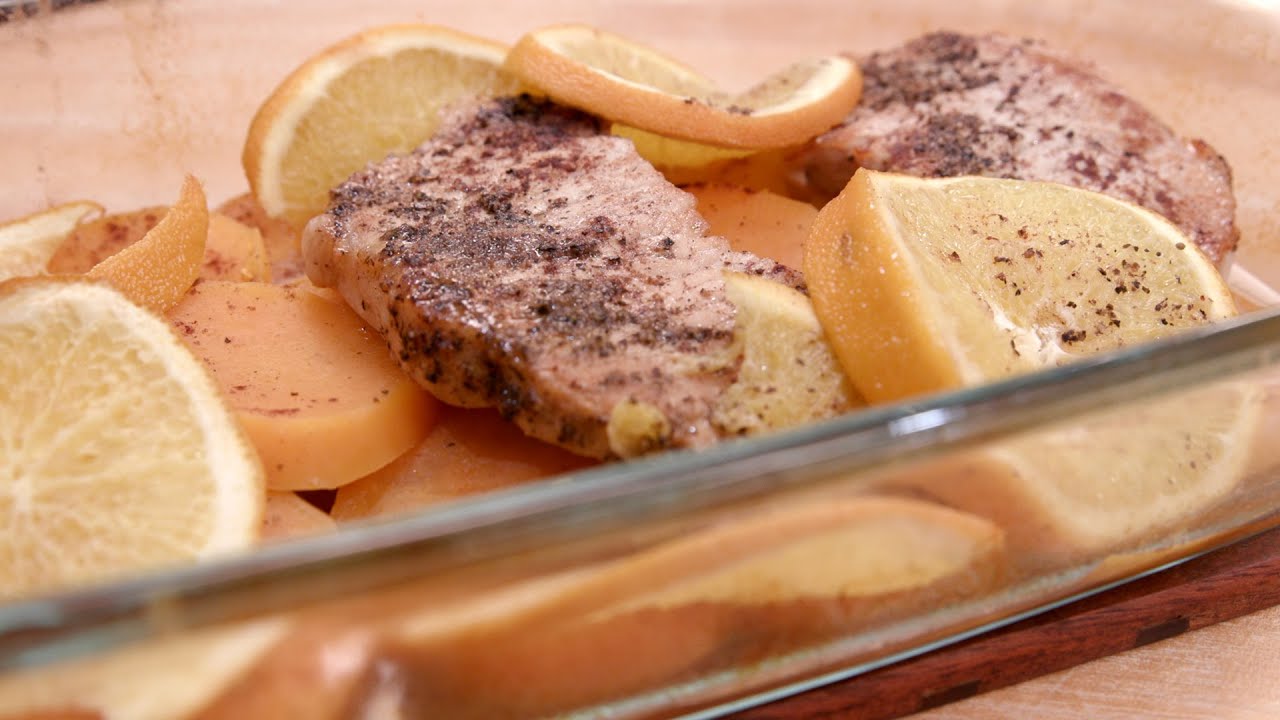
- Food Factor: Orange Sweet Potato Pork Chops
by Ms. Natasha Haynes, MSU Extension Service If you are cooking for just one or two, this recipe is for you! It features one of our favorite ingredients – Mississippi-grown sweet potatoes. You can expand this recipe as needed for a larger crowd. You’ll want to save this recipe for a weeknight when you have a little extra time, or cook it on the weekend, as it requires browning the pork chops first, then baking them. I love the combination of tangy, sweet and savory flavors! While the recipe doesn’t specify an order, The Food Factor crew put the sweet potatoes on the bottom of the baking dish with a sprinkle of cinnamon, then we topped the sweet potatoes with the chops. Sprinkle the meat with a bit of salt and pepper before the orange slices. Orange Sweet Potato Pork Chops Ingredients: - Cooking spray - Oil - 2 boneless pork loin chops - 1 sweet potato, peeled - 1/2 orange, sliced - 1 dash cinnamon - 1 dash salt, optional - 1 dash black pepper, optional Preheat oven to 350 degrees F. In a medium skillet, brown pork chops in a small amount of oil. Cut sweet potato into half-inch slices. Spray a baking dish with nonstick spray. Place meat and sweet potato slices in the baking dish and sprinkle with seasonings. Top with orange slices. Cover and bake for one hour until meat is tender. Pork is safely cooked when it has been heated to 145 degrees F, followed by a three minute rest. Thanks to our friends at the University of Nebraska-Lincoln for offering a printable version of this recipe. Learn more about sweet potatoes in our previous Sweet Potatoes vs. Yams: What's the Difference post. Be sure to follow The Food Factor on Facebook and Twitter! And if you like our recipes and videos, we’d love for you to share them with your friends! It really helps!
- So Many National Food Days, So Little Time
by Paige McKay It seems that every month brings a new "national" day of celebration, whether it's National Cat Day or National Pizza Month. According to Foodimentary, the month of October brings with it several different food days to celebrate, and October is even National Food Month for several foods, too. Celebrate all month long with these recipes to celebrate National Pasta Month, National Potato Day and many more that come with the month of October. National Seafood Month - all October long Celebrate National Seafood Month and the fall season with a hearty bowl of Seafood Shrimp Gumbo from The Cooking Bride. This gumbo is full of shrimp, crab meat and oysters and packs in tons of Creole flavor. National Pizza and Beer Day - October 9 Sometimes, there's just nothing better than stuffing your face with pizza while downing a few pints of your favorite beer. Celebrate accordingly with making your own pizzas. It's usually cheaper and way more fun than ordering delivery or store-bought pizzas. This copycat California Pizza Kitchen Barbecue Chicken Pizza is perfect anytime, but especially on National Pizza and Beer Day. National Pasta Day - October 17 Whether it's chicken alfredo, baked ziti, shrimp scampi or anything in between, everyone is bound to have a favorite kind of pasta. On this year's National Pasta Day, celebrate with a bowl of this Mississippi Sin Pasta. It combines the goodness of Mississippi Sin Dip into a decadent pasta dish that might become your new favorite way to indulge in noodles. National Dessert Day - October 14 There are countless desserts out there, but sometimes, there is just nothing better than a classic chocolate chip cookie. These Chocolate Chunk and Chip Cookies are the perfect treat for any chocolate chip cookie lover. And they're even gluten free! Bake these on National Dessert Day and for all the holiday gatherings that are just around the corner. National Pumpkin Day - October 26 Of course there's a National Pumpkin Day in the month of October, who's surprised? You either love or hate pumpkin flavored things, and if you're a pumpkin lover, try out this Praline Pumpkin Crunch Cake. It might even turn a pumpkin hater into a pumpkin fanatic. It'll make a sweet treat on National Pumpkin Day and all throughout the fall season.
- How to Slow Brain Aging
by Qula Madkin, MSU Extension Service Video by Jonathan Parrish Does diet play a role in brain health? Research shows that eating certain foods may slow brain aging. Here are five power foods to include in your diet. Vegetables: Especially leafy greens like collards, turnip greens, kale, and mustard greens. Greens are packed with nutrients like Vitamin E, flavonoids and folate. Fresh, frozen and canned vegetables are all nutririous, so load up on vegetables. Look for no added salt and sugar versions when choosing canned or frozen vegetables. Berries and cherries: The darker the berry, the sweeter the juice, and the greater the health benefits for your brain. One of my best childhood memories was picking and eating blackberries with my friends. In Mississippi, blackberries are likely in abundance in most areas during the summer months. Take advantage of that, and pick, eat, and freeze some for later. Olive oil, herbs, and spices: Consider using more spices and herbs to boost flavor and cook with olive oil. Spices and herbs provide flavor and potential health benefits. Check out Gary Bachman’s Southern Gardening column if you’d like to try herbs in your late summer garden. Nuts: Nuts are a good source of healthy fats and protein. They provide a good amount of fiber and are packed with Vitamin E. Omega 3 fatty acids: You’ve probably heard you need to eat more fatty fish (cold water fish) like salmon, tuna, sardines and trout to boost your intake of these fats. One of the 11 types of Omega 3 fatty acids is DHA, or docosahexaenoic acid, and it’s found in fatty fish. Some research shows that brain and nervous system tissue may prefer DHA. Aim for 2 servings, or 8 oz., of fatty fish per week, according to the American Heart Association and the Dietary Guidelines for Americans. If you’re a vegetarian, allergic to fish, or don’t like fish, you can get Omega 3 fatty acids from other sources like walnuts, flax seeds and chia seeds. While there is no guarantee that these foods will improve your memory, they do support overall good health. A few things to keep in mind: For some people, DHA supplementation may be necessary. Speak with your doctor or registered dietitian to determine if you need supplementation. Broiling or grilling are healthy cooking options for fish and lean proteins. Roasting vegetables brings out great flavor. Check out the Food Factor’s Easy Roasted Vegetables recipe. Try meat-free meals sometimes to increase your intake of plant-based foods. Consider a meatless Monday. Check out Extension Publication 3430, “COVID-19 14-Day Meal Plan” for more meatless meal ideas. Healthy lifestyle choices, including regular physical activity, are good for your heart and brain. For optimal health benefits, aim for 150-300 minutes per week of physical activity. That’s just 20 to 40 minutes per day of walking, dancing around your house, or riding bikes with the kids. For more information about healthy eating, visit the American Heart Association’s Healthy Eating web page. Visit the Alzheimer’s Association website to learn more about diets that can help reduce heart disease and may lower the risk of dementia. The National Institute on Aging has a variety of diet-related information on its Healthy Eating page. Check out the Academy of Nutrition and Dietetics food webpage for more on healthy eating.
- Rhone Valley Wines Part 1: Northern Region Wines
by The Wine Guys, Tom Marquardt and Patrick Darr Grape growing and wine production in the northern and southern Rhône Valley is a tale of two worlds. Although the greater Rhône region shares the commonality of the Rhône River, north and south are unique environments with each producing radically different wines. In part one of our journey through the Rhône Valley, we will comment on northern Rhône wines. The northern Rhône , which features a cooler continental climate, begins about 20 miles south of Lyon where the Rhône River has carved a gash in the earth and steep hillsides with terraced vineyards descend to the river. The Syrah grape dominates this landscape as the only permitted red grape variety allowed by AOC rules. A small amount of white grape varieties is also permitted, some of which are bottled as white wine and some of which are blended with the Syrah grape to produce one of the eight official appellations. The two most recognized and celebrated appellations are Hermitage and Cote-Rotie, which are known for their sturdy, long-lived wines that command premium prices and are produced in limited quantities. Only five of the named appellations produce red wine in the northern Rhône and we recently tasted wines from three of them to contrast and compare in an informal tasting. Beginning in the northern Rhône , near the Rhône Valley gateway town of Vienne, lies Cote-Rotie which literally means “roasted slope.” As in all northern Rhône red wines, Syrah is the main player although up to 20 percent viognier, a fragrant floral white grape, may be co-fermented during the winemaking process. We tasted the E. Guigal Brune et Blonde Cote-Rotie 2016 ($85). This delightful red wine exhibited a youthful, bright lightness that tamed the Syrah in the blend perhaps, in part, due to the addition of four percent viognier. Pure berry-fruit flavors, a hint of bacon fat, as well as pretty apparent acidity, created a terrific package. Delightful now but it has the potential for extended aging. Moving south about midway through the Rhône Valley hard against the river lies the appellation of St. Joseph. Red wines in this region mature earlier than in the more heralded Hermitage and Cote-Rotie regions. Up to nine percent Marsanne and Roussanne, two white grapes, can be blended with Syrah here. We tasted the Domaine Les Alexandrins St. Joseph 2017 ($40) and were won over by its upfront fruity charm -- a mélange of plum, cherry and blackberry. A little tight, this beauty needs a few years to develop further but should reward with 3-5 years of slumber. It was the favorite of the northern Rhône. Abutting St. Joseph to the south, and on the eastern side of the Rhône River, lies the appellation of Crozes-Hermitage. Crozes-Hermitage is the largest appellation in the Northern Rhone and one of the more available wines in the U.S. White grapes Marsanne and Roussanne are allowed in up to 8 percent of the finished red wine and in general produce wines of higher acidity and often display herbal notes. We tasted the Yann Chave Crozes-Hermitage Le Rouvre 2016 ($60) made entirely from Syrah and from a single parcel of 50-year-old vines. Blackberry notes dominate the palate with hints of herbs and roasted meat. In a future column, we will detail wines we tasted from the southern Rhone. Smoke taint Two professors from the University of California at Davis recently hosted a seminar with wine representatives to discuss of the impact of the fires that have ravaged much of California and Oregon. According to Anita Oberholster on “Office Hours,” California’s style of winemaking may spare red wines from the worse of smoke taint. Wines with high alcohol, some residual sugar and low pH are in a best position to cover up the compounds of smoke taint. PH measures ripeness in relation to acidity. As we suggested in last week’s column, winemakers will limit the amount of skin contact in red wines because skins absorb the smoke. That will lend itself to white pinot noirs and rosés. We also suspect we’ll see naturally light-colored red wines adulterated with concentrated fruit juice, such as Mega Purple. Winemakers don’t like to talk about this, but it’s common to correct a wine’s color to make it more appealing. Alas, you’ll never know if they did but the circumstances seem to call for a dosage of concentrated rubied grape juice. Because Oregon is so dependent on pinot noir and Syrah, both of which are delicate, the results could be worse for those grapes. Another observation from Oberholster: hand-harvested chardonnay could fare better. Machine harvesting breaks the skins on the way to the winery and thus sets off fermentation of smoke-damaged grapes. Most expensive chardonnays are hand-harvested. Wine picks Domaine Anderson Pinot Noir Anderson Valley 2017 ($40). Owned by the Louis Roederer family of Champagne fame, this winery only produces pinot noir and chardonnay. The pinot noir is a winner with cherry, blackberry cola notes and a hint of cinnamon. A great package at a fair price. Intercept Red Blend Paso Robles 2017 ($20). Usually celebrity wines under-deliver and are over-priced, but not this one. Intercept was created by Charles Woodson, a Heisman trophy winner, an 18-year celebrated NFL veteran and long-time wine lover. This fantastic red blend is forged from a polyglot of grape varieties dominated by petite sirahand zinfandel as well as smaller amounts of petite Verdot, Tempranillo and Syrah. Intercept displays a wonderful smooth fruitiness with plum and black cherries dominating as well as a distinctive brightness that many Paso Robles red wines capture. Well worth the modest price. Charles Krug Cabernet Sauvignon Napa Valley 2017 ($45). Charles Krug seems to over deliver for the price. Not an overly complex cabernet sauvignon, just a delicious well-made glass of wine that features a pure cherry fruit nose and flavors at a decent price. Chateau Lassègue St. Emilion Grand Cru 2016 ($60-70). Mostly merlot and cabernet franc with a dash of cabernet sauvignon thrown in creates a big styled St. Emilion that can stand up to any cuisine. Cassis, plums, and dried cherry elements dominate with a subtle refined oak under-note. A bit of earthiness at the end and a long rich full finish.