1733 results found with an empty search
- You'll Find Pizza Heaven At Lost Pizza Co.
Don’t let the catchy name fool you. Lost Pizza Co. is easy to find. And, it occupies a very prominent place on the road to pizza heaven. I get it, it’s hard to believe someone has discovered a way to transform an ordinary round of dough pilled with toppings into something other than, well, ordinary pizza. If I can continue to enjoy one of Lost Pizza’s creative, gourmet pizzas topped with some of the most delicious sauce, meat, and cheese combinations I’ve ever tasted, I’m fine with being lost. First, a little background on the unusual name. Lost Pizza Co. began as a dream of childhood friends from Indianola. Brooks Roberts and Preston Lott were roommates at Mississippi State University and dreamed of opening a restaurant while pursuing agriculture degrees. Fast forward to 2007 – Roberts was living in the Virgin Islands and Lott came over for a visit. One conversation led to another and their restaurant dream was revived. Their first thought was to name their restaurant Lost Dog Pizza after the pub in which they met to make plans. After learning there was already a Virginia restaurant named Lost Dog, they shortened the name to Lost Pizza Co. The first Lost Pizza Co. opened in Indianola in 2007, followed by a second location in nearby Cleveland. Today, there are franchise locations around Mississippi and in neighboring states. Check out their website for locations, but I’m guessing you already know if a Lost Pizza is in your area. Word travels fast about extraordinary pizza and Lost Pizza offers that – and much more. Besides pizza, Lost Pizza serves salads, sandwiches, appetizers, and pasta dishes, but I won’t keep you waiting. I’ll get right to the main attraction. I learned a little about the ingredients that make Lost Pizza a step above most of the pizza I’ve sampled while talking to the manager of the Flowood location. I found out the dough is made fresh daily and only 100% meat, custom-blend, all-natural cheeses, and freshly sliced vegetables are deemed worthy of being placed on a Lost Pizza. Besides all that, the special sauces are, in my opinion, what transforms an ordinary pizza into something spectacular. I didn’t get the recipe, but did learn the “secret sauces” are made fresh daily; no canned tomato sauce will do. When you try it – and perhaps you already have – you’ll agree “the secret’s in the sauce.” It’s just one of the reasons Lost Pizza has been at the top of several “Best in Mississippi” lists over the years. Okay, enough background – on to those pizzas. During my first visit, I selected Fatboy’s Bacon Cheeseburger ($8.35-individual, $16.59-medium, $19.99-massive). I’d sampled cheeseburger pizzas before and loved them, but this one was like no other I’d tried. Atop the homemade dough (I ordered thin crust, but it was still springy and full of flavor) is the special sauce, seasoned beef, bacon, red onions, ketchup, mustard, and cheddar cheese and baked together into a delectable cheeseburger on a plate. It’s then topped with chopped lettuce, fresh tomatoes, and pickles. Other signature pizzas are Hector’s Taco Pie ($8.35, $16.59, $19.99) featuring seasoned beef, onions, and cheddar with a salsa base, topped with fresh tomatoes and lettuce, and The Hot Chick ($8.35, $16.59, $19.99) topped with a house-made ranch base, grilled chicken breast, onions, and buffalo wing sauce. Also on the pizza menu are The Pitt Boss ($9.35, $17.59, $20.99) featuring pulled pork, red onions, cheddar, and bacon with a barbecue sauce topping; The Kujo ($10.35, $19.95, $22.99) topped with hickory ham, pepperoni, Italian sausage, beef, onions, green peppers, black olives, and mushrooms; The Lucille ($8.35, $16.59, $19.99) with grilled chicken, bacon, roasted garlic, fresh tomatoes with ranch, and The Otis ($10.35, $19.95, $22.99) piled high with bacon, hickory ham, pepperoni, Italian sausage, pork sausage, beef, and grilled chicken breast. Those that enjoy a spicier pizza should definitely try the El Diablo ($9.35, $17.59, $20.99) topped with grilled chicken, bacon, roasted red peppers, banana peppers, jalepenos, and barbecue sauce. For those that prefer less or no meat, there’s The Happy Hippie ($8.35, $16.59, $19.99) topped with fresh baby spinach, tomatoes, artichoke hearts, green peppers, onions, and black olives and The Islander ($8.35, $16.59, $19.99) featuring bacon, pineapple, and roasted red peppers. If you’re still hungry after sampling the pizza (highly doubtful, but miracles do happen!), there are a number of appetizers on the menu, ranging from Mississippi Delta hot tamales ($8.25) to fried ravioli ($5.99) to wings ($7.99-$12.99) served in a variety of flavors. Lost Pizza also serves sandwiches ($8.99), including the Lost Pizza Sub, Delta Melt, Court Street Panini and Yardbird. Pasta dishes include grilled chicken Alfredo ($11.99), chicken spaghetti ($10.99), spaghetti and meatballs ($10.99), and baked cheese spaghetti ($10.99). If you need a salad to pair with your pasta or pizza, there the house ($3.50-$5.50), chef ($5.99-$8.99), Caesar ($3.49-$5.74), and Greek ($9.99) There are also a number of dessert pizzas ($6.99-$14.25) on the menu, including ones topped with cheesecake, pineapples, and strawberries, each with a dash of icing. Lost Pizza in Flowood is located at 144 Friendly and Fresh Dr. near the Castlewoods entrance. Hours are 11 a.m. to 9 p.m., seven days a week. To find the location nearest you, check out the website at www.lostpizza.com.
- Chardonnay All Day
We were in a restaurant the other day and overhead a conversation among two young couples who were debating what wine to order. One person suggested a chardonnay, but there was lukewarm endorsement from the others. One even said, “Please, anything but chardonnay.” Chardonnay --- a cross between pinot noir and gouais blanc -- is the grape many people love to hate even though it is the only white grape used in great burgundies and the primary white grape that goes into the best champagnes. Winemakers love it because it is a cash cow and also because there is so much they can do with it. So, what’s the deal? About one out of every four bottles of white wine sold in the U.S. is chardonnay, and it is the second most widely planted white variety in the world. People are drinking it despite what they say. But for some inexplicable reason, it’s more popular to say one likes sauvignon blanc than the common chardonnay. We love the texture, richness, and the layered fruit a chardonnay offers. But it can be overdone, much like a steak. Too much winemaker wizardry can smother a good chardonnay. Depending on where it is made, chardonnay’s flavor profile ranges from tropical fruit – pineapple, mango, grapefruit – to green apple and citrus. But more influential to the flavor is the wine’s exposure to oak barrels, grape clones and the degree of malolactic fermentation – a secondary fermentation that converts malo acids (think apples) to lactic acids (think milk). Those versions fermented and aged in oak barrels with full-blown malolactic conversion will add a blast of flavors, including any of the following: vanilla, cedar, smoke, caramel, spice, clove, and toast. These flavors are influenced by the particular oak that is used in the fermentation and aging process. Frankly, these additional flavors assault the palate way too much. You’re not sure if you are drinking a wine or a blend of someone’s spice rack. Malolactic fermentation – which can involve a portion of all of the juice – adds butter flavors and a creamy mouthfeel. Unoaked chardonnays, on the other hand, are leaner and more subtle because they are fermented in neutral stainless-steel tanks. The acidity gives them a crisper personality and there is often a minerality or flinty character. These versions tend to have a citrus or apple profile. If you want a good example of an unoaked yet complex chardonnay, try a French chablis. Another value of unoaked chardonnays are their prices. With the cost of a barrel running about $1,000, the per-bottle price of an oaked chardonnay can easily exceed $40. Unoaked chardonnays are often less. Pairing chardonnay with food also requires consideration of its oak treatment. A buttery, rich and tropical fruit-driven chardonnay is a good match to fish with a beurre blanc sauce. But a sauce without butter is better paired with unoaked chardonnays. The more delicate the fare, the better an unoaked chardonnay performs. Here are some chardonnays that are either unoaked or lightly oaked: Chehalem INOX Chardonnay 2018 ($20). Those of you in search of a decently priced, unoaked chardonnay should look no further than this gem from the Willamette Valley. We paired this with several other chardonnays and, not surprisingly, liked it the best because it was made entirely in stainless steel tanks. Pure green apple fruit and citrus flavors with a bit of slate and peach, it is a perfect match to fish or fowl. Stoller Dundee Hills Chardonnay 2018 ($28). Using a mix of clones, the winemaker has built an unoaked chardonnay with pure fruit flavor. Apple and orange flavors dominate the vibrant palate with a hint of minerality. This is a great match to fish. Balletto Vineyards Teresa’s Unoaked Chardonnay 2018 ($20). This well –priced chardonnay from the Russian River Valley is the crisp, delicate chardonnay we seek for a fish dinner of Dover sole. Textured with tropical fruit notes and citrus aromas. Scott Family Estate Arroyo Seco Chardonnay 2017 ($20). This crisp and clean chardonnay has been aged 10 months in a combination of stainless steel and new and old oak, so there isn’t a smothering of oak flavors. But it’s a good match to summer fare. Ripe pineapple, tropical fruit and lemon notes. Kendall-Jackson Avant Chardonnay 2018 ($17). Sourced from coastal vineyards in three Cailfornia counties, this unoaked and cold-fermented chardonnay has crisp apple flavors with a touch of lemon and pineapple. It is quite a contrast to the delicious but oaked 2017 Grand Reserve chardonnay ($22) we tasted alongside of the Avant. Cakebread Cellars Napa Valley Chardonnay 2017 ($38). We liked this lightly oaked chardonnay for its balanced acidity, youthful zing and citrus, peach flavors. Newton Unfiltered Chardonnay 2016 ($55). We include this chardonnay – entirely barrel fermented and aged in French oak for 12 months – because it is unfiltered and balances the creamy texture with prominent acidity. Each barrel was hand-stirred, which protects the wine from oxidation and encourages complexity. The barrels were then blended and bottled unfiltered. The wine is exquisite with floral aromas, hint of spice, and ripe tropical fruit and peach flavors. Don’t be put off with its hazy appearance – that’s the result of a pure, unfiltered chardonnay. Here are some chardonnays with more oak flavors: Ramey Wine Cellars Fort Ross-Seaview Chardonnay 2016 ($42). David Ramey eschews skin contact in making his chardonnay and adds some oxidized juice to create a unique and delicious chardonnay from the Sonoma Coast appellation. The wine is rich, textured aromatic and long in the finish. Ramey achieves complexity but keeps the oak influence in check. Frank Family Carneros Chardonnay 2017 ($38). If you like your chardonnay oaky, this is a great wine. Rich, creamy texture with ripe apple flavors and a dash of vanilla. Jordan Russian River Valley Chardonnay 2017 ($34). This supple and fresh chardonnay has apricot and citrus aromas mingled with peach and pear notes with a dash of mineral. Very nice. Riverbench Chardonnay Estate Santa Maria Valley 2016 ($26). If you yearn for those full-blown explosive California chardonnays, check out this bottling. Generous tropical fruit elements featuring pineapple and mango dominate with a very appealing honey note. Its deep yellow color in the glass gives the consumer a hint of this very generously endowed chardonnay.
- Step Up Your Backyard Cookout With One of a Kind Burgers By Celebrity Chef Melissa Cookston
With summer here, there’s only one food item that screams “backyard cookout” – BURGERS! Taken from Cookston’s cookbook, “Smokin' in the Boys' Room” and “Smokin’ Hot in the South,” the below award-winning recipes for pub burgers with beer seared onions, pimento pork and chorizo burgers, and delta juke burgers will elevate your backyard cookout with flavorful burgers unlike any other! “Everyone I know loves a good grilled burger, and this recipe for Pub Burgers with Beer Seared Onions is a winner! For this recipe, I used Aussie Beef, and it really was delicious. The beef is so rich you don’t need a lot of seasoning (but I’ve never let that stop me before!) The onions are super easy and have such a great flavor you’ll want to make these for other recipes as well (they go great with lamb and steak!) It’s easy to make them on the grill in a cast iron skillet, so you won’t have to mess up the kitchen (and keep the heat down in the summer!) The main seasoning that I used for this is my Grillin’ Shake.” Pub Burgers with Beer Seared Onions For the onions: 2 medium onions sliced thinly 2 tablespoons Banner Butter or your favorite butter 1 teaspoon sugar 1 teaspoon salt 1/2 teaspoon black pepper 1-1/2 cups stout beer For the burgers: 1-1/2 pounds Aussie Ground Beef 4 slices cheddar cheese 1 teaspoon hot sauce 1 teaspoon minced garlic 1 teaspoon Worcestershire sauce 1/2 cup stout beer 2 teaspoons Grillin' Shake (or your favorite burger seasoning) In a mixing bowl, add the ground beef, hot sauce, garlic, Worcestershire sauce and beer. Hand mix until incorporated. Form into 4 patties. Sprinkle the Grillin' Shake on outside of patties. Thinly slice onions. Melt butter in skillet on grill, then add onions. Add in salt, sugar and pepper. Sear onions until translucent. Form in a mound then pour in beer. Cook until beer is steamed out and onions are soft. Move skillet to the side. Place burgers on the grill. Allow to cook for 3-4 minutes, then flip and continue to cook for 3 minutes (for medium burgers.) Place cheese over burgers. While cheese is melting, toast buns. Place burger on toasted bottom bun, top with onions and serve with your favorite condiments. Enjoy! “Tired of the same old burger blah? Liven up burger night with my Pimento Pork and Chorizo Burgers! This simple-to-make burger adds some gently spice from the chorizo to the flavors of the ground pork, and leaves everyone wanting another! A little hot sauce adds another layer of flavor to the mix. Don’t worry though, the pimento and cheese will cool the spices down and make this one of your favorite burgers!” Pimento Pork and Chorizo Burgers 1 pounds Ground Pork 1 pound Chorizo 2 tablespoons Worcestershire Sauce 1-1/2 tablespoons Tabasco Chipotle 1 teaspoon minced garlic 1 teaspoon salt 1/2 teaspoon coarse ground black pepper Mix everything and form into 6-8 patties, depending on how large you would like your burger patty. Fire up the grill. Then, sprinkle each patty with a little BBQ rub and refrigerate for 30 minutes before using. This will let the burgers hold their shape better. Place on a medium hot grill and cook about 5-6 minutes per side, or until the burgers are cooked through. As the burgers are nearing completion, add a nice scoop of my Zesty Pimento and cheese and let melt for 1-2 minutes. Toast your buns and grill some bacon. Put it all together with your favorite burger condiments and enjoy! “In the Delta, the local convenience store usually functions as the town grocery, news station, gas station, and restaurant. The menu may be nothing more than sandwiches and a burger, but they are absolutely delicious. When I opened Memphis Barbecue Company, I wanted to recreate the burgers I always ate as a kid while driving around with my grandfather as he made the rounds and caught up on all the goings-on in the area.” Delta Juke Burgers Juke Sauce: 1 cup mayonnaise 2 tablespoons ketchup 1 tablespoon yellow mustard 1-1/2 teaspoons Ultimate BBQ Rub Burgers: 2 pounds (80/20) ground beef 2 tablespoons Grill seasoning 4 slices cheddar cheese 1 yellow onion, sliced crosswise into rounds 4 hamburger buns Lettuce, tomato slices, and pickles for serving Preheat a cast-iron skillet or griddle over medium heat. To make the sauce, combine the mayonnaise, ketchup, mustard, and rub in a small mixing bowl and mix well. Set aside. The sauce can be covered and refrigerated for up to one week. Form the ground beef into eight balls. Flatten slightly, but don’t make into patties. Season both sides of the balls with the grill seasoning, then place in the skillet. Using a metal spatula, flatten into thin patties. Sear for 2 minutes or until the patties release from the skillet. Flip and cook for 2 minutes longer for medium. Top every other patty with a slice of cheese and then another patty to make double-deckers. Remove the patties from the skillet and place the onion slices in the skillet to sear for 2 minutes. Place 1-1/2 teaspoons of the juke sauce on the bottom of each bun; dress with lettuce, tomato slices, and pickles; then finish with a slice of seared onion and a set of patties and the top bun.
- The Menu at Eddie and Ruby's Is Simple, Yet Delicious
Since 1981, Eddie and Ruby's, also known as Eddie's Snack Bar, has been serving up fried catfish, shrimp, and chicken baskets to the Jackson metro area, and there's a reason people have kept coming back all these years. Check them out in this week's Sipp Jackson blog entry.
- Food Factor: Fish and Spinach Bake
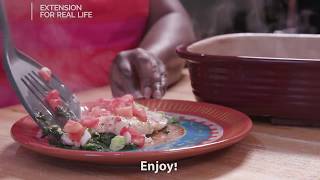
August is National Catfish Month! There are many delicious ways to cook catfish, and this recipe helps you get those daily vegetable servings checked off your list. Support Mississippi’s catfish producers and buy locally raised catfish. Note: a serving size in this recipe is just 2 ounces of fish. When we measured the filets from the grocery store, they each weighed about a third of a pound, so we trimmed them into smaller pieces. Fish and Spinach Bake 1 package (10 ounces) frozen spinach, thawed 1⁄4 teaspoon each salt and pepper 1 pound fish filets (thawed if frozen) 1 teaspoon Creole or Cajun seasoning blend 1 large tomato, diced 4 green onions, sliced OR salsa instead of tomato and onion. Preheat oven to 350 degrees F. Spray a 9 x 13-inch baking dish with nonstick cooking spray. Squeeze thawed spinach to remove most of the liquid. Spread in the bottom of the pan. Sprinkle with salt and pepper. Arrange fish filets over spinach. Sprinkle with seasoning blend. Top fish with tomatoes and green onions or salsa. Cover the baking dish with foil and bake for 15 minutes. Remove foil and bake for 20 minutes more or until fish flakes easily. Refrigerate leftovers within 2 hours. This recipe can also be used with other types of fish or even chicken! A splash of lemon juice or lemon pepper will brighten the flavors. I think you’ll enjoy this versatile recipe – let me know on Facebook or Twitter! Thanks to our friends at Oregon State University Extension for sharing this recipe!
- Dolce Bakeshop to Expand in Gulfport, Opening September 11th
GULFPORT, Miss. - 2019 Sun Herald’s People’s Choice Award winner Dolce Bakeshop has announced it will open its second location on September 11th in Gulfport. In addition to pastries and baked specialties, Dolce Café will offer a full breakfast and lunch menu, as well as coffee and other hand-crafted beverages. Located at 1720 Pass Road, Dolce Café will share space with Bridal and Formal Boutique, House of Tux, and upscale consignment shop Back on the Rack. During the grand opening, to be held during the week of September 11th, customers can enter to win hourly prizes, enjoy live music, as well as sample the southern-themed menu. William and Brooke Rester, creators of the Dolce brand, have enjoyed great success in Long Beach with their “bakery by the sea” since 2017. When the opportunity to lease the café space inside Bridal and Formal Boutique came available, the decision to grow Dolce into a full scale eatery was a “no brainer” for the Resters. “We’ve always dreamed of Dolce becoming a destination for people all over the coast,” Brooke said. “Dolce Café will combine the warm, inviting atmosphere of the Bakeshop with the authentic flavors of the South. Where else can you stop in for a hand-crafted ginger ale and a short rib and pimento grilled cheese with a side of Hoppin’ John?” Bridal and Formal Boutique owners Adrian and Chavus Holland are equally excited to be welcoming the Dolce group into their space. “We were aiming to bring something new to Gulfport to fill a void,” Holland said. “We found just that, with Chef William Rester and his made-from scratch creations. We have had the pleasure of taste testing his menu and we are absolutely excited for everyone else to enjoy his amazing plates of deliciousness soon.” Much in the same way that Dolce Bakeshop strives to provide a scratch-baked experience for its customers, Dolce Café will go that extra mile, too. “When you dine at the Café, you’re eating meats roasted and sliced in house,” Chef Wiliam said. “Store-bought pickles? Sorry, not here. Each crispy cucumber, whether it becomes a dill or bread and butter, will be sliced by hand and canned in the classic southern style. Fresh soups and salads and dressings made in house from quality ingredients. Not a big meat eater? Don’t worry, you’ve got options, too.” And if you’re not hungry, you can simply grab a cup of Dolce Blend, roasted locally by Coast Roast. With Dolce Bakeshop, Dolce Café and party and event space Gather, the Dolce group is quickly making a name for itself on the Mississippi Gulf Coast. For more information, visit the website at dolcebakes.net. You can also interact with Dolce Café and Dolce Bakeshop on Facebook or Instagram.
- Lou's Full Serv Neighborhood Kitchen is a Belhaven Jewel
A restaurant’s historic roots is an odd recommendation, but it's the first adjective that comes to mind when I’m asked about Lou’s Full Serv Neighborhood Kitchen in Jackson. In fact, it’s such an interesting place to eat (I’ll get to the amazing food in a minute) that it’s worth a detour when you’re in the Jackson area or en route to other areas. Here’s what first comes to mind when I think of Lou’s Full Serv. It’s located next to Jitney #14 in the Parkins Pharmacy building. Yes, I know, neither of these two establishments still exist. However, in my mind, and I’m quite sure in the minds of many others, these buildings will always be associated with and called by the names of their former occupants. Another fact that is part of my personal Jackson history: owner and executive chef Louis LaRose was formerly a chef at POET’S, Sam’s Westside, and Bravo! – three of my regular hangouts during the two decades I lived in Jackson and surrounding areas. History aside, today, Lou’s projects an energetic, yet laid-back vibe in a restaurant that's part history/part modern-day courtesy of original features from the previous century like subway tiles and an old post office window combined with metal features and industrial-like lighting. Guests can take their pick of one of several tables in the open dining room or dine al fresco on the adjacent patio. On any given day, especially when the Mississippi legislature is in session, seeing legislators and state and city officials dining next to office workers and physicians is a normal occurrence. Novelty and historic factor aside, ultimately, it’s the food that draws people to Lou’s. LaRose takes innovative dining to a new level with fresh, creative dishes that manage to taste homemade despite the necessity of serving a steady stream of customers that begin arriving at 11 a.m. and doesn’t end until late in the evening. Lou’s offers a delightful mix of southern and coastal flavors in its menu options, including seafood dishes, salads, sandwiches, burgers, steaks, and daily blue plate-like specials. While you’re waiting on the main dish to arrive at lunch, sample one or a selection of what Lou’s calls “snacks.” In some cases, you may not feel the need to move past this section. Sample-worthy appetizers are crawfish cake with local sausage cracklins and Chile butter ($17), mushroom toast ($12), salmon dip ($12), crawfish fondue and seasoned steak fries ($17), and onion rings with smoked tomato remoulade ($8). Many come to Lou’s for its creative sandwiches topped with homemade sauces and dressings. Believe me, they don’t disappoint. There’s the bacon-wrapped meatloaf sandwich topped with Lou’s dill pickle mix and mustard aioli on sourdough bread ($13), Chick-Fil-Lou ($13), a crispy chicken thigh topped with Comeback sauce and pickles, grilled cheese ($13), filled with ham and bacon, caramelized red onions, and mayor on crusted sourdough, Cuban ($14) stuffed with ham, pork, pickles, Swiss cheese, and brown mustard in a hoagie bun and roast beef ($15) composed on Waygu eye of round, shoe string potatoes, herb aioli, and homemade mustard on sourdough. If you’re a burger-lover, you’ve come to the right place. Mile-high choices like Burger No. 7 ($15) is piled high with candied bacon, grilled green tomatoes, caramelized red onion, smoked tomato-bacon aioli, and provolone on a house bun. Or, try the D-Luxe burger ($16), an appetizing albeit somewhat unusual concoction of griddle pork belly, fried egg, barbecue aioli, vegetables, smoked gouda, and a house bun. Each one of these and others on the menu are served with your choice of salad or onion rings or fries. You can’t go wrong with the daily rotating place lunches ($12) that include red beans and rice, crispy chicken, meatloaf, pork chops, and shrimp and crawfish etouffee. Entrees come with vegetables, tea, salad, and bread, making it one of the best deals on the menu. There are also a variety of salads filled with your choice of toppings or meat additions on the menu. For dinner, things are kicked up a notch, especially in the “snacks” section. A favorite stopping-off place for those heading to downtown events after dark, Lou’s is famous for appetizers served with house-made sauces. Selections include the chef’s board (market price) filled with sliced meats, vegetables and other small bites, shrimp crunch ($17), crispy Gulf oysters ($15), and Lou’s famous onion rings ($8), among others. Besides salads, burgers, and sandwiches similar to the lunch menu, dinner selections include heartier meals like Bolognese over fettuccine ($25), shrimp and grits ($27), redfish ($28), salmon ($28), short rib ($26), filet ($36), and ribeye ($38). They’re taken to greater heights with the addition of creative sauces, locally-grown vegetables, and house-made breads and side dishes. Dessert is another treat you don’t want to overlook. Dishes like tiramisu, salted caramel blondie, bread pudding, and blueberry cobbler ($10) are perfect endings to any meal. Lou’s is located at 904B E. Fortification St. next to Froogle’s Market. Hours are Monday through Thursday, 11 a.m. to 9 p.m. and until 10 p.m. on Friday and Saturday. Lou’s is closed on Sunday.
- You Don't Have to Break the Bank For Good Wine
Last week’s column featured some of the great wines of California’s elite Rutherford district. Alas, the wines of this special region come at great price, and many of you rolled your eyes over our suggestion that you open the wallet for one of them. At more than $100 a bottle, you could buy a case of something else that was just fine. As one of you wrote, can any of these wines taste 10 times better than a $12 bottle of wine? For most of you, the answer is a resounding “no.” So, as penance for a column that left you nothing to buy, this week we’re featuring 10 incredibly great values that should give you relief. These are wines we have tasted year after year and which never fail to please. Oftentimes, they are discounted. They should be relatively easy to find at your local wine shop. Columbia Crest Grand Estates Cabernet Sauvignon 2016 ($12). Just about every red wine made by this Washington producer is gold. The cabernet sauvignon has surprisingly good complexity with dark fruit notes and a hint of vanilla. The producers ridiculously delicious 2016 H3 cabernet sauvignon from Horse Heaven Hills is only $15 and has loads of blackberry and black cherry fruit. J. Lohr Paso Robles Seven Oaks Cabernet Sauvignon 2017 ($17). What J. Lohr lacks in complexity is made up by loads of fruit-forward flavors. They define “luscious” in the world of wine whether it be its pinot noir, merlot or cabernet sauvignon. This gem has blueberry aromas and cherry, strawberry flavors with a good dose of cocoa powder and mocha. Saint Cosme Cotes du Rhone 2917 ($16). Yes, you can buy good French wine under $20. Just look to the Cotes du Rhone where syrah, grenache, mourvedre and other grape varieties combine to create tasty wines with the acidity you need to pair them with grilled foods. We love the Gigondas made by this producer, but the value is in its simple Cotes du Rhone. M. Chapoutier Belleruche Cotes du Rhone 2017 ($14). This reputable producer from the Rhone Valley always makes a wine that over delivers. This medium body wine has generous raspberry flavors with strong acidity and a hint of licorice. Benziger North Coast Sauvignon Blanc 2018 ($15). Nice and crisp, this value sauvignon blanc has pineapple and citrus flavors with a dash of minerality. Wente Morning Fog Chardonnay 2017 ($18). From the Livermore Valley where vineyard property is significantly less costly than in Napa Valley, Wente takes advantage of early ripening grapes to create a delicious chardonnay year after year. This one has citrus and apple flavors with a dose of minerality. Marietta Old Vine Red ($16). In place of a vintage, this Sonoma County producer labels the wine with a lot number, which allows it to make more than one batch in a year. We’ve been enjoying this wine literally for decades and it still amazes us for the price. Zinfandel based, the recipe changes every year but generally blends a lot of grape varieties grown on old vines. Nothing complex here – just delicious fruit that makes music with grilled burgers, pizza, and ribs. Can Blau Montsant 2017 ($14). From the Montsant region of Spain, this wine over-delivers in forward, luscious fruit. A blend of red grape varieties, it has a generous floral, lavender aroma with ripe dark berry fruit flavors. Villa Maria Private Bin Sauvignon Blanc ($14). If you like the grassy, herbaceous flavors of New Zealand sauvignon blancs, try this stellar version. Classic grapefruit and lime flavors merge with vibrant acidity to take the edge off a warm August day. Hugel Gentil 2018 ($14). This is a versatile white wine from Alsace to serve with summer outdoor fare. A blend of six grape varieties, it has a smooth texture and loads of stone fruit flavors with a dash of spice. Wine picks DeLille Cellars Chaleur Blanc 2017 ($35). We loved this delicious blend of semillon and sauvignon blanc from Columbia Valley. It is the combination of grapes that makes white Bordeaux so famous but rarely adopted by American wine producers. The semillon blunts the bracing acidity and pungent grassy flavors of most sauvignon blancs. The Chaleur Blanc is fermented sur lie in French oak barrels to round off the flavors and provide a rich texture. Stone fruit and citrus aromas mingle with lemon curd, tropical fruit, and mango flavors. Double Diamond Napa Valley Cabernet Sauvignon 2016 ($70). A collaboration between Fred Schrader and Schrader Cellars, this full-bodied cabernet sauvignon is impressive for its tannin structure and classic Napa Valley flavors of dark cherries and black currants. Blended with just a bit of merlot, it is a wine that can be enjoyed now with grilled steak or set aside for a few years. Balletto Pinot Gris 2018 ($20). We enjoyed the lush peach and citrus flavors in this simple but delicious wine from the Russian River Valley.
- Food Factor: Baked Potatoes in the Slow Cooker
Who says you can’t have “baked potatoes” in the summertime? I love baked potatoes, but I hate heating up the oven when the summer sun is sizzling. That’s when my slow cooker comes to the rescue! It’s fast and easy to wash, oil, and foil potatoes before work in the morning. Then, when I come home, I can add my healthy toppings and have a meal in no time. “Baked” Potatoes in the Slow Cooker 4 russet potatoes Olive oil for brushing Herbs to taste Wash and dry potatoes. Use a fork or sharp knife to prick the potato skin about eight times. Lightly brush each potato with olive oil and season with herbs of your choice. Wrap each potato tightly with aluminum foil, and place in slow cooker. Cook on low for 8 hours or until tender. Use oven mitts or a spoon to remove from the slow cooker—these are HOT potatoes! Thanks to our friends at Texas A&M AgriLife Extension and their Dinner Tonight series for this recipe!
- Sanderson Farms Celebrates Women in Agriculture
LAUREL, Miss - From the farm to the conference room, women are thriving in all facets of the agriculture industry. As the industry is challenged to produce more food more efficiently, female professionals are answering the call. Women producers now make up 36 percent of farmers, a 27 percent increase from 2012, according to the latest Census of Agriculture. Women account for 46 percent of Sanderson Farms employees, 28 percent of the management team, and 40 percent of board members. First launched in 2018, Sanderson Farms' Women in Agriculture series seeks to spotlight hard-working professionals in vital roles across the company. While these women come from different life, educational, and career backgrounds, they all bring invaluable contributions to the industry. Each week during the month of August, Sanderson Farms will release a new Women in Agriculture profile on its corporate blog and social media platforms. "With so many dedicated and highly skilled women making a different at Sanderson Farms, it only made sense to continue this campaign," said Hilary Burroughs, Director of Marketing. "We hope their stories will help people understand the variety of opportunities within the agriculture industry." Kimberly Jefferson, Laboratory Quality Manager, will be featured first. "At this company particularly, your success depends upon your work ethic and your merit," said Jefferson. "In my experience, as women, we are driven and good at multi-tasking. Everyone has their place at Sanderson Farms, and we all fit together and work as a team." Upcoming features include Sanderson Farms employees Dr. Robin Gilbert, Veterinarian; Ashley Fontenot, Division Manager, Production; and Hope Rendon, Field Employee Relations Manager.
- Char Is a Can't-Miss Spot
Hosting friends from out-of-state, especially those that travel internationally, can be a bit challenging. They’ve seen and done it all and enjoyed fine cuisine at some of the world’s best restaurants. I was pleasantly surprised when a Mississippi friend-turned Dallas resident proclaimed the food and ambiance at Jackson’s Char created one of her favorite dining experiences. Located just off I-55 N at the intersection of Northside Drive in Highland Village, Char’s seafood, steaks, creative salads, and desserts have put this once-local restaurant on the Mississippi cuisine map and into neighboring states. Decorated with touches of color, rich woodwork, and historic photos featuring famous Mississippians and special guests from over the years, Char is a pleasant, friendly place at which to dine. As my out-of-town friend and I were seated, I pointed out classic Char dishes like no-filler crab cakes, Sin City barbecue shrimp, and, one of my favorites, ginger peanut chicken salad. After selecting the daily special of fried chicken with homemade sides of black-eyed peas and cornbread dressing, my Dallas friend stated she felt like she was truly home. Char has extensive lunch, dinner, and weekend brunch menus. Here is a brief overview of each one. For lunch, dishes like award-winning seafood gumbo ($5 cup, $8 bowl), fried green tomatoes ($9) and fried, marinated, or sautéed crab claws ($16) are a great way to get the meal started. Char, Caesar, and wedge salads are $8, while my favorite ginger peanut chicken is $15. There’s also the Char burger ($13), Maytag bleu burger ($16), Beefeater ($12), and tuna melt ($16), among other burgers and sandwiches. Each one is served with house-cut fries. Char’s featured items include pan-seared Atlantic salmon ($16), chopped steak ($14), fried chicken ($13), and 8-ounce filet ($34). Entrees are served with a selection of Char’s delicious homemade sides. Daily specials rotate and include meatloaf, baked and fried chicken, short ribs, chicken and dumplings, red beans and rice, roast beef, roasted turkey, and fried catfish. Served with two sides, specials range from $11 to $13. You can’t leave without sampling a slice of Char’s famous house-made pecan pie with a scoop of vanilla ice cream. At $8.50, it’s a bit pricey, but well worth the splurge. Other desserts include pecan caramel butter crunch, fudge brownie and blueberry bread pudding ($6-$7.50). Modeled after a Chicago-style steakhouse, it’s no wonder Char offers a full lineup of steaks in the evening. Selections include the filet ($34/$51), original cowboy ribeye ($54), New York strip ($49), and ribeye ($36). Fresh seafood is also plentiful in the evening, ranging from pan-seared or grilled redfish ($28), blackfish ($29), chargrilled Mahi ($30), to pan-seared salmon ($26). There’s also veal Oscar ($29), range chicken ($23), chicken piccata ($22), and pork chop ($28). If weekend brunch is on your list, a stop by Char is in order. You’ll find many of the appetizers, salads, and dishes offered during the week, with the addition of several special egg offerings, ranging from classic eggs, crab or steak Benedict ($13-$15) along with several specialty brunch dishes. These include croquet madame ($12), chicken and waffle ($12), crawfish, crab, and andouille sausage creole sauté ($13) along with a variety of chicken and seafood dishes. Specials ranging from pecan tenders to ham with specialty sides are also on the brunch menu, topped off by Char’s famous desserts. Char is located at 4500 I-55 N in Jackson. Hours are 11 a.m. to 10 p.m., Monday through Thursday; until 10:30 p.m. on Friday and Saturday and from 10 a.m. to 9 p.m. on Sunday.
- Food Factor: Southwest Chicken Pitas
When the weather heats up, it’s good to have a plan for those nights when you just don’t want to heat up the kitchen. This recipe is perfect for summer nights, for picky eaters (because everyone can decide what they want in their pita), and for healthy eaters. #winning One thing I really like about this recipe from our friends at New Mexico State University Extension is that I get to choose. I can boil frozen chicken breasts, cook chicken breasts all day in the slow cooker (catch our cool shredding trick in this post about BBQ chicken sliders!), or even pick up a rotisserie chicken. I can change the flavor by sautéing the veggies, corn, and beans. If I have a vegetarian in the family, there’s plenty of protein without the meat. Southwest Chicken Pita 4 whole-wheat pitas 2 cups shredded chicken 2 cups lettuce 1 cup corn 1 cup black beans 1/4 cup mozzarella 1 cup diced tomatoes 1/4 cup diced red bell pepper 1/4 cup diced onion 1/4 cup salsa Boil chicken until completely cooked, then shred it. Wash and cut up vegetables. Assemble pitas as desired. Plus, this recipe capitalizes on fresh, seasonal, locally grown produce like lettuce, tomatoes, and corn. So it’s a great way to use your farmers market purchases without a lot of time in the kitchen. How do you beat the heat in the summertime? Tell us on Facebook or Twitter!
- Water Valley Celebrates 50 Years of Watermelon Carnival
Photos courtesy of Water Valley Chamber of Commerce Going on its 50th year, the city of Water Valley celebrates everyone’s favorite summer fruit with a weekend-long carnival. The Water Valley Watermelon Carnival is set for August 2nd and 3rd and promises to be one of the most exciting events of the summer with something fun for everyone of all ages. Sponsored by the Water Valley Chamber of Commerce, the carnival includes live music, arts and craft vendors, food vendors, watermelon-themed games and activities for all ages, free watermelon slices, other watermelon dishes, and so much more. On Friday night, enjoy a street dance and fireworks in City Park. Saturday is full of continuous entertainment, food vendors, arts and crafts booths, contests, parades, an antique car show, a 3-K run, and much more. After you burn some calories and work up an appetite during the 3K, head over to the Train Tracks Pork Attack BBQ Contest. Ticketholders for the BBQ contest will be able to taste several different dishes and help choose who will take home the Taster’s Choice Award. Other cooking categories include best dessert, best sauce, and best watermelon-themed dish. Watermelon games start at 11 a.m. on Saturday morning, with events ranging from seed-spitting, watermelon throwing, and a watermelon eating contests. All ages are welcome to enter the watermelon games. Watermelon slices will be handed out throughout the afternoon, followed by a dog costume contest and a sidewalk chalk drawing activity. With something for everyone, the Water Valley Watermelon Carnival is sure to be one of the most fun events of the summer. Grab your family and friends and enjoy a weekend of fun, food, music, and, of course, watermelon. For more information on this event, click here or call 662-473-1122.
- California's Russian River Valley Produces Great Pinot Noir
We could argue until we’re blue in the face about the best region in California for pinot noir. Among the places we would consider include the Russian River Valley, Anderson Valley, Carneros, Santa Lucia Highlands, and Sta. Rita Hills. They all produce good pinot noir – but different pinot as micro-climates and soil combine to make wines with unique flavor profiles. We like the pinot noirs from the Russian River Valley because the cooling fog from the Pacific Ocean – just 10 miles away – moderate the heat in the vineyards and extend the growing time. It’s like making a beef tenderloin at low heat for a long time instead of roasting it at a higher temperature for a short period of time. The Russian River Valley’s balanced climate and the soil make great partners in creating expressive aromatics and special flavors -- mushrooms, forest floor, and spice -- to add to the varietal red berry flavors. The wines are generally light in color, but that shouldn’t discourage consumers. Light-colored pinot noirs can be just as expressive and elegant. We recently tasted a group of Russian River Valley pinot noirs. Here were our favorites: Balletto BCD Vineyard Pinot Noir 2016 ($46). The earthy and spice characteristics of the region are especially pronounced in this delicious pinot noir with a velvet texture. Cartograph Estate Pinot Noir 2016 ($68). This is Cartograph’s first estate-grown pinot noir and it’s a beauty. Hints of mint and citrus mingle with strawberry and cranberry flavors. Long in the finish. Emeritus Vineyards Hallberg Ranch Wesley’s Reserve Pinot Noir 2016 ($75). At this price you get a lot more complexity from selectively picked grapes. Black cherry flavors are supported by the mushroom notes made famous in the Russian River Valley. Amici Russian River Pinot Noir 2017 ($40). Fresh black cherry and earth aromas mingle with raspberry and cherry flavors with hints of spice. Medium body but tasty. Merry Edwards Coopersmith Russian River Valley Pinot Noir 2016 ($66). Now under the guidance and ownership of the Champagne house of Louis Roederer, this respectable pinot noir producer is turning out some interesting wines. We liked this single-vineyard pinot noir for its jammy blueberry and cassis flavors. Hints of allspice and cocoa, plus some firm tannins to give it ageability. New to the producer’s pinot noir lineup is the 2016 Bucher ($63). It has more generous aromas – floral and blueberry. Dark fruit flavors with a hint of figs and fine tannins. Ice wines Has the summer heat got you down in the dumps? Chill out with ice wine. This delicacy originated in Germany as eiswein but has been made more famous in Canada where the colder climate is ideal for late-harvested grapes. The process to make this wine is fraught with stress. Grape growers leave the grapes on the vine far past normal picking dates. They are harvested in the dead of winter at about 20 degrees F. and then crushed when they are as hard as steel pellets. Only a small portion of the juice is used because of its extreme sweetness. Fermentation can take a month or longer. But, once bottled, ice wine is intensely concentrated with generous aromas and flavors that just go on forever. It is best paired with peaches, cheesecake or fruit pies, but we like it all by itself. You only need a small glass of it to be satisified. Common grape varieties for ice wines include: riesling, cabernet franc, vidal, gewurztraminer, and chenin blanc. Expect to pay a lot for these labor-intensive and low-yielding products. Generally, they come only in half bottles (375ml). We’ve enjoyed the ice wines from Inniskillin, a producer who has property on Canada’s Niagara Peninsula. The Inniskillin Riesling 2017 ($80) has delicate lime and white peach notes with a long finish while the 2017 Cabernet Franc ($100) is an incredible display of red fruit flavors: cherries, strawberries and rhubarb. Creamy in texture, this red ice wine would be the frosting on a chocolate-based dessert. Wine picks Stags’ Leap Napa Valley Petite Sirah 2015 ($47). Blended with syrah, grenache and mixed Rhone varietals, this hardy petite sirah has the inky color and dense plum and black cherry flavors we expect from these wines. Broad aromas of spices and cedar make for a serious but approachable wine. Girard Artistry Red Wine Napa Valley 2015 ($40). This blend of Bordeaux grape varieties offers a wide array of aromas ranging from plums to cedar and spice. A melange of flavors include blackberry and cassis with a good dash of cinnamon. A delicious wine to drink now or age. 1000 Stories Cabernet Sauvignon Prospectors Proof Bourbon Barrel Aged 2017 ($20). Bourbon barrel aged wines are all the rage, and tasting this example explains the phenomenon. Rich round, and smooth in the mouth with intense dark cherry fruit and no overarching flavor from the bourbon barrels, just a hint of vanilla. A terrific beverage wine. Three Finger Jack Cabernet Sauvignon East Side Ridge Lodi 2016 ($22). This is a pretty complex cabernet sauvignon from the hot Lodi growing region more noted for its zinfandel output. Robust cassis and chocolate cherry notes are evident as well as a hint of black pepper. A pleasant cabernet sauvignon at a fair price. Left Coast Orchards Pinot Gris 2017 ($18). Mostly fermented and aged in stainless steel tanks, this refreshing and juicy pinot gris from the Willamette Valley has green apple flavors with s hint of tea.
- Yummy Treats to Beat the Summer Heat
There are still a few lingering days of summer before school starts and kids head back to school. Here’s my list of some of the best end-of-summer and, in some cases, new supermarket products to help you stay cool and enjoy the dog days of summer. 1. Vegan ice cream? Yes, it’s good! Ben & Jerry’s has created vegan versions of favorite ice cream flavors for those who have problems with dairy or are simply health-conscious. In 2019, the company added the following two new additions to its collection of non-dairy frozen offerings: • Chocolate Chip Cookie Dough: vanilla with chocolate chip cookie dough and fudge flakes. • Chocolate Caramel Cluster: chocolate with peanuts, fudge chunks, and salted caramel swirls. And for those who are not as health-conscious: 2. Magnum’s Double Tubs now offer enticing flavors like Double Sea Salt Caramel, Double Cookie Crumble, Double Chocolate & Ganache, and Double Cherry Truffle. They’re filled with delicious sauces and ingredients wrapped in a chocolate shell. 3. Party-size McCafe Frappes - Originally only sold in smaller 13.7-ounce bottles, two flavors of the refreshing iced coffee drinks – caramel and mocha – are now available in large 40-ounce bottles to help beat the summer heat. The drinks are made with 100% Arabica coffee beans and blended with real milk, sugar, and natural flavors. 4. When you take your next burger off the grill, add a dollop or two of Best Foods Classic Burger Sauce. Made from cage-free eggs and responsibly sourced oils and vinegar, the creamy sauce is flavored with bits of relish, paprika, and garlic. Once you try this, you may never use ketchup and other condiments again. It’s the perfect topping for other meats and dishes as well. 5. Pillsbury Grands! and Hawaiian bread = perfect combo. Pillsbury has jumped on the sweet bread wagon, following the lead of others who have made their own version of the wildly-popular King’s Hawaiian Bread. You have to try Pillsbury Grands! Sweet Hawaiian Biscuits – they’re flaky and fluffy, with the perfect drop of sweetness. Breakfast – or any meal – never tasted so good. 6. Newman's Own Organic Oil and Vinegar Dressing – Yes, I know, the brand has been around for quite a while and for good reason. It’s good and the proceeds go to charity. This latest variety is even better. It’s low in sodium and free of added sugars. Instead, it’s full of onion, mustard, garlic, and lemon flavors that combine to create a delicious and light salad dressing for a cool summer salad and marinade for chicken breasts, pork chops, or steak. 7. Welch’s Non-Alcoholic Sparkling Rosé – Cheers to the last lingering days of summer! And when this light and fizzy beverage is served, even the kids can have a glass. The non-alcoholic drink is made with two types of healthy grapes, which create the delicious taste and soft pastel color. It’s fruity and downright fun to drink. 8. Just when I thought potato chips couldn’t possibly get any better, Cape Cod Waves Sea Salt chips came along. I already love Cape Cod chips, but their newest creation takes crunchy, salty, and satisfying to an entirely new level. They’re hearty enough to hold the heaviest dip, but they’re so good, you really don’t need one. 9. It’s summer, so kids – and grownups - are looking for snacks. Fudge Covered Oreos are also perfect school lunchbox desserts. Encased in chocolate, these perennial favorites just got 100 times better. 10. Breyer’s Ice Cream is a perennial favorite and so is its newest flavor, Breyer’s Delights’ Caramel Brownie. A serving of the reduced fat ice cream contains only 3.5 grams of fat and 9 grams of sugar. And it’s even a good source of protein! With caramel swirls and real chunks of brownie. It’s perfect for a hot summer day treat. Beat the Heat Frozen Fruit Pie 9 - 10-inch graham cracker crust 1- 1/3 cups heavy whipping cream 1/3 cup powdered sugar 1- 1/2 teaspoons vanilla extract 8 ounces cream cheese, softened 14-ounce can of condensed milk 20-ounce can of crushed pineapple, drained and pressed dry 1/2 cup maraschino cherries, finely chopped 1 cup toasted and chopped pecans Extra cherries, pecans and whipped cream for garnish (optional) Prepare the pie shell as directed on the package; let cool if baking a crust. In mixing bowl, beat the heavy whipping cream until soft peaks form. Add the powdered sugar and vanilla; stop whipping when peaks are stiff. Using another clean bowl, beat cream cheese until soft, then add in the condensed milk. Stir in the pineapple and cherries, then fold in the sweetened whipped cream and pecans. Pour in as much filling as possible into the deep dish crust. Place the pie in the freezer (covered lightly with non-stick foil or plastic wrap) and freeze for several hours or overnight. Before serving, removing the pie from the freezer and let thaw slightly. Top with extra cherries, pecans, and whipped cream.
- Saltine Celebrates Anniversary with School Supply Collection
JACKSON, Miss. - Saltine, a Southern-influenced restaurant from 4Top Hospitality, is celebrating its seven-year anniversary at its Jackson location. In conjunction with National Oyster Day, Saltine will offer $1 Raw Gulf Oysters all day on Sunday, Aug. 4 and Monday, Aug. 5. Additionally, Saltine will be partnering with the We Are One Church to collect school supplies for Jackson public schools. School supplies collection bins will be located at the front of Saltine, 622 Duling Ave., on Aug. 4 and Aug. 5. Items needed include: 10-oz. hand sanitizers, pencils, loose-leaf notebook paper (college ruled & wide ruled), 70-sheet notebook tablets, crayons, folders with prongs and pockets, and any other supplies. “We are excited to share our seventh anniversary with our customers and our employees at Saltine,” said David Conn, partner, 4Top Hospitality. “We hope our friends will join us in supporting Jackson public school children by coming out on Aug. 4 & 5 with donated school supplies. We know that together, we can help our community’s children.” Seven years ago, Saltine opened its doors in Duling Hall, the once site for Duling Elementary School in the early 1900s. Since it’s opening, Saltine has become a staple for locals as it continues to pay homage to its location bringing forth new possibilities for the use of the space.
- Berry's Seafood and Catfish Is Worth the Trip From Almost Anywhere
If you’ve passed the gigantic redwood barn-like structure known as Berry Seafood and Catfish House on U.S. 49 in Florence, which features an even larger white cross in the foreground, and wondered what it’d be like to actually eat there, here’s a tip. It’s worth a detour from any direction you happen to be travelling. Berry’s operates a smaller restaurant just down Highway 49 in Magee, but since the Florence location gets the most queries, I’ll focus on this one. In terms of my favorite time to visit, I have to select the dinner seafood buffet offered Thursday – Saturday evenings. When the doors open at 4:30 p.m., there’s usually a line or at least several cars full of hungry diners waiting to go in. Once you enter the cavernous building filled with vintage artifacts and lighted trees, you’ll want to head straight to the seafood buffet. It’s a veritable smorgasbord of almost every type and variety of seafood you can imagine. And that’s not even taking into consideration the delicious sides, salad, and dessert bars included with the all-you-can-eat seafood. The buffet is piled high with fried oysters, stuffed crab, fried and blackened catfish, boiled, stuffed, and fried shrimp, frog legs, and seafood gumbo. Also included is sirloin steak, chicken tenders, fried quail, crawfish étouffée, and seafood gumbo. A few of the accompanying sides are fried green tomatoes, fried dill pickles, turnip greens, corn on the cob, hushpuppies, cornbread, and rice and gravy. If you’re hungry earlier in the week, there’s a country dinner buffet Monday through Wednesday evenings for $14.95 offering rotating favorites like fried chicken and other meats, casseroles, country-style vegetables, full salad and dessert bars, and cornbread. If you stop by at mid-day, the daily country lunch buffet is available for $14.95. The buffet offers all-you-can-eat catfish, fried and boiled shrimp, and other buffet staples like fried chicken, country-style vegetables, casseroles, and the full salad and dessert bars. Speaking of dessert, you need to plan accordingly during your meal so you’ll be able to enjoy a follow-up serving of fruit cobbler, banana pudding, homemade cakes, and other delicacies that rotate daily. An additional menu of seafood and chicken dinners, sandwiches, burgers, and poboys is offered for those who just can’t quite tackle an enormous buffet meal. Steak lovers can enjoy a hamburger steak ($14.95), 8-ounce filet ($22.95), 10-ounce sirloin ($15.95), and 16 and 24-ounce ribeyes ($19.95 - $27.95). All are served with choice of baked potato or fries and Texas toast. A selection of entrées includes the Dungeness crab dinner ($21.95), catfish plate ($13.95), shrimp dinner ($16.95), chicken dinner ($10.95), and Berry’s seafood sampler ($20.95). Entrées are served with fries, onion rings or baked potato, hushpuppies, and cole slaw. Sandwiches include fried catfish, shrimp and oyster poboy ($9.95- $11.95), and Berry’s hamburger ($9.95). A serving of fries comes with each one. And, if eating light is on your agenda, $4.95 brings one trip to the sprawling salad bar. Children’s meals and a la carte sides and appetizers are also on the menu. Berry’s is located at 2942 U.S. 49 in Florence. Hours of various buffets vary according to the day. The daily country lunch buffet is offered Monday through Friday, 10:30 a.m. to 4 p.m., while the Saturday country lunch buffet is open 10:30 a.m. to 3 p.m. Country dinner buffet hours are Monday through Wednesday, 4 to 9 p.m. The seafood buffet is offered Thursday from 4:30 to 9 p.m., Friday from 4:30 to 10 p.m., and Saturday, 3:30 to 10 p.m. Berry’s is closed on Sundays. Call (601) 845-7562 to check on daily rotating buffet items or to place a to-go order. Or, to learn more about the different buffets and menu items at both locations, check out their website at www.berrysseafood.com.
- Food Network's "Restaurant: Impossible" Coming to Ridgeland
RIDGELAND, Miss. – Restaurant: Impossible is coming to Ridgeland on August 6th and 7th! They are seeking enthusiastic individuals that would love to work with Robert Irvine and his talented renovation team as design and construction volunteers on the show at Rossini’s Cucina Italiana in Olde Towne Ridgeland/Jackson Street District. Volunteers may be any licensed or certified individuals in painting, crafting, constructing, remodeling, cleaning, decorating, etc., depending on your skill set. They are always looking for skilled contractors, electricians, plumbers, upholsters’, and painters to help out and donate their time, but we welcome all skill sets and skill levels always. The volunteer schedule is as follows: Day 1 – Tuesday, August 6th: noon to 7 p.m. Day 2 – Tuesday, August 6th: 7 p.m. to 2 a.m. Day 3 – Wednesday, August 7th: 10:30 a.m. to 6 p.m. They are only interested in volunteers, and meals will be provided. You must be 18 years or older to volunteer, and all volunteers much sign an appearance release and volunteer agreement on site. Please wear sneakers or boots and work clothing with no logos. If interested, please send email to volunteer@restaurantimpossiblevolunteers.com by Friday, August 2nd, at 2 p.m. CST with your preferred day(s), full name, email address, cell number, and skill set/related profession (ex: plumber or painter). Please use the following subject line: 1601 MS Volunteer Anyone who replies to volunteer is guaranteed a spot. Confirmation emails will be sent the day before each day you intend on volunteering. PUBLIC INVITATION TO THE GRAND RE-OPENING Restaurant: Impossible invites you to Rossini’s Cucina Italiana for their grand re-opening on Wednesday, August 7th, at 7 p.m. Come dine and be one of the first patrons to see the newly renovated space. If you are interested in making a reservation at Rossini’s for their grand re-opening, please email the Restaurant: Impossible production at volunteer@restaurantimpossiblevolunteers.com by Friday, August 2nd, at 2 p.m. CST. Please use the following in your subject line: 1601 MS RESERVATIONS. Please not that Production is NOT covering the cost of your meal – you will be responsible for paying your own bill. This event is first come first serve by email and we cannot guarantee everyone who responds will get a table. If you are selected, you will receive a confirmation email close to the date of the dinner. Unfortunately, we cannot have any guests under 8 years old. Please include your contact information (full name, email address, cell number) your party size (number of people at your table) and the names of the people in your party.
- American Consumers Love Australian Wines
There was once a time in our life when it seemed like all we were drinking were wines from Australia – shiraz, viognier, chardonnay, grenache, and even cabernet sauvignon. Alas, we have drifted away from this wonderful fountain of fun wines. The U.S. is Australia’s second largest customer in the world market. Not only are American consumers enamored by those critter labels, but they like the price of most Australian wines. Although premium wines like Penfold’s Grange can cost more than $400 a bottle, many of the wines from this continent are well under $15. Inexpensive shiraz (syrah in other regions) is popular, but there are many premium red wines that are worth exploring on occasion. We just tasted several powerful wines from Vintage Longbottom Henry’s Drive in Adelaide Hills that impressed us. These full-bodied wines need cellaring; if you can’t wait eight to 10 years at least aerate these wines before serving them. Kim Longbottom and her late husband David released their first Henry’s Drive wines in 1998. Although her husband died in 2008, she remained focused on building the brand. She also makes premium wines from McLaren Vale. “Henry” is Henry John Hill who operated a horse-drawn mail and passenger coach service in the 19th century. The 2017 Henry’s Drive Shiraz/Cabernet Sauvignon blend ($60) is a fruit-forward, dense and inky wine with raspberry and cranberry notes, a minty nose and hints of spice. We also liked the unblended 2017 Henry’s Drive Shiraz ($60), an equally dense wine but with blackberry and plum flavors with floral and mint aromas. If you like concentrated and complex shiraz, Vintage Longbottom steps it up to an ultra-premium label with the 2017 Henry’s Drive Magnus Shiraz ($80). The best value is the 2017 “H” Syrah ($40), which is still sporting fine tannins but brighter fruit of cherries and plums. It’s odd to us that Longbottom calls this one by its French name “syrah,” but we guess it’s a way to separate it from the premium wines. Here are some less expensive shirazes that deliver a lot for the money. Yalumba Barossa Shiraz 2017 ($21). Blackberry and cherry flavors mingle with forest floor and spice with a dash of anise. Soft mouthfeel. Two Hands Gnarly Dudes Barossa Valley Shiraz 2017 ($30). Plum and herbal notes dominate this balanced shiraz. Torbreck Woodcutter’s Shiraz 2017 ($25). Layer black fruit aromas with a hint of licorice and mint. Flavors are reminiscent of juicy plums and black berries with a subtle dash of smoke and vanilla. Siduri pinot noirs We recently had the opportunity to blind taste three 2017 pinot noirs from Siduri. Each were made by winemaker Adam Lee but from different California appellations. It was interesting to taste the differences. Adam Lee and Diana Novy Lee founded Siduri in 1994 and have established a reputation for fairly priced, well-made pinot noir from what are currently 20 different separately bottled sites. Jackson Family Wines purchased Siduri in 2015, retaining Lee as winemaker. The purchase gave Siduri access to the vast Jackson Family vineyard sources in both Oregon and California. Tasting the three pinot noirs proved a challenge. Each appellation expressed subtle but readily apparent differences. Stretching along the Pacific Coast, the three regions were cool climates: Oregon’s Willamette Valley, California’s Sonoma’s County Russian River Valley and most southernmost in California, Santa Barbara County. Pinot noir loves climates that cool off the grapes after a day of blistering sun because the growing season is slow and extended. We guessed the Siduri Willamette Valley Pinot Noir 2017 ($30) because it was the lightest of the three samples. The Willamette Valley pinot noir exhibited sour cherry and rhubarb notes with a hint of spice and balanced acidity. Overall a lighter version would pair well with tuna and salmon dishes. Parsing the difference between the Russian River Valley pinot noir and the Santa Barbara version proved more difficult. We guessed wrong between the two California selections. The Siduri Pinot Noir Russian River Valley 2017 ($35) presented very ripe cherry fruit with cherry cola notes and the least acidity of the three samples. Overall, the Russian River Valley was the simplest of the three samples with the least apparent tannins. Our favorite of the tasting was the Siduri Pinot Noir Santa Barbara County 2017 ($35). Wild cherry and plum flavors dominated the nose and mouth with some interesting spice elements. There was a bit more acidity than the Russian River Valley pinot noir that created a bit more interest along with the abundant fruit. Siduri also makes a full-throttle Edmeades Pinot Noir 2017 ($50) that abounds in dark berry flavors. Lee uses grapes from the Pommard clone and exposes half of them to whole-cluster fermentation. Wine picks Etude Grace Carneros Pinot Gris 2018 ($30). Crafted from grapes grown in the estate’s Grace Benoist Ranch vineyard, this classic pinot gris offers pear and apricot notes with a hint of spice and lime. Balanced acidity makes it a great match to summer fare. Peter Zemmer Pinot Grigio Reserva “Giatl” 2016 ($38). You don’t often see a reserve pinot grigio – perhaps because it is an oxymoron or, more likely, no one wants to pay this kind of money for pinot grigio. However, it demonstrates what can be done with pinot grigio. This gem comes from the best 6 acres of a 24-acre vineyard. A small amount of this wine is made for adoring audiences who enjoy the golden color, lush palate, and oak-inspired flavors. Pear aromas with juicy tropical fruit flavors. Girard Russian River Valley Chardonnay 2016 ($24). Pear and peach notes feature this lush and textured chardonnay. Hints of butterscotch, mineral, and crème brulee highlight a well-oaked wine for those who love an oaky style of chardonnay.
- How to Prune Blueberry Bushes
Pruning is a task I put off, and my blueberry bushes serve as a testament to this fact. Mainly, I am unsure how to do it correctly most of the time and don’t want to kill my plants. Eric Stafne, Extension fruit and nut specialist, says there are a few different ways to prune blueberries, depending on what you want to achieve with your plants. But the most important thing is to prune each year after harvest. Pruning creates new wood where flower buds develop. How You can prune for rejuvenation. In this situation, you may have inherited plants that have been neglected for several years and have grown leggy and produce less fruit. If you choose this method, some harvest can be had in the following year (if pruned early enough). And you’ll definitely get a good harvest in the second year. Here’s how to prune for rejuvenation. You can also prune minimally. In this situation, you’d basically trim the bushes each year to keep the plant producing new wood and to keep it within a reasonable height for harvest. Timing Prune blueberries anytime after harvest, but before August 1st to ensure flower buds will have time to mature before the onset of fall and winter. Pruning is a stress on the bush, so keep them watered and fertilized to make sure they recover and continue to grow at the right rate. What kind of fertilizer? The best way to determine what kind and how much fertilizer to use is to do a soil test. Check out our blog post and video on how to take a soil sample or contact your local Extension office. Extension offices have the forms, sample boxes, soil probes, and expertise to help you. For the best results, pull samples from underneath the bushes. For more information about growing blueberries, check out our Extension publications 1758, “Establishment and Maintenance of Blueberries” and Extension information sheet 1448, “Fruit and Nut Review - Blueberries.”
- 16 Mississippi Restaurants Land on Wine Spectator's 2019 Restaurant Awards List
NEW YORK, NY — Finding a place to drink great wine around the globe has never been so easy. Wine Spectator has uncorked the winners of the 2019 Restaurant Awards, which honors the world’s best restaurants for wine. This year, the Restaurant Awards program honors 3,800 dining destinations from all 50 states and 79 countries and territories. Launched in 1981, the Restaurant Awards are judged on three levels: the Award of Excellence, the Best of Award of Excellence, and the Grand Award, with 2,447; 1,244; and 100 winners this year in each respective category. Eight of the Grand Award winners—Alfredo Di Roma Mexico in Mexico City, Fiola in Washington, D.C., Griggeler Stuba in Lech am Arlberg in Austria, Mastro’s Steakhouse at the Post Oak Hotel in Houston; Pappas Bros. Steakhouse in Downtown Houston; The Pool in New York City, Ristorante Cracco in Milan and Vantre in Paris—are first timers. “We’re pleased to shine a spotlight on the destinations around the world that show devotion to their wine program, while also creating a comprehensive global dining guide for our readers to enjoy,” said Marvin R. Shanken, Editor and Publisher, Wine Spectator. “Both novice wine lovers and seasoned sommeliers alike actively seek and frequent restaurants with exciting, well-curated wine lists. Bravo to all the 2019 recipients—we raise a glass to you.” All winners are profiled at Restaurants.WineSpectator.com and in the Restaurant Awards app. The app, available free on the App store, allows iPhone and iPad users to find nearby award-winning restaurants, with maps, plus helpful information about cuisine, wine and pricing. The Award of Excellence recognizes restaurants whose wine lists feature a well-chosen assortment of quality producers. Best of Award of Excellence recipients offer more extensive selections with significant vintage depth and excellent breadth across multiple regions. The Grand Award is the program’s highest honor. This elite group comprises the world’s best wine programs, which deliver serious breadth of top producers, outstanding depth in mature vantages, excellent harmony with the menu and superior presentation. Wine Spectator carefully assesses each Grand Award candidate, including rigorous independent, on-site inspections of the wine program, cellar, service, ambiance and cuisine of the restaurant. This year, 16 Mississippi restaurants were recognized in Wine Spectator, including: BR Prime Steakhouse, Beau Rivage, Biloxi BRAVO!, Jackson CAET, Ridgeland The Castle Restaurant and Pub, Dunleith Historic Inn, Natchez Char Restaurant, Jackson Chicago Steakhouse, Gold Strike Casino and Resort, Robinsonville Estelle Wine Bar and Bistro, Jackson Jia, Beau Rivage, Biloxi Koestler Prime, Ridgeland The Manship Wood Fired Kitchen, Jackson Morton's, The Steakhouse, Golden Nugget Casino, Biloxi Restaurant Tyler, Starkville Ruth's Chris Steakhouse, Hard Rock Casino, Biloxi Stalla Italian Kitchen, Beau Rivage, Biloxi Thirty-Two, IP Casino Resort and Spa, Biloxi Walker's Drive-In, Jackson The full list of award winners is available in print in Wine Spectator’s August issue, on newsstands July 16th. Follow the Restaurant Awards on Twitter and Instagram, with hashtag #WSRestaurantAward.
- Pontotoc Food Fight 2019 Celebrates National Candy Month with Local Bakers
PONTOTOC, Miss. – B.O.N.D. Small Business Group hosted the second annual Pontotoc Food Fight on Saturday, June 22nd, at Pontotoc Second Baptist Church in Pontotoc, Miss. This year's theme was "The World of Candy." The Pontotoc Food Fight consisted of four professional bakers and five home bakers going head-to-head to see which baker could create the best candy-themed cake. Bakers had the chance to win in three categories: Fan Favorite, Best Dressed Cake, and First Place Overall. Attendees chose the winners of the Fan Favorite awards; however, Best Dressed Cake and 1st Place Overall were selected by three judges – local food blogger Jeff Jones of "Eating Out with Jeff Jones," radio personality Tawny of Big 99.3, and radio personality Kelli Karlson of Wizard 106.7. The emcee for the event was Stephanie Moneek, host of The Uneekly Living Radio Show in Tupelo. Music was provided by DJ Marcus Rucker of Pontotoc. The photographer for the event was Kevonte Golden, owner of K. Golden Photography. Decorations for the event were done by Danielle Williams, owner of Dani's Hootenannies, and awards were designed and created by Ashley Hutcheson, owner of AHE Kreations. Souvenir calendars for the event were also printed by Valerie Adkinson, owner of Pamphlets by Val. The bakers were not the only winners. Attendees also had the chance to take home one of the nine competing cakes by participating in a cake walk. B.O.N.D. Small Business Group Would Like to Congratulate Our Winners: Fan Favorite Home Cook - Sherry Walden, Caledonia Fan Favorite Professional Cook - Laura Hallmark of Strange Brew Coffeehouse, Tupelo Best Dressed Cake Home Cook - Jim Mull, Pontotoc Best Dressed Cake Professional Cook - Kawana Valet of Kawana's Sweet Kreations, Tupelo 1st Place Home Cook - Tarlita Roberson, Pontotoc 1st Place Professional Cook - Tiffany Wheeler of Kreecher's Creations, Tupelo B.O.N.D. would also like to thank JEWELS Mentoring, LLC, PAWS Pet Sitters, LLC, and Hill Country Network for sponsoring the event. B O.N.D. Small Business Group is a promotional, networking, and developmental organization based in Pontotoc, created to allow small business owners in Pontotoc and the surrounding areas to come together, fellowship, and give back to the community. B.O.N.D. was created due to the need for cost-effective advertising, promotion, and resources for small business and organization owners. Membership with B.O.N.D. Small Business Group is only $65 per year. Membership includes exclusive merchandise and discounts, promotion and referrals, free access to paid events like the Food Fight, and much more. If you would like more information about this event or B.O.N.D. Small Business Group, please call (662) 586-1156, email bondpontotoc@gmail.com, visit their website at www.bondsmallbusinessgroup.com.
- James Beard-Recognized Chefs Partner With Walter Anderson Museum of Art
OCEAN SPRINGS, Miss. – Mississippi’s culinary community, seafood industry, and the Walter Anderson Museum of Art (WAMA) come together to host an evening of food and dialogue paying homage to the diversity of the Southern coast and encouraging cooperation to protect the bounty of the Gulf waters. The evening, a fundraiser for WAMA’s nature-based educational programs, includes a cocktail hour and family-style dinner menu in the Museum and the Ocean Springs Community Center that speak to the connectivity between culture, economy, and the natural world. The art of Walter Anderson serves as a backdrop, reinforcing the important relationships between people and coastal environments. 2019 James Beard Foundation's Best Chef South Chef Vishwesh Bhatt of Snackbar (Oxford) collaborates with James Beard Semi-Finalist Chef Alex Perry of Vestige (Ocean Springs), along with Chef Michael Paoletti and Pastry Chef Stephanie Paoletti, to prepare a menu paying homage to the ingredients and foodways of the Mississippi Gulf. The Walter Anderson Museum of Art presents conversations with chefs, scientists, and special guests to draw attention to the current threats to coastal ecosystems and aquaculture that impact the seafood industry and the region at large. All seafood will be safely sourced from offshore waters, while drawing attention to the reality that some areas of the Gulf are not currently viable due to critical environmental conditions related to the opening of the Bonnet Carré Spillway in Louisiana. “Part of the Museum’s role in the community is to empower conversation about the intersections of contemporary life and the natural world,” said Julian Rankin, Director of the Walter Anderson Museum of Art. “As a region, we are intimately connected to our marine environments — culturally, economically, and physically. As the region experiences the inundation of freshwater and chemical byproducts into the Gulf of Mexico that harm our ecosystems, it is also demonstrating the importance of collaboration as we search for long-term solutions to protect coastal environments and ways of life.” During a cocktail hour and between dinner courses, WAMA facilitates conversations with special guests, including chefs Vishwesh Bhatt and Alex Perry, Mike and Anita Arguelles of The French Hermit Oyster Company, and Jim Franks and Harriet Perry from the University of Southern Mississippi Gulf Coast Research Laboratory. Through personal stories and scientific insights, conversations will reinforce the meaning of these locally-sourced products not only as economic drivers and ingredients on a plate, but as vehicles for regional identity that connect communities around a shared table. "I’m a Southern chef. I’m from the South. This is where I have put down roots. This is where I have decided to be,” said Chef Vishwesh Bhatt, speaking to the Southern Foodways Alliance. “This place, Mississippi in particular, has dictated what I do and how I do it.” “In a time where we talk about missions to Mars, where astronomers beam images and weave tales of ‘the next Earth,’ it’s all too easy to overlook the delicate balance that allows life to thrive on the only home we may ever know,” said Chef Alex Perry. “We must learn to be better stewards and that aegis starts within our own backyards.” Gulf to Plate is presented by Mississippi Gulf Fresh Seafood in partnership with Snackbar; Vestige; Cathead Distillery; Fort Bayou Wine and Spirits; the City of Ocean Springs; Sweet Enchantments Cakes; and Food, Booze & Hiccups. Tickets are $100 per person, inclusive of all food and drink. Tickets available at www.walterandersonmuseum.org.
- Wary About Seafood? Try the Award-Winning Landmass Burger
Who doesn’t love visiting the Mississippi Gulf Coast for a day trip, weekend, or longer stay? The wide expanses of sea and sand, cool breezes, and opportunities to partake of sight-seeing, fishing, concerts, shopping, and restaurant-hopping combine for an unforgettable getaway. If recent issues with the gulf waters have made you wary about ordering seafood, take heart. There’s a new burger – and restaurant – in town that will more than make up for a temporary halt to your seafood meals. The giant Landmass Burger, created by Kristian Wade, executive chef at Biloxi’s Beau Rivage Resort & Casino, was named “Best of the Fest” at Atlanta’s Food and Wine Festival held earlier this summer. It’s an innovative burger composed of smoky, grilled double-patties topped with American cheese, Mississippi tomato fondue, caramelized onions, bread and butter pickles, a unique blend of Alabama white sauce and New Orleans barbecue sauce, and, to top it off, a crispy fried oyster. The recipient of numerous accolades for his food, Wade oversees all of Beau Rivage’s culinary operations that include several restaurants and the latest, TAP Book Bar and Bistreaux, where the Landmass Burger is on the menu. Just in case you’ve forgotten this past slight, the burger received its tongue-in-cheek name from a Weather Channel forecaster’s description of the Mississippi Gulf Coast as “the landmass between New Orleans, La., and Mobile, Ala.” I was fortunate enough to interview Wade last week and received more insight – including a burger hot off the grill – into the award-winning creation. Trust me when I say that it is unlike any burger I’d ever sampled. Juicy, smoky, meaty, and, despite being several inches thick, not chewy and tough like some all-meat burgers. And therein lies the burger’s secret weapon, or, at least, one of them. The Landmass Burger is comprised of 75 percent Angus beef (a blend of brisket, short ribs, and shoulder) and 25 percent ground cremini, portabella, and button mushrooms. I’m not a huge fan of mushrooms, but was pleasantly surprised to learn the burger is a subtle, tasty meld of both elements. Wade said that blending meat with mushrooms reduces calories, fat, and sodium while adding important nutrients like vitamin D, potassium, and B vitamins. “A blended burger brings more sustainable, plant-based items to menus allowing Americans to enjoy the taste and flavor of the burgers they love, knowing it’s a healthier and more sustainable preparation,” said Wade. “This is one way to enjoy our favorite foods without sacrificing taste and it actually enhances the overall experience." Sampling the Landmass burger during the opening was a thrill, but anyone can now partake of it. As the name suggests, there’s ample opportunity at TAP to partake of sports betting and adult beverages. However, if one is simply interested in a memorable meal, the focus on good food and a relaxing experience is evident upon entering the spacious, smoke-free environment beyond the gaming floors. Inspired by its coastal location, TAP’s nautically-influenced interior contains elements of a luxury yacht, with walnut tabletops, touches of quartz, rustic wood flooring and stitched leather panels that offer a clean and tailored warmth to the open space. The addition to the Beau’s lineup of restaurant is a calm, relaxing oasis from the hustle and bustle of the casino action. Even better, menu offerings are hearty and affordably priced. TAP’s self-described “elevated comfort food and American sports bar classics” include a variety of appetizers, salads, pizzas, soups and gumbo, sandwiches, burgers, and desserts. Right now, Wade’s Landmass Burger is featured seasonally, but after sampling it, I feel sure fans will call for it to be offered year-round. Appetizers include typical choices as well as a few surprises, all created with the Beau’s signature flair. Selections include a serving of wings with your choice of flavor and dipping sauce ($13), beer-battered fried mushrooms with dipping sauce ($10), loaded tater tots ($7) topped with chili, jalapenos, queso, and dressing, queso fundido ($9), buffalo chicken dip with chips ($11), Bavarian pretzel with craft beer cheese sauce ($12), spinach and artichoke dip ($11), and loaded nachos ($12). On the lighter side, salads and soups, ranging from Caesar salad ($11), seafood gumbo ($8), and short rib chili ($7) are perfect choices. Despite 90-degree temperatures last week, one of Wade’s signature dishes, a bowl of steaming chili, was brought to our table for sampling. Filled with pecan-smoked short ribs, a spicy sauce, beans, and chipotle and served with even spicier jalepeno cornbread muffins, it’s a meal that shouldn’t be relegated to cooler weather. Also on the menu are a variety of pizzas, ranging from cheese ($15) to a build-your-own version ($17). Now, to the sandwich and burger menu. The Landmass is not listed on the menu, but don’t let that stop you from asking for it. As I mentioned, you won’t be disappointed or hungry when you leave. Other choices include the house TAP burger ($14) dressed and topped with signature TAP sauce, chili cheese burger ($14), grilled chicken sandwich ($15), blackened triggerfish ($15), steak and fries ($19), and shrimp poboy ($14). To top off your TAP meal, choose from among banana pudding and peanut butter pie (both $8) or chocolate cake ($12). Everything on the menu is fresh, innovative and delicious. However, don’t leave until you’ve sampled the Landmass burger. At the very least, order it to go. Like the Gulf Coast, it keeps well in the heat and is even better the following day. TAP Bistreaux is open Monday, Thursday, and Friday from 5 to 9 p.m. Saturday and Sunday hours are 11 a.m. to 9 p.m. TAP Bistreaux is open Monday, Thursday and Friday from 5 p.m. – 9 p.m. Saturday and Sunday hours are 11 a.m. – 9 p.m. Learn how to make your own Landmass Burger at home here!
- German Wines Are a Jigsaw Puzzle
German wines have always been a jigsaw puzzle for us to put together. Confusing categories ranging from dry to sweet, names hard to pronounce, and varying degrees of quality have challenged us to both understand the wines and then like them. Their absence on store shelves and many wine lists indicates we’re not the only ones who find German wines an enigma. Tom was able to add a couple of pieces to the puzzle during a recent river cruise along the Rhine and Mosel rivers. Vineyards planted on incredibly steep mountainsides in this cool northern region show the difficulty wine producers face to make decent wines. The Bremmer-Calmont vineyard on the Moselle River, for instance, is the steepest in the world at 65 degrees. Pickers defy death every day they take to these vineyards, which not surprisingly has one of the highest fatality rates in the world. Because mechanical harvesting is impossible under these conditions, man hours spent in the vineyards are seven times higher than in the flatter lands of Bordeaux. Tom saw a hodge-podge of vertically and horizontally planted vines as if the growers weren’t sure which pattern was safer to harvest. The vines planted vertically on these steep mountainsides are not trained on wire to allow workers to safely cross horizontally between plants. In some vineyards, a mechanical cart on tracks help to transport grapes to pick-up spots on roads above the vineyards. How these vineyards survive the erosion that must come in heavy rainfalls is mystifying. It’s not as if the Germans haven’t had time to figure this out. Romans planted vines in the 1st century AD to stock their garrisons with local wine instead of transporting it from Italy or Spain. Still, there isn’t much you can do about the terrain. No wonder the Germans wanted Alsace so bad in its war with the French. They crossed the relatively narrow Rhine River to occupy Alsace four times and slake their thirst for the drier French wines using the same grape varieties. The visit to these beautiful vineyards was an important piece of the puzzle, but hardly the only one. Grapes grown on these terrains have a hard time fully ripening, which means the wines are often low in alcohol and body. But the primary attribute of its prize variety – riesling – is its finesse. What sacrifice the wines make in body, they soar with intensity and elegance. More than half of the wines made here are riesling. Although the Germans have made progress with their red spatburgunder made from pinot noir, it hasn’t achieved any notable success in our opinion. Alas, Germany’s wine industry struggles to shed an image that up until the 1990s was associated with the likes of liebfraumilch, sweet and mass-produced dreck that led to many college hangovers. But even after focusing attention on quality, German wines struggle to gain shelf position in this country. Go into any store any you’ll see more rieslings from the West Coast than Germany, even though the U.S. is one of Germany‘s best wine markets. If growing grapes in this region isn’t challenging enough, producers struggle to educate the public about its unique styles. Spatlese means late harvest but they are typically semi-sweet and riper than Kabinett. Auslese means “select harvest,” but are sweet enough to classify as dessert wines. Let’s not even go into beerenauslese and trockenbeerenaulese. Still, find a dry or semi-dry riesling made in the hands of a producer who strives for quality and you’ll be immensely rewarded. Those made by Egon Müller, Weingut Keller, and Erben Thanisch, for instance, are good examples. A good riesling will have powerful, stone fruit aromas, apple and pear flavors, good acidity, and minerality. They are great matches with delicate fish, quail, and apple-based appetizers. We particularly like to use riesling in sauces associated with cornish hens. However much more we understand about these intriguing wines, we remain challenged to get guests to like them. Maybe they’re looking for pieces to the puzzle, too. Mount Peak Many vineyard operations were lost to Prohibition. One was Mount Peak, a winery built in 1886 high atop the Mayacamas mountain range. Mount Peak was one of the top 10 producers in California when Prohibition forced them to close. Since then, the ghost vineyards have been smothered by weeds and brush. However, in recent years they were rescued by the Gallo family. The wines we tasted from this property were incredible – what you expect from mountain-grown fruit from the Monte Rosso vineyard. The initial 2014 of the Mount Peak Sentinel Cabernet Sauvignon was winemaker Mark Williams’ debut. But the 2015 showed a big step up in concentration and integration. At $60, it isn’t cheap, but we’ve seen a lot of less worthy wines for much more money. The grapes come from Napa and Sonoma county because the vineyards straddle those two regions. These wines are gaining high scores from top critics and we understand why. The 2015 is a muscular wine with firm tannins that beg for cellaring. Lush lavender and black cherry aromas with layered dark fruit flavors and hints of spice and caramel. Mount Peak also produces a full-body Gravity Red Blend ($45) of eight red varietals, including petite sirah, zinfandel, and cabernet sauvignon. Inky color with loads of jammy blackberry and blueberry flavors. Wine picks Mi Sueno Napa Valley Cabernet Sauvignon 2015 ($75). This iconic wine from Rolando Herrera clearly is fit for a cellar, but it’s also a wine that despite its complexity and tannin can be enjoyed without further aging. Deep in color it has firm tannins, black cherry, and plum aromas with hints of chocolate and anise. Pagos de Galir Mencia 2016 ($17). We just loved this northern Spanish wine made entirely from mencia grapes. Plump, ripe flavors reminiscent of plums with an earthy mouthfeel and hints of chocolate. Simple but perfect for barbecued food. Niner Wine Estates Grenache Blanc Reserve Paso Robles Heart Hill Vineyard 2017 ($30). Grenache blanc is an essential building block in many Southern Rhone wines. From an estate vineyard only two acres in size the fruit from this source has produced a wonderful white wine that exhibits a honeyed fat and rich experience in the mouth, almost like a semillon-based wine but with more acidity. Maybe more winemakers should consider this grape.