Search this site
1736 results found with an empty search
- MSU Extension Promotes Rural Health in Many Ways
by Ms. Bonnie A. Coblentz, MSU Extension Service STARKVILLE, Miss. -- While National Rural Health Day is celebrated Nov. 18, the Mississippi State University Extension Service works daily to build and maintain this personal and community-level commodity. “The work we are doing in Extension around rural community health is exciting and includes more than just individual-level health issues,” said Keith Coble, vice president of MSU’s Division of Agriculture, Forestry and Veterinary Medicine. “Extension as a whole is engaged in efforts to impact individuals across the life course and at the individual, family, community and policy levels,” he said. “This work has the potential to affect every community and every citizen of Mississippi.” There is a crisis in mental health across the country -- worsened by the pandemic -- but especially felt in many rural areas. Farming and the rural lifestyle have tremendous pressures brought on by market uncertainty, weather challenges and isolation. MSU Extension responded by establishing the PROMISE Initiative, which stands for Preventing Opioid Misuse in the SouthEast. Three in four farmers say opioids are easy to get, but only a third say mental health or substance use treatment is equally attainable. David Buys, Extension state health specialist, said part of the PROMISE Initiative is mental health first aid training that Extension agents across the state have absorbed. “This training allows Extension personnel to recognize and intervene on the mental health needs of farmers, their families and rural residents,” Buys said. “The program teaches agents how to recognize signs of mental health or substance use challenges in farm communities, offer and provide initial help, and guide those in need to professional services.” Physical health is a big component of a healthy rural population, and Mississippi joins the rest of the nation in battling to keep health care professionals and facilities in its rural areas. As the number of rural physicians decline, access to adequate health care becomes more difficult to achieve. The Rural Medical and Science Scholars program is an Extension effort to help recruit the next generation of medical professionals who will choose to make a career in underserved areas of Mississippi. A goal of the program is to develop a pipeline of future medical providers. Ann Sansing, Extension instructor, directs the Rural Medical and Science Scholars program. It is designed to help rising high school seniors determine if they want to pursue health-related careers. “The goal of this program is to shape students’ interest and understanding of medicine, health-related disciplines and other STEM fields,” Sansing said. “The program aims to ensure a strong and passionate workforce for the long-term goals of improving Mississippi’s economy and increasing access to health care.” Participants in the five-week course live on campus and take two health science college courses. They tour medical facilities and shadow various medical and health care professionals, including physicians and dentists. “Mississippi still has the lowest number of physicians per capita in the nation, which limits access to care and contributes to many of the negative health issues plaguing our state,” Sansing said. “The one constant in health care reform discussions is the need for more primary care physicians. The scholars program is helping to address that need in Mississippi.” Young people may be healthy, but they need productive activities to be a part of and insight into career opportunities to help them make wise choices in life. The Mississippi 4-H youth program offers programs and growth opportunities that put the heads, hearts, hands and health of Mississippi's youth to work. Linda Mitchell, interim director of Mississippi 4-H, said participants learn and apply the essential elements of the 4-H program: belonging, mastery, independence and generosity. “The 4-H program creates supportive environments for culturally diverse young people and adults to reach their fullest potential,” Mitchell said. “It offers formal and nonformal community-focused experiential learning that allows young people to develop skills that benefit them throughout life.” Volunteerism and leadership are key traits developed through 4-H, and the result is stronger families and communities. These are important elements of health, both in rural and urban areas. Clean, safe water and strong food systems are other components of rural health. Jason Barrett, an associate Extension professor with the MSU-based Mississippi Water Resources Research Institute, oversees the testing of private water wells and directs technical assistance for public water supplies in the state. Rachel Carter, Extension community planning specialist in the Extension Center for Government and Community Development, assists individuals and communities in building infrastructure that leads to healthy, vibrant communities through a variety of programs and direct consultation. One such effort led to Marks, Mississippi, being able to open a grocery store after an extended period of no access to a retail market space. All of Extension’s work on health is designed based on solid needs data. Data is also necessary to measure anything, including the overall wellness of a community. Alan Barefield, an Extension agricultural economist, works primarily with the economic well-being of communities. He collects and analyzes data on the economic environment in which the health care sector operates, the economic burden of chronic disease and adverse health conditions, and the public infrastructure, primarily water, wastewater and gas utilities. Barefield also assists community economic developers with small business and entrepreneurship development and business retention and expansion programs. “Data-driven decision making is key to any successful initiative, and having community-level data on both health outcomes as well as factors that impact health is valuable,” Buys said. “We need reliable, up-to-date data to know what the leverage points are and where the greatest areas of need and opportunity are so that we can work in those areas.”
- What Are Whole Grains?
by Ms. Qula Madkin, MSU Extension Service Not all grains are created equal and figuring out the difference can be confusing. Grains are divided into two subgroups: whole grains and refined grains. Whole grains contain the entire grain kernel, which is made up of three parts: the bran, germ, and endosperm. Refined grains have been milled, a process that removes the bran and the germ. The milling process can also remove fiber, iron, and other important nutrients from the grain. According to the “Dietary Guidelines for Americans,” half the total amount of grains consumed in a day should be whole grains. So, choose whole-grain products instead of products made with refined grains whenever possible. Here are some helpful tips when choosing whole-grain products: Don’t be fooled by color. Just because something is brown doesn’t make it whole wheat. Look for the official whole grain stamp. The 100% Whole Grain Stamp assures you that a food product contains a full serving of whole grain in each labeled serving and that ALL the included grain is whole grain. Check the nutrition facts label. If you do not see the 100% Whole Grain Stamp, look at the ingredient list. If the product is whole grain, the first ingredient will have the word “whole” listed first, for example, whole-wheat flour or another whole grain. Still not sure what whole grains are? Here is a list that may help you. You may see these terms on some whole-grain products: whole-grain barley, whole-grain cornmeal, whole-grain sorghum, whole rye, whole-wheat bread, whole-wheat cereal flakes, whole-wheat chapati, whole-wheat crackers, whole-wheat pasta, whole-wheat sandwich buns and rolls, and whole-wheat tortillas. Some whole-grain food products may not have the words “whole” or “whole-grain” on the ingredient list. Instead, the product itself will be listed. These are some other products that are whole grain: Amaranth Barley (not pearled) Brown rice Buckwheat Bulgur (cracked wheat) Dark rye Kamut Millet Muesli Oatmeal Oats Popcorn Quinoa Rolled oats Sorghum Spelt Teff Triticale Wild rice Try these suggestions to get more whole grains into your family's diet: Choose fiber-rich, whole-grains, like oatmeal or whole-wheat toast for breakfast. Check the nutrition facts label for the amount of dietary fiber per serving. Remember: The more grams of fiber there are in a serving, the longer you’ll feel full. Try our steel cut oatmeal recipe featured in our Extension Publication 3566, “Electric Pressure Cooker Recipes.” Experiment with different grains such as quinoa, whole rye buckwheat, bulgur, millet, sorghum, or barley. Many people find whole grains challenging to cook, so be sure to follow the package instructions. To save time, cook extra bulgur or barley and freeze half of it to heat and serve later as a quick side dish. Choose whole grains over refined items when selecting breads, buns, bagels, tortillas, pastas, and other grains. There are many options available in most grocery stores. Enjoy whole grains as a snack, like popcorn or whole wheat crackers. For more helpful tips like these, visit extension.msstate.edu and join our Nutrition and Wellness Facebook group. For more nutrition information, tips, and recipes, visit the Academy of Nutrition and Dietetics, the American Heart Association, and U.S. Department of Agriculture My Plate websites.
- Pair Your Thanksgiving Turkey and Beyond With a Nice Glass of Pinot Noir
by The Wine Guys, Tom Marquardt and Patrick Darr In last week’s column, we offered a dozen recommendations for inexpensive pinot noirs that would do well with the traditional turkey dinner. This week, we ratchet up the offerings to more expensive pinot noirs that would not only complement turkey but also special dishes such as duck, pork, pasta and even lamb. Inexpensive pinot noirs are generally light and medium body, which makes them a good match to a neutral food such as turkey. Expensive pinot noirs are concentrated, complex and more tannic because they spend time in expensive French barrels. The grapes often come from single vineyards recognized for producing quality fruit. Given their cost, they are more suited to small groups when a single bottle will suffice. Or, they make good gifts for the host. Just encourage the host to open the bottle for dinner so you don’t miss out on the pleasure of drinking an expensive wine. Enjoy these 10 luxury pinot noirs from the superb 2019 vintage: Darioush Signature Russian River Valley 2019 ($85). This is an exotic wine with floral aromas, fresh cherry, cranberry and plum flavors with fine tannins and hints of sage, thyme and cedar. LaRue Emmaline Ann Vineyard Pinot Noir 2018 ($75). We liked the earthy, forest floor notes of this Sonoma Coast pinot noir. Its delicacy reminds us of a burgundy – deceivingly light in color but elegant and lingering. Noticeable cranberry flavors supplement the generous cherry notes. A good match to cranberry sauce. FEL Savoy Vineyard Pinot Noir 2019 ($75). Aged 16 months in large French oak barrels, this wine from multiple clones leans more toward the dark red fruit. It has a lot of enticing herbal and baking spice notes to make it complex. Sanford Sta. Rita Hills Pinot Noir 2019 ($45). A steady, top-notch pinot producer since Terlato bought it in 2005, Sanford has stepped up its quality after bringing in winemaker Trey Fletcher. He built his reputation as an influential winemaker at Littorai Winery and later at Bien Nacido Vineyards. The Sanford is a balanced wine from its estate Sanford & Benedict and La Rinconada Vineyards. Very bright and fresh fruit character with cherry, strawberry and cranberry notes. SIMI Winery Russian River Valley Pinot Noir 2019 ($45). Broad aromas of strawberries and toffee are followed by plum and earth flavors with a hint of spice. Sosie Spring Hill Vineyard Pinot Noir 2017 ($45). From the Sonoma Coast, this delicious and juicy pinot noir draws grapes from three unique clones. Generous red berry aromas with raspberry, cherry flavors and hints of forest floor and a smooth, seamless texture. Gary Farrell Russian River Selection Pinot Noir 2019 ($45). This Russian River Valley producer can be relied on to make consistently balanced and exquisite pinot noir. Sourcing grapes from several top vineyards, Farrell creates a more layered, nuanced wine with bright cherry, cranberry and herbal flavors, hints of earth and cola. Generous rose and violet aromas. Silky tannins. The Hilt Estate Pinot Noir 2019 ($50). You definitely get what you pay for in this exquisite pinot noir from Sta. Rita Hils. Expressive in the nose and mouth, it has effusive red berry notes and a good dose of spice. J. Lohr Fog’s Reach Arroyo Seco Pinot Noir 2019 ($35). Always luscious and fruit forward, this reasonably priced pinot noir from Monterey County has bright red cherry fruit flavors with a slight hint of spice. Ram’s Gate Bush-Crispo Vineyard Russian River Valley Pinot Noir 2018 ($75). This boisterous cuvee takes grapes from four different lots at harvest and shows tantalizing floral, spice and anise aromas followed by black cherry flavors. Dense and lingering on the palate. Flowers Sonoma Coast Pinot Noir 2019 ($55). Violet aromas with bright cherry and raspberry flavors and an earthy, forest-floor feel. Wine picks Not everyone likes pinot noir or chardonnay, so here are some alternatives for the holiday feast: Ferraton Pere & Fils Cotes-du-Rhone Samorens Rouge 2019 ($16). We loved this equal blend of grenache and syrah, a nice soft approach to the holiday meal. It’s a great sipper but it is versatile enough to go with just about anything you put on the table for the holiday feast. Ripe and juicy blackberry, raspberry notes with a hint of black licorice and dried rosemary. Chauvet Freres Morgon Cote du Py 2020 ($25). The gamay noirs from Beaujolais are great matches to turkey and all its traditional side dishes. They are generally very fruity and medium bodied, although this Morgon from old vines grown on a hill has tannin and complexity. Vibrant and juicy raspberry and cherry notes with a hint of clove. Sanford Rosé of Pinot Noir 2020 ($20). The price is right for this exquisite rosé made from pinot noir grown in the Sta. Rita Hills. Classic strawberry and citrus aromas with juicy strawberry flavors and balanced acidity and a hint of mineral. We put it against a well-seasoned, grilled pork loin and it was a perfect match to the spice. But it will do well with turkey or served as an aperitif.
- Pandemic Thanksgiving Brough a New Recipe Worth Repeating
by Kara Kimbrough Indisputably, the big, bronzed turkey is the most iconic component of the Thanksgiving table. But I believe side dishes and desserts make a feast taste and resemble the perfect Norman Rockwellian holiday. Memorable sides and desserts are necessary for many reasons, including providing a balance for the (in my opinion) somewhat banal-tasting turkey. From Brussels sprouts with bacon to cranberry relish with oranges and walnuts, two of my favorite sides sate my craving for comfort and something a little out of the ordinary. My goal is to create dishes that are remembered long after the turkey carcass is boiling in preparation for next week's turkey gumbo. After Dr. Fauci vetoed large gatherings last year, I was forced to create an impromptu Thanksgiving. As a result, I discovered a dressing-like dish that played well with the first turkey I’ve ever baked. To say I was nervous to even attempt to create a dish for which my mother is the known expert is an understatement. As a result, I didn’t even try, but came up with my own dressing containing plenty of cornbread and most of the regular dressing ingredients. While she doesn’t add chicken to hers, I felt it was necessary in case my inaugural turkey wasn’t fit for consumption. I’m happy to report that after a frantic, last-minute water bath to speed up the defrosting process and more handwringing during the cooking process than the humble Pilgrims would’ve imagined, my turkey emerged from the oven golden brown and for the most part, edible. However, the star was the chicken and dressing. It was so good I’ve made it several times since Thanksgiving for regular meals and to drop off to ailing friends. In short, it’s one of the best things about last year’s pandemic Thanksgiving. Inaugural Chicken and Dressing Casserole Ingredients: - 2 pounds chicken breasts, shredded (about 4 cups) - 6 cups coarsely crumbled cornbread (I don’t recommend Jiffy Mix cornbread for this recipe; make it from scratch) - 8 slices firm white bread, torn into small pieces - 3-1/2 cups chicken broth - 2 cans condensed cream of chicken soup - 1/2 cup chopped onion - 2 stalks celery, chopped - 4 eggs, slightly beaten - 1 teaspoon poultry seasoning (optional) - 1/2 teaspoon ground black pepper - 1/4 teaspoon salt - 1/2 cup butter, cut into small pieces Heat oven to 400 degrees F. Lightly grease 13-by-9-inch (3-quart) glass baking dish with butter or margarine. Boil chicken breasts in lightly salted water until done (don’t overboil). Reserve 3-1/2 cups chicken broth from cooking water. Sauté chopped onions and celery in butter over medium heat until translucent. Next, in a large bowl, stir together all ingredients except butter. Spoon mixture into baking dish. Dot evenly with butter. Bake uncovered about 45 minutes or until top is bubbling and golden brown.
- Praline Pecan Pumpkin Crunch Cake
By Lisa L. Bynum Serves 12 For the cake layer: 1 (15 ounce) can pumpkin puree 1 (12 ounce) can evaporated milk 4 large eggs 1/2 cup sugar 1/2 cup packed light brown sugar 2 teaspoons pure vanilla extract 1 tablespoon pumpkin pie spice 1 teaspoon salt 1 box yellow cake mix 1/4 cup of unsalted butter melted For the praline layer: 1/4 cup of unsalted butter softened 1/2 cup packed light brown sugar 1/4 cup all-purpose flour 1/2 cup of chopped pecans For the cake layer: Preheating the oven to 350 degrees. Spray a 9 x 13-inch baking pan with cooking spray. To a mixing bowl, combine pumpkin puree, evaporated milk, eggs, white granulated sugar, light brown sugar, vanilla extract, pumpkin pie spice and salt. Mix on medium speed until everything is thoroughly mixed together. Pour the pumpkin mixture into the prepared baking pan and spread it into an even layer using a spoon or spatula. Sprinkle the dry yellow cake mix evenly over the pumpkin mixture. Drizzle the melted butter over the entire top of the cake. For the praline topping: Combine the remaining 1/4 cup of softened butter with light brown sugar and chopped pecans. Mix everything together until it resembles the consistency of wet sand. Using a spoon (or your fingers), sprinkle the praline layer as evenly as you can over the top. Bake the cake for 50-60 minutes until the top is golden brown. Check the cake after 35-40 minutes just to make sure the top isn’t browning too quickly. If it looks like it is, cover it with a layer of aluminum foil and continue baking for the duration. Allow the cake to cool completely, then chill it in the fridge for a few hours before serving. Pumpkin crunch cake can be serves cold or heated in the microwave for a minute. Serve with whipped cream or vanilla ice cream.
- 4 Tips for Safely Handling and Cooking Your Thanksgiving Turkey
by Susan M. Collins-Smith, MSU Extension Service What’s on your Thanksgiving menu this year? My family loves turkey and dressing, and I’m getting the list of my favorite dishes to contribute ready. No matter what you plan to cook this holiday season, the first item on your checklist should be food safety. Research indicates that food mishandling and undercooked food items are the most common reasons people get sick from foodborne illness after eating turkey and chicken. If you’re preparing the turkey for your family this Thanksgiving, the Centers for Disease Control and Prevention recommends that you keep these four tips in mind: Properly thaw your turkey. You can thaw your turkey in the refrigerator, in cold water, or in the microwave; and there’s a right way and wrong way to carry out each of these methods. Follow the instructions in this guide from the U.S. Department of Agriculture Food Safety and Inspection Service to safely thaw your turkey while using any of these methods. Properly handle your turkey. Keep raw turkey separate from other foods. Wash your hands, surfaces, and utensils with soap and water after handling and preparing raw turkey. Never put cooked turkey or raw produce on any unwashed dish or surface that held the raw turkey. Refrigerate any leftovers within two hours. Thoroughly cook your turkey. Heat the oven to 325 degrees or above. The weight of the turkey determines how long you should cook it. The best way to ensure the turkey is done is to check the internal temperature with a meat thermometer. Make sure you insert the thermometer in the thickest parts of the breast, thigh joint, and wing joint. When the internal temperature reaches a minimum of 165 degrees in all three areas, the turkey is ready to enjoy. While there are pop-up temperature indicators included in some frozen turkeys, they are not always accurate. Thoroughly cook the stuffing. The safest way to cook dressing is in a separate casserole dish. However, if you do cook stuffing inside the turkey cavity, fill the cavity with dressing just before you put it in the oven. Always use a food thermometer to make sure the center of the dressing reaches at least 165 degrees, no matter which method you use. If you cook it inside the turkey, let the stuffed turkey sit for 20 minutes after taking it out of the oven, then remove the stuffing. Get more detailed instructions for safely cooking stuffing inside your turkey on the USDA FSIS website. https://www.fsis.usda.gov/food-safety/safe-food-handling-and-preparation/poultry/turkey-basics-stuffing One more thing: Don’t rinse your turkey before cooking it. Rinsing your turkey before cooking it can spread bacteria through cross-contamination that could make you and your family sick. See just how easily bacteria is spread in the kitchen when you wash a turkey in our previous blog post. For more information about handling and cooking your Thanksgiving turkey, visit the USDA FSIS website. Do you celebrate with a different kind of meat? The same basic food safety rules apply. The USDA’s article, “Roasting Those “Other” Holiday Meats,” includes a guide on safe internal temperatures and approximate cooking times for various kinds of meats. Still have questions? USDA’s Meat and Poultry Hotline can answer all your questions about food safety related to your Thanksgiving turkey and other menu items. The basic rules of food safety for preparing any kind of food are clean, separate, cook, and chill.
- Find the Perfect Wine to Pair With Your Turkey This Thanksgiving
by The Wine Guys, Tom Marquardt and Patrick Darr As we head into the holiday season, we should stop and count on blessings. The last two years have been challenging for all of us – devastating for the families of those who lost loved ones to COVID. Giving thanks is literally at the root of Thanksgiving. Let’s not forget to do that when we sit down at the dining table. We give thanks to our loyal readers who have nourished us for more than 32 years of writing this column. And, as is traditional at this time of year, we recommend wines to pair with the typical feast of turkey and all the trimmings. This year we focus on pinot noir and chardonnay, versatile wines that complement the neutral flavors of turkey but also marry well with side dishes ranging from sweet to spicy. Next week we’ll offer suggestions for some very special, albeit expensive, pinot noirs for those of you who are having a smaller dinner or who wish to bring a nice gift for the host. While next week’s more expensive pinot noirs are complex, extracted and often tannic, this week’s pinot noirs are relatively simple because they don’t see the same kind of oak aging and are not from grapes culled from top vineyards. They are lighter and arguably more suited to a neutral food like turkey. Here are a dozen pinot noirs that won’t disappoint for the price: La Crema Sonoma Coast Pinot Noir 2019 ($25). We have a friend who prefers this wine over all others and we can see why. For the price --- often seen for far less – you get a melangê of red berry flavors. It’s simple but oh so delicious. Marques Casa Concha Pinot Noir 2019 ($25). Another good value in pinot noir, this Chilean version has strawberry aromas and flavors of cherries and raspberries with a dash of licorice. Simple yet delicious. Ritual Casablanca Valley Pinot Noir 2017 ($20). This organic wine from Chile represents a good value in pinot noir. Floral, violet aromas with bright cherry and raspberry flavors. Silky in texture and medium body. Kendall-Jackson Vintner’s Reserve Pinot Noir 2019 ($20). Balanced and loaded with bright black cherry fruit and a bit of spice. It has an earthy profile too. Bogle California Pinot Noir 2019 ($11). Bogle makes good wine for the price in every category. This fruit-forward, juicy pinot noir has blackberry, blueberry and cherry flavors. Benziger Monterey County Pinot Noir 2019 ($20). You can count on this biodynamically farmed property to produce a clean, pure wine year after year. We liked the herbal aromas and complex raspberry and plum flavors. Erath Oregon Pinot Noir 2019 ($19). This producer can be counted on to make a reliable pinot noir year after year. Lavender and anise aromas give way to a variety of flavors that include cranberry, cherry and plum. Olema Sonoma County Pinot Noir 2019 ($20). Made by Amici Cellars, this pinot noir from several Sonoma appellations is a winner year after year. Floral, rose petal aromas with lively red fruit flavors, hint of cinnamon and a seductive mouthfeel. Head High Pinot Noir 2019 ($20). Bill Price III of Three Sticks fame and other top-drawer properties is among the names behind this upstart from Sonoma County. The partners have in common surfing and a sense of adventure, hence the name. It’s just a pretty wine with balance and elegance. Landmark Vineyards Overlook Pinot Noir 2019 ($27). One of the best values in the pinot noir market, this wine uses grapes from Monterey, Santa Barbara and Sonoma counties. Its medium body and supple red berry flavors make it a versatile match to holiday fare. Hints of vanilla and cooking spices. For a few bucks more, try the delicious and bolder Landmark Grand Detour Pinot Noir that sources grapes from the producer’s Hop Kiln Vineyard on the Sonoma Coast. Baileyana Firepeak Pinot Noir 2018 ($30). From the Edna Valley, this exciting and balanced pinot noir shows off juicy cherry flavors with lingering notes of cinnamon. Girasole Mendocino County Pinot Noir 2019 ($16). Simple but juicy red cherry flavors with lavender aromas. Chardonnays If you prefer to have white wine for your traditional turkey dinner, we recommend chardonnay. Here are a few to consider: Balletto Russian River Valley Chardonnay 2017 ($29). You get a lot of complexity for the price but not a lot of overpowering oak. We liked that. It’s good structure makes it a nice match to turkey or it serves as an inviting, pre-dinner sipper. Head High Chardonnay 2020 ($24). A great value, this crisp and pure chardonnay from Sonoma County shows off a piercing lemon/lime aroma and a refreshing mix of pineapple and grapefruit flavors. One of our favorite chardonnays in recent tastings. It’s no wonder that Bill Price III of Three Sticks and Kosta Browne is involved in this new project. FEL Savoy Vineyard Anderson Valley Chardonnay 2019 ($52). From the cooler end of the valley, this extracted and complex chardonnay was fermented and aged for 18 months in French oak puncheons. Citrus aromas with pear flavors and a healthy dose of exotic spices. Sanford Sta. Rita Hills Chardonnay 2019 ($35). A big wine for the price, the Sanford chardonnay has ample, fresh pear and stone fruit flavors. Baileyana Firepeak Edna Valley Chardonnay 2018 ($28). The creamy texture of this delicious chardonnay is an ideal match to gravy, potatoes and even turkey. Citrus aromas with vibrant pear and pineapple flavors. The Hilt Estate Sta. Rita Hills Chardonnay 2019 ($50). The rough terrain of this fog-covered region gives unique flavors to the wines from this reliable producer. Full bodied with opulent apple and exotic tropical fruit flavors with hints of spice and a lingering finish. Wine pick Imaginary Friend 2019 ($28). This Sonoma Coast product of the inventive Anarchist Wine Co. is a delicious blend of mostly chardonnay and viognier. Ample melon and peach notes with a round texture.
- The Art of Canning with April McGreger
By Susan Marquez April McGreger, aka “The Farmer’s Daughter,” didn’t start out to be an expert in canning and preserving foods. The Calhoun County native went to Millsaps College where she majored in English and Geology. She even went on to University of North Carolina where she went to graduate school in geology. But she always liked food – the preparation and the serving of it. “I worked in a restaurant the summer after high school, and while in college, I worked at Hal & Mal’s and Iron Horse Grill in Jackson.” While she was in graduate school in Chapel Hill, North Carolina, she learned about a new restaurant run by women called Lantern. “I walked in and surprisingly got a job!” April’s graduate work took her to Italy, where she studied a volcano. “When I came back, I was cooking everything I had eaten in Italy. My boyfriend couldn’t help but notice that I seemed more interested in food than geology. He asked if I had thought of food as a career. My answer was ‘no,’ but that did plant a seed.” She began looking into what it might take to get into the culinary field, but April realized that culinary school was too expensive. “I bought the book The Making of a Chef: Mastering Heat at the Culinary Institute of America by Michael Ruhlman and devoured it.” The information in the book appealed to April, who said much of it already came naturally to her. “I ended up staying at Lantern for six years, the last three as the pastry chef.” Through her relationships at the restaurant, April met area farmers. “My family farmed sweet potatoes in Mississippi, so the local farming scene was important to me. I have always loved going to farmers’ markets.” April began hitting up the local farmers’ markets in the Chapel Hill area and taking advantage of the seasonal glut of fresh produce so she could can it for use throughout the winter months. “I also traveled a lot, and I would always visit markets in other parts of the world. After seeing what others were doing, I felt I had something to offer. The quality of the preserves my mother and grandmother made were exceptional, and I had learned from the best.” The Complete Guide to Canning & Preserving was published last spring and has been for sale in supermarkets, bookstores and other places where magazines are sold. The magazine format publication features a forward by April, followed by sections that cover canning 101, jams and jellies, preserves and marmalades, pickles, relish and chutneys and more. She even covers pressure canned broths and soups, brined and fermented foods and freezer favorites. Designed for the beginner as well as those who have been preserving foods for some time, the publication includes canning toolbox essentials, special ingredients that may be needed, and how to prepare jars for canning. The publication includes 127 recipes, which allow for variations, as well as step-by-step how-to illustrations. “This publication should serve as a guide,” says April. “I read a lot of magazines, and my mom has always bought tons of special issue publications like this one which she uses for information, so it was a format that was very comfortable to me. There is an approachableness to the format that people seem to like.” Many of the recipes April had were for larger amounts, going back to her Farmer’s Daughter days, so she had to scale them down for home cooks. “I look at food prep in terms of technique and ratios. All had to be exact and precise.” Centennial Media has an agreement with Simon & Schuster Publishers that if a special publication does well on the newsstands, it will be republished in book form. The Complete Guide to Canning & Preserving has done exceptionally well, perhaps partly due to people staying home and cooking more amid the pandemic. The publication will be released as in book form in Spring 2022. “I was very proud of how it came out,” says April. “I got a great education in the magazine world while doing it and look forward to doing more of these in the future.”
- Smart Eating, Activity Battle Extra Pounds
by Ms. Bonnie A. Coblentz, MSU Extension Service STARKVILLE, Miss. -- For every reason to eat excessively, someone is pushing a diet plan to reverse the scales, but there’s more to a healthy weight than consuming fewer calories and burning more energy. Weight gain can be brought on by the holiday season, the “freshman 15,” or the first year of marriage. In recent months, many have struggled with the “COVID 19” -- weight gain brought on by mental health struggles and isolation. Common motivators for losing weight include getting a “beach body,” participating in an upcoming wedding or planning for an easier recovery from surgery. David Buys, state health specialist with the Mississippi State University Extension Service, said there is a clear connection between stress and weight gain. Millions of people have been stressed by the COVID-19 pandemic. “In a lot of ways, our struggle to stay physically healthy is connected to our mental health and well-being,” Buys said. He said living through the pandemic has caused nearly everyone to experience a loss of some kind, and those losses bring a heavy toll. “There’s been loss of routine, income, health, and friends and loved ones,” Buys said. “It’s upended our confidence and led many people to experience unusual levels of stress, anxiety or depression. “When that happens, some of us turn to comfort foods or just more convenient ways of eating that are not as nutritionally robust. In other cases, we may have a loss of appetite or will to be active,” he said. For those truly struggling with stress or mental health challenges, it may be helpful to seek support from a medical provider and explore medication to find balanced living again. As mental health is restored, the rest of the body can begin to recover. Qula Madkin, MSU Extension instructor and registered dietitian at the Central Mississippi Research and Extension Center in Raymond, said people sometimes get caught in an unhealthy loop that leads to weight gain, and they need to take positive action. “Health is wealth, and I would like everyone to focus on their health -- both gaining health and maintaining good health -- rather than emphasizing weight loss,” Madkin said. The Standard American Diet is an eating pattern that favors a high intake of fast and processed foods mainly composed of added sugar, refined grains, added salts, preservatives and trans fats. Madkin said the number of Mississippians consuming this diet increases over time due to multiple factors like cost, availability and access. Getting healthier requires an individual approach, she said, but being active whenever possible is a great starting place. “I encourage people to go outside more often and do more activity outdoors,” Madkin said. “Taking advantage of sunlight is huge, as it reduces stress and allows vitamin D synthesis to occur. When outdoor activity is not an option, find opportunities to be active inside.” Rather than recommending that people follow restrictive diets, Madkin suggests making lifestyle changes one small step at a time, focusing more on personal longevity and quality of life. “In my opinion, people should really think less about weight loss and more about their health,” Madkin said. “My goal is for people to be healthier. If I can help someone understand what that looks like for them, it can lead to weight loss, but weight loss does not necessarily equal health.” Madkin defined health as being physically active, drinking more water, eating more vegetables and fruits, and consuming less sugar and processed foods. It also includes self-care and having a complete state of physical, mental and social well-being. “With lifestyle change, we like to see 1 to 2 pounds of weight loss a week,” Madkin said. “This rate of weight loss and increased activity allow you to maintain muscle mass.” When trying to set a weight loss goal, Madkin urged people to try for 5-10% of their body weight. For a 160-pound person, that would mean a goal of losing 8 to 16 pounds over a month or two. “That is an excellent place to start,” she said. “Set doable, relatable and reachable goals. Make sure they are goals that you can meet, and then you can push yourself to meet another goal after you have succeeded in your first goal.” Madkin also encouraged people to think of waist circumference as a strong indicator of health and to recognize that body shape is granted by genetics and often cannot be substantially changed. “People have different shapes, and we all carry weight in different areas of the body,” Madkin said. “We can enhance our body shape or try to lose weight in certain areas, but you can’t change your genetic shape.” As opposed to a generic body mass index -- or BMI score -- Madkin said it is better to consider factors like body fat percentage, waist circumference, the distribution of body fat and a personal assessment of how you feel. In addition to healthy eating choices, good physical exercise is the next necessary component to losing weight and keeping it off. It does not take a gym membership or expensive equipment to do this. “Find physical activity and movement opportunities that work for you,” Madkin said. “Remember, you’ve been through a pandemic, so don’t be so hard on yourself. Give yourself a pat on the back and make health happen for you.” The MSU Extension Service offers the MSU Nutrition and Wellness Facebook Page for doable nutrition and wellness tips to improve health.
- Pecans Slightly Behind Schedule But Promising
by Mr. Robert Nathan Gregory, MSU Extension Service STARKVILLE, Miss. – Harvest is slightly behind schedule for Mississippi’s pecan crop due to a cold, wet spring and early summer, but quality and yield are looking good so far in much of the state. One exception is in the state’s southeast quadrant, which was battered by Hurricane Ida in late August. “Wind damage caused broken branches, downed trees, loss of leaves, increased disease pressure and overall increase in tree stress,” said Eric Stafne, fruit and nut specialist with the Mississippi State University Extension Service. “I am seeing trees re-leaf now in south Mississippi, where most of the crop is closer to poor condition. We also had tremendous rainfall in the spring and early summer that led to high disease amounts, especially pecan scab.” Max Draughn, president of the Mississippi Pecan Growers Association, acknowledged a heavy year for scab, a fungal disease that develops in rainy conditions from shucks, leaf petioles and stems infected the previous season. It is characterized by spots on the leaves, which then infect shucks and eventually lead to nuts to shedding from the pecan trees. “Rains have been timely for most of the year, so quality of pecans should be excellent,” Draughn said. “Even though it has been a heavy year for scab, most managed orchards have been able to adequately address the situation.” The American Pecan Council reports that Mississippi has 823 pecan orchards on a total of 8,400 acres. Since 2018, the state has the second most pecan acreage added by percentage of the pecan-producing states, and it ranks ninth in annual production nationally. However, as more new orchards begin producing, Mississippi will move up rapidly on production, Draughn said. “Mississippi has had a nice increase in the number of orchards planted in the state in the last few years,” he said. “Many of our orchards are now being managed to increase the quality of the nuts being produced.” Older orchards in the state primarily grow the Stuart, Mahan and Desirable pecan varieties. Newer orchards are branching out and growing the Creek, Elliott, Excel, Gafford, Jackson and Pawnee varieties. “There is a move toward more low-input pecan varieties that can be grown with much less spraying for disease and pesticide application,” Draughn said. “This also reduces cost of production.” Wholesale market prices are rebounding from last year’s low prices due to COVID-19. Cold storage inventories have been depleted since this time last year. Heading into the fall of 2020, cold storage had approximately double what would be in inventory in a normal year. The retail range on prices per pound for shelled pecan halves is $13 to $16. “Prices are still somewhat depressed due to tariff disputes between the U.S. and China, but interest from buyers in China is strong for this early in the season,” Draughn said. “Retail prices should remain close to last year’s. Average wholesale prices are hard to judge due to the wide range of quality and size that are the main drivers of price.” For MSU Extension Service publications about Mississippi-grown pecans, visit http://extension.msstate.edu/content/pecan-publications. To learn more about where to purchase them, visit the Mississippi Pecan Growers Association website at http://mspecans.org/.
- Thanksgiving Celebration: Wild Rice Stuffed Turkey Breast
By Lisa L. Bynum Thanksgiving is synonymous with food, and lots of it! However, when planning your feast, don’t feel like you have to stick with tradition. In fact, straying from tradition is not only fun, it’s delicious. Check out these “traditional” Thanksgiving dishes with a twist. Wild Rice Stuffed Turkey Breast Serves 4 1 (6 ounce) box long grain and wild rice 2 tablespoons unsalted butter 1/3 cup diced onion 2 cloves garlic minced ½ cup pine nuts ¼ teaspoon ground sage ½ teaspoon ground thyme 1 (3 pound) boneless turkey breast roast Salt and pepper to taste Cook long grain and wild rice according to package directions. While the rice is cooking, melt the butter in a large skillet over medium heat. Add the onion and sauté until tender. Add the minced garlic and pine nuts. Cook until the garlic is fragrant, about 30 seconds to one minute. Add the cooked rice to the pan with the onions. Stir in the sage and thyme. Set aside and allow the rice to cool. Lay the turkey breast out on a cutting board. Starting from the thick end, slice through the turkey breast lengthwise, but do not cut all the way through. Lay the turkey breast out flat. Cover with waxed paper. Flatten the turkey breast with a meat mallet until it is about ½ inch thick. Season the inside of the turkey breast with salt and pepper. Spoon the rice down the center of the turkey breast. Be sure to keep a 1-inch margin at the top and bottom to prevent the stuffing from oozing out the bottom when it’s rolled up. Cut a few lengths of cooking twine long enough to tie around the rolled and stuffed turkey breast. Fold one of the long sides of turkey breast over the rice. Fold the other side over the first. Slide the kitchen twine pieces under the turkey breast. Place them about 1-inch apart. Tie the ends securely to hold the turkey breast together. Tuck any loose ends under the twine. Brush the outside of the turkey breast with olive oil. Season with salt and pepper. Preheat the oven to 375 degrees. Roast the turkey breast until a meat thermometer inserted in the meat near the center reads 165 degrees. Allow the turkey breast to rest for 15 minutes before cutting. Cut the stuffed turkey breast into medallions and serve.
- Honestly Beef: Genuinely Mississippi
By Brandi Perry Bernie Rogers had always been in the cow business, and when he and Jaclyn got married, she wanted to know why they could not sell their beef directly from the farm. Little did she know the steps she would have to take to get Honestly Beef where they are today. After finding out they had to be federally inspected to sell small cuts of beef or sell across state lines, they also had to find a state-inspected plant that was willing to work with them. “At the time, there were not that many plants in the state, and we kept getting ‘no.’ Finally, the one in Summit finally took a chance on us, and they have been loyal to us and us to them ever since,” Jaclyn explained. Since then, the Collins, Mississippi, farm has not slowed down their production or sales. The farm only has two types of cows, Angus and Charolais. Their cattle are grass-fed and grain-finished, and they spend their entire lives free-ranging. They count them on paper every month, and twice a year in January and July they count every head. Many times, to ensure the cattle are getting all the nutrients they need; they are fed grain. Different from most farms in Mississippi, Honestly Beef mixes their own from a variety of human-grade products that are going out of date. They buy products that are fresh and local as often as they can. For instance, they get peanut skins from the M&M factory, cotton seeds from the Mississippi Delta, and orange peelings from an orange juice factory out of Florida. The roasted coffee beans come from the Folgers plant in New Orleans and the brewer’s mash from the Abita Beer Factory in Abita Springs, Louisiana. They mix the feed from the items that are nearing expiration in order to give the cattle the best mix. The feed found at your local feed store has something added in it that allows for it to have a long shelf life. Additionally, they will use silage when available, which is corn from their Pearl River County farm that has been chopped up and fermented for 30 days. Once the 24 months are up for the beef, they are harvested and each one is dry-aged to perfection, which is usually seven to 14 days. Then each one is hand-cut and trimmed into the delicious steaks and beef products that they are so proud to offer their customers. Their primary goal is to bridge the gap between the farm and the dinner table. This allows their customers access to locally raised beef they can feel good about serving to their family. “We want to offer our customers the beef that is best for their family. What we can provide is lean and nutritious and it will provide known health benefits that only grass-fed animals can,” Rogers explained. Their beef is packaged Kosher, so consumers do not have to worry about what is hidden inside. Customers can shop for all types of cuts online at honestlybeef.com. The farm offers a huge variety of cuts and products that range from ground beef, roasts, brisket, filet of tenderloin steaks, New York Strip steaks, ribeye steaks, top sirloin steaks, flanks and flat iron steaks, short ribs and rib rack, to soup bones, oxtails, tongue, liver, heart, kidney, cheek, smoked link sausages, beef jerky and even liver doggie treats. If you do not live in Mississippi but still want some of the best beef you have ever had, they can ship anywhere in the country. At present time, they regularly make shipments to California and Colorado. Honestly Beef has specially made boxes that will keep any order fresh frozen for 72 hours. If a shipment is going to take longer than that, the Rogers will use dry ice to ensure your beef is still fresh when you receive it. If you do live in Mississippi and would like to pick up your order, there are also options for that! Arrangements can be made with Jaclyn to be picked up in Collins, Magee, Laurel or Brandon. Jaclyn also regularly attends farmer’s markets all over the state and Louisiana. These are perfect opportunities to talk with her about what is going on at the farm, order some of their delicious product or try it. She is at the Camelia City Farmer’s Market in Slidell the second Saturday of every month, the Downtown Hattiesburg Farmer’s Market every Tuesday, Vicksburg’s Farmer’s Market every third Saturday and Hancock County’s Farmers Market every first Saturday. These appearances are all dependent on weather. Honestly Beef is also a part of Genuine Mississippi. The Mississippi Department of Agriculture and Commerce started this in an effort to make it easy for consumers not only from Mississippi but all over the world, to be able to find products that are created or produced in the Magnolia State by farmers or entrepreneurs. Genuine Mississippi does a spectacular job of showing the entire world our state pride and in turn, helps keep the state’s economy strong by encouraging tourism. There are also ten restaurants in Mississippi that you can try the beef. On the Mississippi Gulf Coast, these restaurants that serve Honestly Beef are Wholey Foods in Bay St. Louis, Craft Advisory Brewing in Ocean Springs and Beach Side Grill in Long Beach. In the Laurel area, you can find this beef at Edgar’s Steakhouse, Bird Dog Café, Oak Leaf General Store and The Knight Butcher Shop. Finally, Gitano Grill and Bakery in Taylorsville and GW & Jo’s Café will be more than happy to serve you up a delicious plate of beef. Honestly Beef is located at 84 Cattle Drive in Collins, Mississippi but please call to arrange an order or pick up before you. You can reach them at 601-299-4202. Head on over to their website and place your first order with Jaclyn and Bernie.
- Food Factor: Crustless Pumpkin Pie
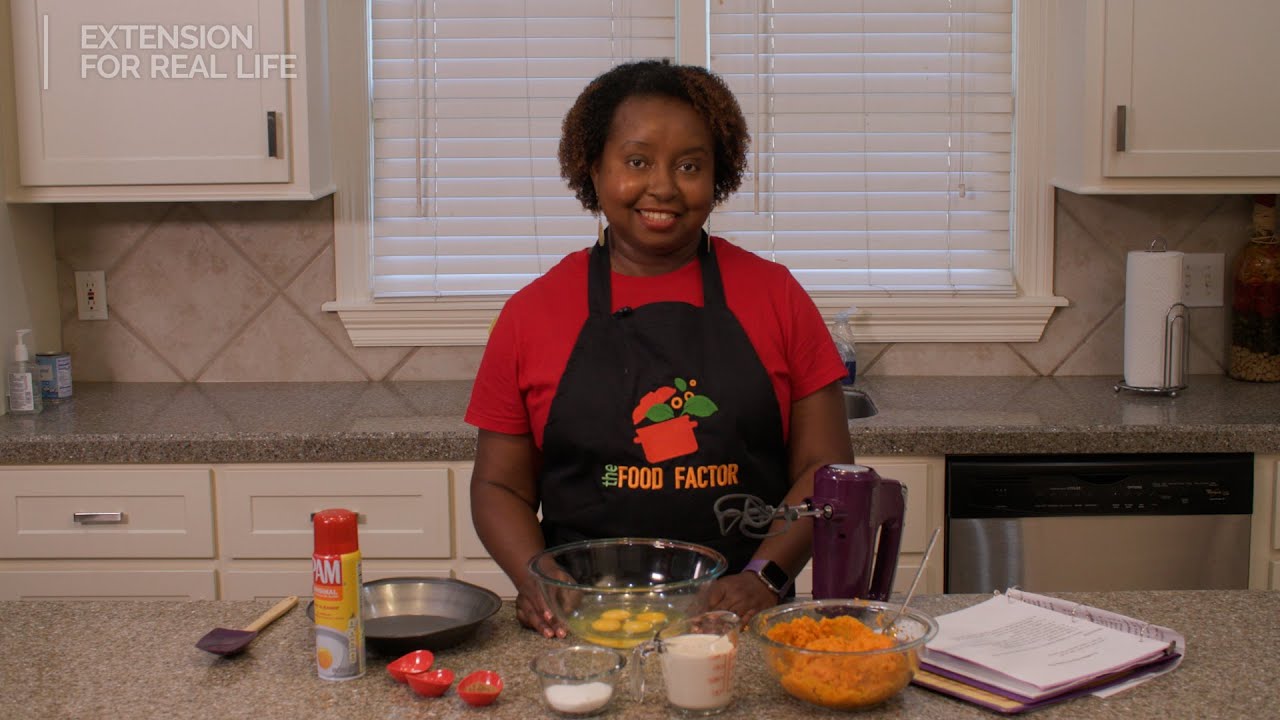
by Ms. Natasha Haynes, MSU Extension Service Love pie, but can’t eat the crust? Or do you need a gluten-free option for your dessert table this holiday season? This Crustless Pumpkin Pie fits the bill and comes together quickly. Although this recipe calls for pumpkin, I prefer sweet potato pie. So, we substituted Mississippi-grown sweet potatoes in our recipe. They work just as well, and they also are in season. Bake three to four medium to large sweet potatoes. Cool. Remove the skins and mash. That’s it! It’s really easy. Crustless Pumpkin Pie Ingredients - 4 eggs - 15 ounces canned pumpkin - 8 ounces evaporated milk - 1/3 cup sugar - 1 tablespoon pumpkin pie spice - 1 teaspoon vanilla extract - 1/2 teaspoon salt - Nonstick cooking spray Heat oven to 400 degrees F. Spray a pie pan with nonstick cooking spray. Add the eggs to a mixing bowl and beat together. Next, add the pumpkin, evaporated milk, sugar, pumpkin pie spice, vanilla, and salt. Mix until smooth. Pour into the pie pan and bake for 15 minutes. Turn the oven down to 325 degrees F and bake for another 30 minutes or until the pie is set. Pie is done when a knife inserted in the center comes out clean. Thanks to Virginia Cooperative Extension for this recipe! For more great recipes and terrific kitchen tips, be sure to follow The Food Factor on Facebook, Instagram, and Twitter! And if you like our recipes and videos, we’d love for you to share them with your friends! It really helps!
- Cozy Up With These Italian Wines
by The Wine Guys, Tom Marquardt and Patrick Darr Quick, what is the most productive wine region in Italy? Many would guess Tuscany where chianti leads the parade. But it’s not. Piedmont, the home of the famed barolo and barbaresco? Nope, it’s the Veneto. The home of the reds of Valpolicella and whites of Soave produces 18 percent of all Italian wine. Tuscany comes in 6th place and Piedmont ranks 7th. Hemingway was an ardent valpolicella enthusiast. After enduring two significant plane crashes in Africa, he claimed valpolicella as an integral element in his recovery. Valpolicella is also featured by Hemingway in one of his more obscure books, “Across the River and Into the Trees,” published in 1950. The novel featured valpolicella as the main character’s ample tipple of choice. The Veneto, near the town of Fossalta Di Piave, is also where in 1918 the teenage Hemingway was injured by an Austrian mortar shell while serving as a volunteer ambulance driver for the Italian army. Hemingway’s wartime Veneto experience is thought to form the basis for his breakout novel “A Farewell to Arms” in 1929. Valpolicella is primarily made from three red gapes: corvina, rondinella and molinara. Four styles of valpolicella range from age-worthy amarone and recioto, a sweet dessert wine, to regular valpolicella and ripasso, which are generally meant for current consumption. The introductory valpolicellas provide a pleasant, uncomplicated experience and is generally priced less than $20. Priced a bit higher, ripasso is valpolicella that is mixed with the spent skins and seeds from amarone production to create a bolder, more complex wine. For amarone, the fully mature grapes are harvested and air-dried for up to three months, shriveling the grapes and concentrating the grape liquids. The resulting wine is concentrated and complex with higher alcohol. Recioto is also made from air-dried grapes but with the fermentation process halted before all of the grape sugars are consumed by the yeast. It is thus a sweet dessert wine. We recently tasted a selection of wines of the Veneto from Famiglia Pasqua, a three-generation family owned and operated winery. We sampled a valpolicella and amarone from them as well as two excellent IGT selections that skirted the traditional Valpolicella DOC rules but implemented some of their traditional techniques. The Famiglia Pasqua Passionsentimento Bianco Veneto IGT 2019 ($18) is a fantastic wine and a good value. Crafted from lightly dried garganega grapes, which are traditionally used to make soave, this example presents citrus with intense pear and peach notes that present a very round experience and a very long finish. The Passionsentimento Rosso Veneto IGT 2019 ($19) also uses desiccated grapes after they lose 30 percent of their water, which concentrates the sugars in the remaining grape must. Corvina, croatina and merlot make up the blend, which reminds one of a well-made ripasso at a fraction of the price. Fresh cherry and dried cherry notes dominate. We also tasted the Pasqua “Mai Dire Mai” (which means “never say never”) Valpolicella Superiore DOC 2013 ($50). Pasqua has wisely aged this wine so that it is in a beautiful spot right now. This valpolicella presented baked plum and cherry notes with hints of cedar in the finish. Very full, rich and mature with a flavor profile similar to a well-made Rioja reserva. The grapes for the Pasqua Famiglia Pasqua Amarone della Valpolicella 2016 DOCG ($50) were air-dried for three months before pressing. The finished wine featured sweet cherry notes with a hint of roses. Very fresh smooth and long lasting in the mouth. Flat Top We recently tasted several wines from Flat Top Hills being made by “G4,” the fourth generation of the pioneering C. Mondavi family. Consulting winemaker Angelina Mondavi has teamed up with head winemaker Randy Herron to make reasonably priced wines under the broad California appellation. The primary growing region is in the Dunnigan Hills in Yolo County. Their fruit-forward style makes them easy to drink and versatile with simple foods. Flat Top Hills California Chardonnay 2020 ($14). Medium body with fresh tropical fruit aromas and apple flavors with a touch of lemon curd and vanilla. Simple but elegant for the price. Flat Top Hills California Red Blend ($16). Medium bodied with perceptive spice notes and black cherry, raspberry flavors. It’s an easy drink that matches well a variety of fare or it can be enjoyed by itself. Flat Tops Hills California Cabernet Sauvignon 2018 ($16). Medium body with rich black cherry, some plum flavors and a dash of cocoa powder. Smooth mouthfeel. Italian wine picks La Valentina Pecorino 2019 ($18). Pecorino is the grape variety often forgotten in the Abruzzo region of Italy yet here it excels. It is aged on the lees to add some weight and complexity. Pear and tropical fruit notes. Enrico Serafino “Grifo del Quartaro” Gavi di Gavi 2020 ($17). Simple yet fresh with balanced acidity. Made from the local cortese grapes, it has citrus and peach notes. Inama Carbonare Soave Classico DOC 2019 ($28). Using the native garganega grapes grown from a 50-year-old vineyard, this soave has good body and palate length. It sees no oak so the fruit is pure and fresh with citrus notes and brisk acidity.
- Restaurant or Your Kitchen: Soup is Good Anyplace You Find It
By Kara Kimbrough The temperature has dipped slightly, so it must be time for homemade soup… right? Some of my favorites are chicken noodle, potato and corn chowder, ham and vegetable and chicken taco. I tasted this one while judging a soup and gumbo competition on the Gulf Coast and fell in love with the spicy flavors balanced with shredded chicken. It’s just as delicious minus the chicken if you're vegetarian. Whenever I prepare soup, I always use an extra-large stockpot. Soup freezes well and defrosts quickly to create the perfect fall or winter meal in minutes. If a bowl of steaming soup prepared by someone else is your idea of nirvana, you’re in luck. Several restaurants around the state are known for their delicious versions. Back by popular demand, are just a few of my picks for Mississippi’s top restaurant soups: 1. Corner Bakery doesn’t disappoint with a loaded potato soup that’s as delicious as the real potato version. 2. Basil’s in Ridgeland’s Renaissance and the Jackson area is known for fresh, tasty fare, including creamy tomato basil soup. 3. Scranton’s she crab is a favorite of diners at this Pascagoula restaurant. It's a rich, flavorful soup filled with, you guessed it, crab. 4. Many feel seafood gumbo is this long-time Jackson restaurant’s best soup offering, but I disagree. Seafood bisque draws its share of fans to Hal & Mal’s in Jackson every Friday, the only day it’s served. 5. Stop by Panera Bread and choose the bread bowl filled with steaming French onion soup. Soup and bread – in my book, it doesn’t get much better. 6. It’s a little chilly, so time to try the Wagyu chili at Dave’s Triple B in Flora. It’s thick, hearty and a complete meal. 7. Cream of crab sounds like an interesting soup. It is, especially if you sample Strawberry Café in Madison’s version. 9. In the mood for old-school vegetable soup? Look no further than Primos Café in the Jackson area. With a side of cornbread, it’s the perfect hearty lunch. 10. Last, I hate to play favorites among gumbo-serving Gulf Coast restaurants. Almost every variation I’ve sampled is delicious, but Mary Mahoney’s reigns supreme. It’s regularly shipped to fans around the U.S. It may be pricier than other eateries’ version, but you’ll forget the cost after the first bite. Here's the recipe for my favorite shortcut potato and corn chowder. Fall ’21 Potato and Corn Chowder 2 – 28-ounce bags of Ore Ida Potatoes O’Brien with Peppers and Onions (you can use whole potatoes, cut into small cubes, if you prefer 2 - 14-1/2-ounce cans cream of mushroom soup and 2 soup cans of water 1-2 cups crumbled cooked bacon (I use the bagged variety of extra large pieces, not bits - but you can cook your own) 1 can whole kernel corn, drained 1-1/2 cups milk or heavy cream 1/2 teaspoon salt 1/2 teaspoon pepper In a large slow cooker, place defrosted potatoes (or cubed potatoes) in the bottom and top with soups, followed by two soup cans of water; stir well. Stir in the corn, bacon and salt and pepper. Cover and cook on low for 3-1/2 hours or high for 7-1/2 hours. Uncover and stir in milk or heavy cream. Add more seasonings and milk or cream as needed. Cover and cook an additional 30 minutes.
- Everything You Ever Wanted to Know About Gumbo
By Julian Brunt Gumbo is perhaps the most iconic dish of the Southern Gulf Coast, and I doubt anyone with knowledge of this Southern food culture would disagree. It is most often associated with Creole and Cajun cultures, but over the years, it has become so popular that it can be found almost anywhere. I’m fond of saying gumbo isn’t a recipe, it’s an opinion. Recipes, techniques and even basic concepts vary so widely it is probably the most argued over Southern dish of all time, with heated debates raging over every aspect of gumbo making, from the Holy Trinity to the roux. So, where did this iconic dish come from? Many people think its origins are in French bouillabaisse, the famous seafood stew from Marseille. I have been telling the story of the lonely Frenchman from Marseille who invented gumbo for years, although I cannot speak to the veracity of the story. Then again, if it is a good story, it doesn't matter, does it? The story goes like this: this Frenchman lived on the Louisiana Coast and was homesick for his father's bouillabaisse. His father was a fisherman, and after selling the day’s catch, what was leftover was turned into a stew for the hungry fisherman and crew on the beach, bouillabaisse. Our Frenchman did the best he could to replicate his father's recipe with what he could find, but there certainly wasn't any fennel, and he didn't recognize any of the local fish, but what resulted was the prototype of modern gumbo. Good story, right? In fact, gumbo came to us from many places besides Marseille’s vaunted bouillabaisse. It came to us from Africa and the okra that slaves brought with them into bondage. Ki ngombo is the term for okra in the Central Bantu dialect of West Africa. The dried sassafras leaves that were once popular to use as a thickener in gumbo came from the Native Americans that sold it in the French Market in New Orleans. The Holy Trinity, a combination of onion, bell pepper and celery, is related to not only the French mirepoix, but also the Spanish sofrito. So, our beloved gumbo is truly an international dish. Let’s get on to actually learning how to make a good gumbo. It is a daunting recipe to many cooks, but if you take your time, one step at a time, and never, never take any shortcuts, you will do just fine. So, what are the basics? It’s pretty simple, the Holy Trinity (onions, bell pepper and celery), a good stock, sausage, sometimes chicken, seafood of your choice and the booger bear to so many, a good dark roux. Let’s start with the roux, which is of course French. The French have four types of roux, white, blond, brown and dark brown, but a gumbo roux is far darker than the French dark brown. When I teach a gumbo class, I tell the class that if they want to learn how to make a gumbo roux, make a roux and burn it. Now back up three or four minutes, and you will have it just right. The vegetables are pretty simple: just chop and sauté, but I like to cook them for at least 20 minutes. I want them to almost disappear—the flavor is intensified the longer you cook them. Think of the difference between a lightly sautéed onion and an onion fit for French onion soup. It really is a big deal. The stock is perhaps the only place where a tiny shortcut can be made. Buy commercial chicken stock, roast 4 to 6 chicken thighs, de-bone them and add the bones to the stock, along with any vegetable trimmings you might have, now simmer for an hour. I like to season my stock simply with Tony Chachere's Creole Seasoning and red pepper flakes. The combination of protein is up to you, but I use Conecuh sausage, roasted chicken thighs and shrimp. I also like duck and oysters in a gumbo. But gumbo really is a leftover kind of recipe, and you can make a good gumbo out of almost anything you have on hand. I have heard stories that the poor folks that lived in Biloxi's Point Cadet, the old seafood district, used hot dogs when there was nothing else to use. But I do not recommend it. Just as in the making of the stock, my basic seasonings for gumbo are Tony Chachere's and red pepper flakes. One point that I think is important, season as you go. Always taste before and after seasoning, never season all at once. Let the gumbo develop slowly, nurture it lovingly and the results will be just as lovely. Two more tips: this is a one-pot dish. Everything is cooked in the same pot, and the drippings are never wiped out but will add to the depth and flavor of the gumbo. Oil is not only a lubricant but also an ingredient. Use a good quality olive oil in some quantity, and it will make a difference. Here is the basic recipe: 1 1/2 cups Conecuh sausage, sliced 2 bell peppers, chopped 1 large onion, chopped 1 cup celery, chopped 2 cups rice 4 cups chicken stock Chicken stock to cover, maybe 6 cups 1-pound large, peeled shrimp Equal parts of oil and flour (less than a cup) Tony's seasoning and red pepper flakes Sauté the sausage in a little oil until well browned. Remove and set aside. Add the shrimp and cook over high heat in small batches for just one minute. The point is to give the shrimp a little color, not cook them through. Remove and set aside. Add the vegetables and more oil if necessary and cook for 20 minutes. Separately, season the chicken with salt and pepper and roast at 375 F until well browned. Remove, cool and de-bone. Set the meat aside. Add the chicken stock to the bones and skin leftover in the pot and simmer for an hour. In a cast-iron skillet, add the oil and flour, combine well. It will start out lumpy but gradually smooth out. Keep a good eye on the roux, and do not let it burn, stir often. (It will slowly start to take on color, and when it starts to smell nutty, you know you are getting close. Stir, stir, stir at the end. If it darkens too quickly, take it off the stove. If you need to cool it down quickly, place the pot on a tile counter or the floor. It will draw off some of the heat.) When the roux is almost done, take it off the stove, it will continue to cook for a while. Add the stock to the vegetables, bring to a simmer. Taste and season as necessary. Carefully add the roux, it will spatter and bubble. Stir and simmer for 10 minutes. Add the sausage and chicken, simmer for about 30 minutes. While the gumbo simmers, steam the rice and stock for 20 minutes. Fluff as soon as it is ready. Add the shrimp just before the gumbo is served. Notes: If you are a garlic fan, toast the dry rice in garlic butter, then steam per usual. It is delicious! I told you this was an opinion, not a recipe! Use as many local ingredients as you can. I like Two Brooks Farm rice from my friend Mike Wagner’s farm in the Mississippi Delta. Buy your vegetables at a farmer’s market, and buy the freshest shrimp that you can find.
- Mr. D's Fried Chicken at Lorman's Old County Store is World Famous
By Kara Kimbrough When the Mississippi Department of Archives and History calls a place “Mississippi’s most iconic site,” it’s worthy of a visit. Located in Claiborne County about 10 miles from Port Gibson, the Ruins of Windsor is a two-acre site featuring 23 45-foot-tall Corinthian columns, remnants of the largest antebellum Greek Revival mansion ever built in Mississippi. The 17,000-square-feet antebellum home was destroyed by fire in 1890; everything, that is, except the stately columns, balustrades, four wrought-iron staircases and a few pieces of china. Visiting the hauntingly beautiful site that has been featured in movies like Raintree County and Ghosts of Mississippi offers the perfect excuse to visit Mr. D’s Old Country Store in nearby Lorman. There you’ll find some of the best fried chicken in the state. If you believe the sign in front of the store, it’s the “world’s best fried chicken.” According to Food Network personality Alton Brown, Anthony Davis’ fried chicken is even better than his. Similar accolades have been written about Davis' fried chicken by national magazines and television networks. If you’re a Mississippian and haven’t sampled a piece, it’s time that you did. To work up an appetite for lunch, a trip to the ruins is the perfect solution. Named to the National Register of Historic Places in 1971 and designated a Mississippi Landmark in 1985, like Mr. D’s chicken, it’s another thing every Mississippian should experience. And for those who delight in taking the perfect selfie, it’s an Instagrammable place unlike any other. Today, the site is largely deserted except for the occasional bird or other wildlife darting through the nearby woods, but it wasn’t always this way. Known as Windsor Plantation, the three-story mansion was built for Smith Coffee Daniell, his wife and six children in 1861. Originally built with 29 columns, the mansion contained approximately 25 rooms, each with its own fireplace. A rarity for those days was the addition of two inside bathrooms equipped with rainwater from an attic tank. In today’s dollars, construction costs of the stately mansion equated to over $5 million. Like many buildings during the Civil War, Windsor was invaded by Union troops. Union General Ulysses S. Grant and 17,000 Union troops landed nearby and took over the mansion. After the Battle of Port Gibson, the Union Army turned Windsor was into a hospital. The Daniell family was allowed to remain in their home on the mansion's third floor. Windsor survived the war and continued to be occupied by the Daniell family until Feb. 17, 1890. On that date, a guest dropped ashes from a cigarette or cigar into debris left by construction workers. The mansion was completely destroyed with the exception of the columns and ironwork. Over the years, three of the four cast iron stairways that survived the fire disappeared from the site. Today, the remaining stairway occupies a prominent place at Alcorn State University, serving as the entrance to Oakland Memorial Chapel. After visiting the ruins, head south to Lorman and stop in front of the weathered clapboard building fronted by a porch that’s usually packed with customers waiting to enter. Over 100 years old, the building formerly served as a general merchandise store. Today, remnants of the past remain in the restaurant. An assortment of “a little of everything” is spread throughout the dining room on shelves and hanging on the walls. But it’s not the memorabilia that draws people by the hundreds into the Old Country Store seven days a week. It’s the bounteous buffet filled with mountains of golden fried chicken, ribs and pork chops. A piece of cornbread or a biscuit is the perfect accompaniment to vegetables like black-eyed peas, corn, green beans, turnip greens, okra and tomatoes and macaroni and cheese. Don’t forget to sample Mr. D’s sweet pea and homemade desserts like peach, blackberry and apple cobbler. If You Go: Ruins of Windsor Where: Rodney Rd., Port Gibson Hours: 8 a.m. – 7:30 p.m. Sunday-Saturday Contact: 601-576-6952 Old Country Store Where: 18801 US-61, Lorman Hours: 10 a.m. – 4 p.m. Sunday-Saturday Contact: 601-437-3661
- Celebrate Merlot Month and Halloween With These Wine Picks
by The Wine Guys, Tom Marquardt and Patrick Darr Merlot has suffered a lot of abuse over the years, but talk to Frank “P.J.” Alviso and it’s one of his favorite – albeit most challenging – grape varieties. This being Merlot Month, we spoke to Alviso because as vice president of Central Coast winegrowing for the vast Duckhorn portfolio, he has a good pulse on the merlot market. He manages grape sourcing for Duckhorn, a Napa Valley producer that never gave up on merlot in spite of flagging sales. Before joining Duckhorn in 2006, Alviso worked at Kendall-Jackson and grew up on a 400-acre vineyard in Amador County. While many vineyard owners have ripped up merlot vines because of waning interest, Duckhorn is looking for more. Merlot has suffered in a public perception over the years, but the decline may be because the grape variety is difficult to grow. Alviso said when demand for merlot was rising, the “gatekeepers” were forced to grow it in areas they didn’t like to satisify the public’s thirst for merlot. Quality went down and many dropped the program – it was a “thinning the herd,” Alviso said. Today, those who are making good merlot have zeroed in on the best areas and growing conditions. “Merlot is fundamentally trickier to grow,” he said. “It’s a more finicky varietal than cabernet sauvignon which has less vintage variation and can deal with weather issues better than merlot. The French have known that for a long time.” We went through more than a dozen merlots in the last few weeks and still found a lot not to like. Duckhorn Estate and its special Three Palms Vineyard merlots are exceptions. Mountain-grown merlot often produces the best, most long-lived merlot but most producers favor growing cabernet sauvignon in these choice locations. La Jota Vineyard’s extraordinary merlot is from Howell Mountain; Mt. Brave is from Mt. Veeder. Unfortunately, you’ll spend a lot of money to enjoy these merlots. Here are a dozen interesting merlots we recently tasted: Seavey Napa Valley Merlot 2018 ($65). Bill and Mary Seavey bought this historic Conn Valley vineyard in 1979 and since then have gained a reputation for making small-lot merlot, cabernet sauvignon and chardonnay. Only 450 cases are made of this well-balanced and age-worthy merlot. Generous strawberry and coffee aromas give way to fresh strawberry and raspberry flavors with layered nuances of vanilla, clove and rosemary. Good but fine tannins. J. Lohr Creston Vineyard Paso Robles Merlot 2018 ($40). Blended into this jammy, fruit-forward merlot is 11 percent malbec and 1 percent cabernet sauvignon. Red fruit aromas with raspberry and strawberry flavors accented by tea, mocha and cranberry. Duckhorn Vineyards Napa Valley Merlot 2018 ($56). This reliable producer has one of the most luxurious merlots in its Three Palm Vineyards version ($110), but the Napa Valley estate version is approachable, balanced and delicious. Unlike many merlots with muscular tannins, this wine can be enjoyed on release with fare such as short ribs and beef. Cherry aromas with layered plum, kirsch and blackberry flavors and a hint of cloves. Long finish. Duckhorn also makes a Stout Vineyard merlot. La Jota Vineyard Napa Valley Merlot 2018 ($85). Winemaker Chris Carpenter takes advantage of the Howell Mountain fruit to craft a bold merlot that is blended with a bit of petit verdot and tannat. Although it shows promise for a long and illustrious future, the wine has approachable plum and blackberry fruit character. Nice dried herb aromas and long finish. Mt. Brave Napa Valley Merlot 2018 ($85). Also made by Chris Carpenter but using grapes from Mt. Veeder, this merlot is lusher with forward, concentrated black cherry and cassis flavors with hints of cedar. Very delicious. Rutherford Hill Napa Valley Merlot 2019 ($35). Blended with cabernet sauvignon, cabernet franc, petit verdot and syrah, this wine has generous blueberry and blackberry notes with a good dash of soothing kirsch and a hint of vanilla. Rutherford’s 2018 Oakville merlot ($62) is a powerful wine with more complexity and tannin. J.O. Sullivan Founder’s Reserve Napa Valley Merlot 2018 ($290). This blockbuster merlot comes at a high price but it shows what kind of merlot can emerge from the Rutherford AVA. It’s densely packed with plum and blackberry fruit with hints of chocolate, cedar and vanilla. It puts definition to full body. Cakebread Cellars Napa Valley Merlot 2018 ($55). Black cherry and blackberry notes dominate this medium-bodied and fruit-forward merlot. Hints of graphite and black licorice. Moderate tannins make it quaffable on release. Frank Family Vineyards Napa Valley Merlot 2018 ($45). The producer is back in the merlot business after a long respite and consumers should be happy. Some cabernet sauvignon and cabernet franc help make this merlot complex but also juicy with generous blackberry flavors. Decoy Merlot 2019 ($35). Drawing grapes from Sonoma County, this medium-body merlot is deceivingly complex. The floral nose seems simple, but on the palate there are layers of blackberries, plums, raspberries and hints of vanilla and spice. The tannins are soft, thus making it a versatile wine to go with pasta, veal, pork and burgers. Silverado Vineyards Mt. George Vineyard Merlot 2018 ($40). Smooth and easy, this medium-body merlot has black fruit flavors and hints of mint and chocolate. Matanzas Creek Winery Alexandar Valley Merlot 2018 ($40). Dark fruit notes with hints of black licorice, olives and leather. Grapes from high elevation to render a medium body but serious merlot. Halloween Flora Springs makes two wines with Halloween themes that unlike many gimmicky labels are actually very good. The 2019 Flora Springs Ghost Winery Malbec ($60) is smooth and round with ripe blackberry flavors and a hint of cocoa. It’s really one of the best malbecs we’ve tasted from Napa Valley. The Flora Springs All Hallow’s Eve Cabernet Franc ($60) is dense and unctuous with dark fruit flavors and a hint of mocha. Every year general manager Nat Komes commissions an artist to create a unique label for the wine. This year the artist was Marc Sasso from New York who has worked with Marvel and Topps Comics. It’s of witches dancing in the moonlight, brewing a wine potion. Wine picks Primus The Blend 2018 ($19). This is a broad blend of cabernet sauvignon, the native carmenere, syrah, petit verdot and cabernet franc. From the Chile’s Colchagua Valley just 15 miles from the sea, it has a velvet texture with raspberry and strawberry notes. Veramonte Chardonnay Casablanca Valley Chile 2019 ($12). This is a very reasonably priced chardonnay from Chile that will please a crowd. Simple tropical fruit and apple flavors, good structure and a soft mouthfeel.
- A Local Food Network Star
by Paige McKay White At just 11-years-old, Madison native Andrew Clark has already made a name for himself in the baking and pastry world. Back in December, Andrew appeared on season nine of Food Network's “Kid Baking Championship.” While he did not win, he accomplished and is still accomplishing so much more. Chef Andrew started his baking journey at just age four. “I baked a blueberry pie for Thanksgiving,” he said. “And it actually turned out pretty good.” From there, he decided to take on the challenge of a chocolate chip icebox pie. After watching Nancy Fuller on Food Network, Andrew decided he wanted to take on baking, and he has not stopped since. He had to learn the ropes of baking and the science that came with it, but it was a task he was ready to take on. “I didn’t even know how to cream butter and sugar,” he said. “I had to watch a lot of YouTube videos.” For a few years, Andrew was only baking for leisure. At around 7-yearsold, he and his momager (mom/ manager) Kristi decided to make it into a business. “My mom wasn’t too sure about it since I was so young, so when I was close to 9, it got a lot more serious.” Since then, business has been booming, and Chef Andrew has been taking custom orders through his Instagram and email, and he has even been setting up shop at local farmer’s markets over the last several years. Chef Andrew noted that he has learned how much goes into having a business and selling his products. “A lot goes into it because you have to package and label all the products,” he said. “It sometimes takes longer than the baking process.” His first gig was a couple of years ago at the Madison Farmer’s Market, held every Tuesday during the spring and summer. It motivated him to want to do more and take this passion further. Whether he is at the Madison Farmer’s Market or Livingston Local, customers can find all kinds of sweets, from cookies to brownies and even macarons, at Chef Andrew’s table. Selling his baked goods at farmer’s markets is not his only accomplishment, however. Last year, Chef Andrew got the chance of a lifetime and appeared on season nine of “Kids Baking Championship.” He and his fellow contestants beat out thousands of other kids to appear on the show, which is an accomplishment in itself. The episodes in which he appeared aired in December 2020, so he was on set filming during the summer of the same year. “It was a lot different cooking on TV than it is at home,” Chef Andrew noted. “It was really hot on set and we had to do a lot of things differently because of Covid.” Though he did not come home with a win under his belt, the future is still bright for the young baker, and he is clinging tight to his advice of never giving up. “This was my third time auditioning,” he said. “I didn’t give up.” Chef Andrew also recalled when he tried to make cupcakes when he was younger, and they did not turn out as he hoped. Yet, he did not give up. And his cupcakes have since improved, of course. Ultimately, Chef Andrew’s goal is to open a pastry shop in Paris, but for the time being, you can find him at local farmer’s markets or contact him on Instagram at @ thechefandrewclark for custom orders. Chef Andrew is also planning to host virtual baking classes through an online pastry school.
- Ornamental Peppers Have Use As Holiday Decoration
Dr. Gary R. Bachman. MSU Extension Service As an ornamental horticulture guy, I’m always thinking about how to expand or extend the usefulness of our landscape and garden plants. I’ve been toying with a nontraditional use for ornamental peppers. This is a group of attractive plants many of us grow during the summer. They come in a colorful and wide variety of selections. I have always marveled how the colors change as the pepper fruit mature across the season. The idea I’ve been playing with is growing some ornamental peppers indoors during the winter and using them in Christmas and holiday season décor. Now, this isn’t new idea. I remember a day over 30 years ago when my fellow grad students and I were kicking around ideas. One student came up with this totally out-of-bounds thought of growing peppers specifically for the holidays. We’ll call them Christmas Peppers, he said. This was one of those wild and crazy ideas -- and maybe has a touch of horticultural heresy --because everyone knows that poinsettias are the end-all, be-all holiday plant forevermore. But still the idea stuck with me, and I’m so glad it did. Slowly over the years, garden centers and floral designers have been adding ornamental peppers into their holiday creations. In fact, the Chili Pepper Institute at New Mexico State University has developed an entire series of ornamental peppers to celebrate the holidays, from NuMex New Year’s Day to NuMex Christmas. What I like about using ornamental peppers as holiday plants is the fact that the plants continue to produce multicolored fruit over most of the winter. Most of the ornamental peppers grown for the holidays stay small and are well mannered. A couple of my landscape favorites are perfect for holiday use. Chilly Chili seems to explode in a dramatic, colorful demonstration. This 2002 All-America Selections winner holds the fruit above the foliage. Fruit starts as yellow-green and transitions to a bright orange and brilliant red. Chilly Chili is a great choice for container planting, as the plants reach just 1 foot tall and wide. These peppers are not hot and are probably the safest to grow around curious children. The ornamental pepper variety Sangria holds its slender fruit pointing upward boastfully as if getting ready for a party. This pretty ornamental pepper bears fruit in almost unbelievable numbers so that they resemble confetti. Young Sangria peppers emerge greenish yellow and then march through a wonderful parade of colors from orange, lilac, purple and finally on to a glorious crimson red. Unlike Chilly Chili, Sangria peppers are hot, hot, hot! Growing ornamental peppers for the holidays is really easy. Find a bright window where the plant can receive about six hours of sunlight a day. Temperature-wise, if you’re comfortable, the plants will be happy. To be more specific, this means daytime temperatures in the low 70s and a little cooler at night to the mid-60s. Temperatures in this range will help encourage and prolong the flowering cycle and production of the colorful fruit. As with all indoor plants, correct watering is important. Keep the potting mix consistently moist, not waterlogged, as this condition leads to root rot issues that cause the flowers drop off. Over the past couple of weeks, I’ve already seen nice selections of ornamental peppers produced for the holidays at local garden centers. Consider getting one or two to complement your poinsettias.
- Food Factor: Pumpkin Spice Latte
By Ms. Natasha Haynes, MSU Extension Service Pumpkins are the star of fall. They are everywhere -- in the stores, on front porches, and in your holiday pie. And so is pumpkin spice. If you love lattes and this quintessential fall flavor that has become all the rage, this recipe is for you! Pumpkin puree gives this drink a nutritious boost. Pumpkin is high in fiber, low in calories, and packed with vitamin A. It’s a terrific addition to your diet. Don’t forget about the seeds. They are a good source of magnesium, which is important for bone health. They also boost heart health with omega-3 fatty acids and antioxidants. Now grab your favorite mug and get ready for a healthier version of your favorite coffee drink!!! Pumpkin Spice Latte Ingredients: - 1 cup low-fat milk - 2 tablespoons pure pumpkin puree - 1 tablespoon sugar - 1/4 teaspoon pumpkin pie spice (or 1/8 teaspoon cinnamon and 1/8 teaspoon nutmeg), plus more for sprinkling - 1/4 teaspoon vanilla extract - 1/4 cup strong brewed coffee - 1 tablespoon whipped cream Combine the milk, pumpkin puree, sugar, pumpkin pie spice, and vanilla in a medium microwavable safe bowl. Cover the bowl with plastic wrap and vent with a small hole. Microwave until the milk is hot, about 1-2 minutes. Whisk vigorously until the milk mixture is foamy, about 30 seconds. Pour the coffee in a large mug and add the foamed milk. Top with whipped cream and a sprinkle of pumpkin pie spice. Thanks to the University of Georgia Extension for this recipe! For more tasty recipes and terrific kitchen tips, be sure to follow The Food Factor on Facebook, Twitter, and Instagram! And if you like our recipes and videos, we’d love for you to share them with your friends! It really helps!
- Happy Healthy Newsletter: Greens
By Samantha Willcutt, MSU Extension Service Greens are a Southern tradition, found on most lunch special menus throughout Mississippi. There are many types of greens, but the most popular greens in our state are collards, mustard, turnips, Swiss chard, kale, and spinach. Kale and spinach can be enjoyed raw or cooked. These plants grow well in Mississippi and can be found year-round at grocery stores. There are many healthy and tasty ways to prepare greens, and greens are rich in nutrients! Grow Greens are cool-season vegetables, which means they grow best in Mississippi during the spring and fall. Mustard greens, spinach, and turnip greens need only 2–4 inches between plants, making them great for container gardens. For more information about growing greens in Mississippi, check out the Mississippi Vegetable Gardener’s Guide. Select One pound of fresh greens cooks down to about 1–2 cups. Pre-washed and packaged greens save time but cost more. Pick greens with full leaves that are not wilted or spotted. Don’t forget about frozen or canned greens, which may be more convenient. Choose “no salt added” or “reduced sodium” and avoid “seasoned” canned greens when possible to limit salt intake. Prepare Remove any wilted or yellow leaves before cleaning fresh greens. Wash greens under cold running water or in a large bowl filled with cold water; then drain and repeat if necessary. Remove hard stems; stack large leaves and roll; then cut into thin strips. Benefit Greens are packed full of vitamins, minerals, and fiber but are low in calories. Eating a variety of greens can: Support your immune system (being sick is never fun). Help your muscles to work better (remember the heart is a muscle). Protect your cells from damage (think better eyesight and healthier looking skin and hair). To learn more about preparing greens, visit HappyHealthy.MS and click on Tips and Videos. Prepare Leafy Greens Egg and Spinach Casserole Ingredients: - 1 (16-ounce) bag frozen chopped spinach - 6 large eggs - 1 tablespoon shredded cheese - 1/4 teaspoon onion powder - 1/8 teaspoon salt - 1/8 teaspoon black pepper - Nonstick cooking spray Preheat the oven to 350 degrees F. Wash your hands well with soap and hot water. Thaw the spinach in the microwave or under cool running water. Put the spinach in a strainer in the sink. Squeeze as much water out of the spinach as you can. Crack the eggs into a small bowl. Stir the eggs with a fork until they are all bright yellow. Add the cheese, onion powder, salt, and black pepper to the eggs. Stir until all the ingredients are mixed together well. Spray a medium-sized baking dish or a pan with high sides with nonstick cooking spray. The pan should be about 8 inches square. Make a light coating. Spread the dry spinach in the bottom of the baking dish. Make an even layer. Pour the egg mixture over the spinach. Stir gently to make sure the spinach is still spread evenly in the pan. Put the pan in the oven. Bake for 15–20 minutes, or until the eggs are done and the top is lightly browned. Cut the casserole into 6 even pieces. Serve the casserole while it is hot. Refrigerate leftovers within 2 hours. Slow-Cooked Southern Greens Ingredients: - 1 tablespoon oil - 1 small white onion, cut into small pieces - 1 teaspoon black pepper - 1 smoked turkey wing - 1 bunch greens (turnip, collard, or mustard) - 1 (32-ounce) container low-sodium chicken broth Wash your hands well with soap and hot water. Put the greens in a large bowl and run water over them to wash away any dirt or grit. If greens are still dirty, repeat this step. Tear or cut off the stems. Cut the leaves into strips about 2 inches wide. Heat the oil in a large pot over medium-high heat or in a slow-cooker set on high. Add the onion to the pot. Cook the onion until it looks clear and is starting to brown, about 5 minutes. Add the black pepper and the smoked turkey wing to the pot. Stir to coat the onion with black pepper. Add the greens in 3 or 4 handfuls. After each handful, stir to coat the greens with onion, pepper, and oil. After all the greens are added to the pot, add the chicken broth. Put a lid on the pot. Cook on low until the greens are tender, about 2–3 hours. Add shredded meat from the turkey wing (optional). Serve the greens while they are hot. Refrigerate leftovers within 2 hours. HAPPY HEALTHY @HAPPY HEALTHYMS HAPPY HEALTHYMS WWW.HAPPY HEALTHY.MS Publication 3411 (POD-10-21) This material was funded by USDA's Supplemental Nutrition Assistance Program - SNAP. This institution is an equal opportunity provider. Click here to view as a PDF.
- Gems in Jackson: International Eats
From Asian to Caribbean, the city of Jackson has all kinds of international eats! No matter what you are in the mood for, the City With Soul has you covered. Check out some of our favorite places in Jackson for international eats in this week's Sipp Jackson blog post.
- What's Actually In "Clean" Wine?
by The Wine Guys, Tom Marquardt and Patrck Darr History shows that humans are very inventive when it comes to making something better. The auto industry is a good example: power windows, power brakes, electric cars and now cameras, self-parking, self-driving, GPS and more. The same goes for the beverage industry. Wine was once a simple matter of crushing ripe grapes and letting wild yeast convert sugar to alcohol. But then, wine turned to vinegar, and ancient winemakers knew they had to add something to preserve the wine from spoilage. And so began the intervention of chemists who invented new means to alter a wine for the better: sur lies aging, malolactic fermentation, racking, cold-soaked fermentation. And if the grapes don’t ripen as well as expected, there are more tricks. Bugs or downy mildew? There’s a spray for that. Too much alcohol? Add water. Not enough color? Add grape concentrate. Not enough acidity? Add tartaric acid. Too sweet? Add tannins. In fact, a lot of chemical additives are allowed in wine, which is the source of great controversy among “natural” wine proponents who want labels to include ingredients. With more people discovering what’s really in their Flaming Hot Cheetos, why wouldn’t they want to know what’s in that cheap Menage e Trois chardonnay? Unfortunately, wine producers are only obligated to tell us that wine contains alcohol and sulfites. If legislation is ever passed to change that, consumers could see such ingredients as potassium ferrocyanide, copper sulfate and ammonium phosphate. Should you be worried? Many purists think you should. Most recently, Cameron Diaz teamed up with Katherine Power to create a “clean” wine called Avaline. Clean is another word for organic. Scout & Cellar calls its line-up of organic wines “clean-crafted.” We have mixed feelings about the natural wine movement. On one hand, why wouldn’t you want a wine free of pesticides, artificial fertilizers and those funny sounding chemicals? On the other hand, we’re consuming that in food products every day and the alternative can be more disgusting. Purists are also living a hypocrisy. Alcohol is as strong a toxin as any of these chemicals, yet we don’t see them embracing alcohol-free wine. We’re in favor of organic wine from biodynamic vineyards because in general the fewer chemicals are better for us and better for the Earth. But the wine still has to taste good and a good number of the natural wines we have tasted don’t. We don’t think consumers will like their cheap plonk if producers remove Mega Purple, a grape concentrate, that has been added to give the wine deeper color and more sugar. Nor would they be happy if the wine soured on the second day because the producer didn’t add any sulfites. Then there is the issue of GMOs. Many wine producers use cultured yeasts instead of the natural yeasts that cling to grapes. These modified commercial yeasts add different flavors, but more importantly they allow a winemaker to control fermentation. Even grape vines are genetically modified to create versions that are more resistant to pests and disease. But vines already have been genetically modified over time. Cabernet sauvignon is a cross between cabernet franc and sauvignon blanc; chardonnay is a cross between pinot noir and gouais blanc. The terms in this movement sow confusion. Only “organic” is defined by law. Every other term, including “natural,” is vaguely defined by marketers and well-meaning winemakers. Scout & Cellar, for instance, is an intriguing business in organic wines. It uses a lab to test every wine it sells for chemicals. It says none of the wines it sells contain any of the FDA-approved additives, including Mega Purple and genetically modified organisms. Their wines have low sulfites, a natural-occurring ingredient of wine. All of this terminology is enough to give you a headache – and that’s exactly what prompted Sarah Shadonix to leave law and launch Scout & Cellar. The headaches she got from drinking wine, she concluded, were a result of the pesticides and chemical additives in wine. She scouted the world to find wines – mostly from small producers – that lab testing shows are free of chemicals. You won’t find Scout & Cellar’s wines in stores. You may find them in your neighborhood, though, as did we. There are thousands of at-home consultants who will process your orders and get the wines delivered to your house. Or you can go to their web site: scoutandcellar.com. No stores, no middlemen, no fancy marketing. More and more wine producers are moving to sustainable farming and chemical-free wines. Whether the great wine producers will follow is another matter. Blackbird Vineyards Some extraordinary blends are coming from Blackbird Vineyards in Napa Valley. Although pricey, these premium blends reflect the character that we have grown to expect from Napa Valley, especially in the hands of talented winemakers Aaron Pott and Kyle Mizuno. They are helped by sourcing grapes from some of the regions’s top vineyards: Stagecoach on Vaca Mountains, Ballard on Spring Mountain and Crocker & Starr in Rutherford. We enjoyed the Blackbird Vineyards Illustration, a blend of 49 percent merlot, 28 percent cabernet sauvignon and 23 percent cabernet franc. Equally bold in style is the Blackbird Vineyards Contrarian, a blend of 70 percent cabernet sauvignon, 29 percent cabernet franc and 1 percent merlot. Wine picks Sea Slopes Fort Ross Winery Pinot Noir 2019 ($35). A reasonably priced wine for this category, the Sea Slopes pinot noir draws grapes from the Sonoma Coast. Made by Jeff Pisoni, it has bright raspberry and cranberry aromas, cherry flavors with some herbal notes and long finish. Avalon Lodi Cabernet Sauvignon 2019 ($11). This is one of the best values in the cabernet sauvignon market today. True to the region, it has jammy and ripe plum and blackberry flavors with a hint of vanilla. Chateau des Ferrages Roumery Cotes de Provence Rosé 2020 ($20). From the respectable house of M. Chapoutier, this rosé is a classic blend of grenache, cinsault and syrah. Very vibrant and racy with strawberry and mineral notes. This wine rocks.
- Happy Healthy Newsletter: Broccoli
By Samantha Willcutt, MSU Extension Service Broccoli is a super vegetable that can be enjoyed raw or cooked, alone as a yummy side, or added to salads or cooked dishes like pastas, soups, stir-fries, and casseroles. If you are not a fan of raw broccoli, try blanching, which makes broccoli more tender and less bitter. Use the following tips to help your family enjoy more broccoli! Select When selecting broccoli, look for tight, dark green florets and firm stems. Avoid broccoli with an odor or yellow, opening buds. In Mississippi, purchase fresh broccoli in April and May or October and November when it is less expensive and more available. During the off-season, choose frozen broccoli, which may cost less than fresh. Prepare Make bite-sized pieces by cutting below the top and removing the stem. Cut the florets and stem into pieces. Rinse bite-sized pieces just before using. Be careful not to overcook broccoli! Crispy, tender broccoli is what you are looking for, not mushy, soft broccoli. Store Keep fresh broccoli in an open plastic bag in the refrigerator for up to 5 days. If you have produce drawers in your refrigerator, keep vegetables in one and fruits in another. Fresh broccoli can be blanched and frozen to keep color, flavor, and nutrients longer. To learn more about storing, blanching, and freezing broccoli, visit HappyHealthy.MS and click on Tips and Videos. How to Store Fruits and Vegetables How to Freeze Fresh Fruits and Vegetables Fun with Food Children Can Help At the grocery store, allow children to select broccoli. In the kitchen, children can wash broccoli and prepare an ice bath to place broccoli in after blanching. Children Can Learn Raw or blanched broccoli makes a quick and easy snack and is fun to eat with healthy dips. The florets are the flowers of the broccoli plant, so they are eating flowers! Broccoli and Vegetable Dip Ingredients: - 1/2 cup low-fat sour cream - 1/3 cup chunky salsa - 3 tablespoons green onions, cut into small pieces - 1/2 teaspoon garlic powder Wash your hands well with soap and hot water. Rinse green onions under cool water. Cut roots off white ends of onions. Cut tips off green ends. Cut onions into small pieces. Place the sour cream, salsa, green onions, and garlic powder into a small bowl. Stir until they are mixed together. Chicken Broccoli Skillet Ingredients: - 2 teaspoons oil - 4 skinless, boneless chicken thighs (1-1/2 pounds) - 1 teaspoon black pepper - 1 (14-1/2-ounce) can low-sodium chicken broth - 3/4 cup water - 1 (10-1/2-ounce) can low-sodium condensed cream of chicken soup - 1 tablespoon minced garlic (3 cloves) - 2 cups small shell pasta, uncooked - 2 cups chopped frozen broccoli - 1/2 cup (4 ounces) cheese, optional Wash your hands well with soap and hot water. Heat oil in a skillet on medium-high heat. Cut chicken into 1-inch cubes; add chicken to skillet and sprinkle with black pepper. Turn chicken until cooked thoroughly, about 3–5 minutes. Wash your hands well with soap and hot water after handling raw chicken. Sanitize the cutting board and knife used to cut the chicken. Add chicken broth, water, cream of chicken soup, garlic, pasta, and frozen broccoli to the skillet. Stir gently to mix. Bring to a boil. Reduce heat to low, cover, and simmer for 20 minutes or until pasta is tender. Sprinkle cheese on top before serving. Refrigerate leftovers within 2 hours. How to Blanch Broccoli Wash your hands well with soap and hot water. Use 1 gallon of water for every pound of broccoli. Pour rinsed broccoli pieces in a pot of boiling water. Bring to boil again. Let broccoli cook for 1 to 11/2 minutes until bright green. Remove pot from heat. Quickly place broccoli into a large bowl filled with ice water. Leave broccoli in the ice water for 2–3 minutes. Transfer the broccoli to a colander and allow to drain. Click here to view this newsletter as a PDF HAPPY HEALTHY @HAPPY HEALTHYMS HAPPY HEALTHYMS WWW.HAPPY HEALTHY.MS